


Imagine you bought USD 20,000 of Bitcoin with 20x futures leverage near Wednesday's USD 80,000 reclaim, putting up about USD 1,000 of your own margin. A drop of roughly 4.5% to 5% toward USD 76,000 is enough to wipe most of that margin once maintenance requirements kick in. That is the setup thousands of traders woke up to on Thursday, November 5, as Bitcoin erased the post-midterm push and fell back under USD 76,000.
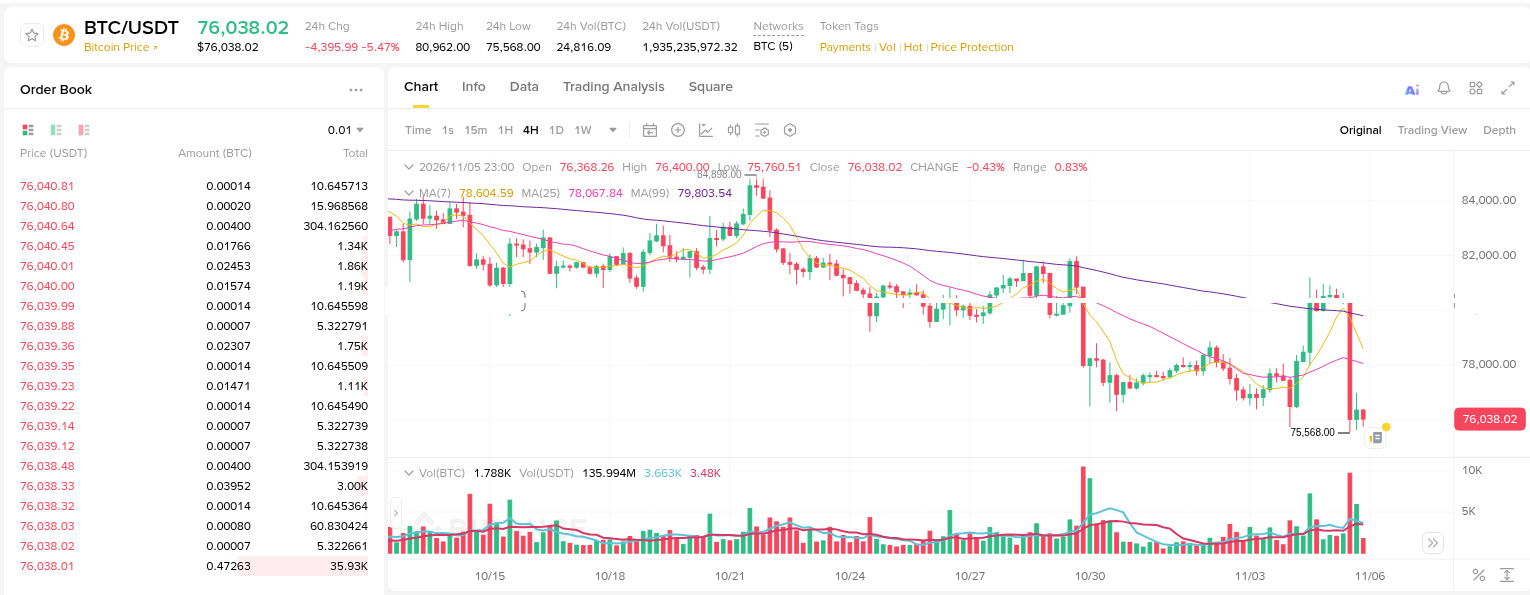
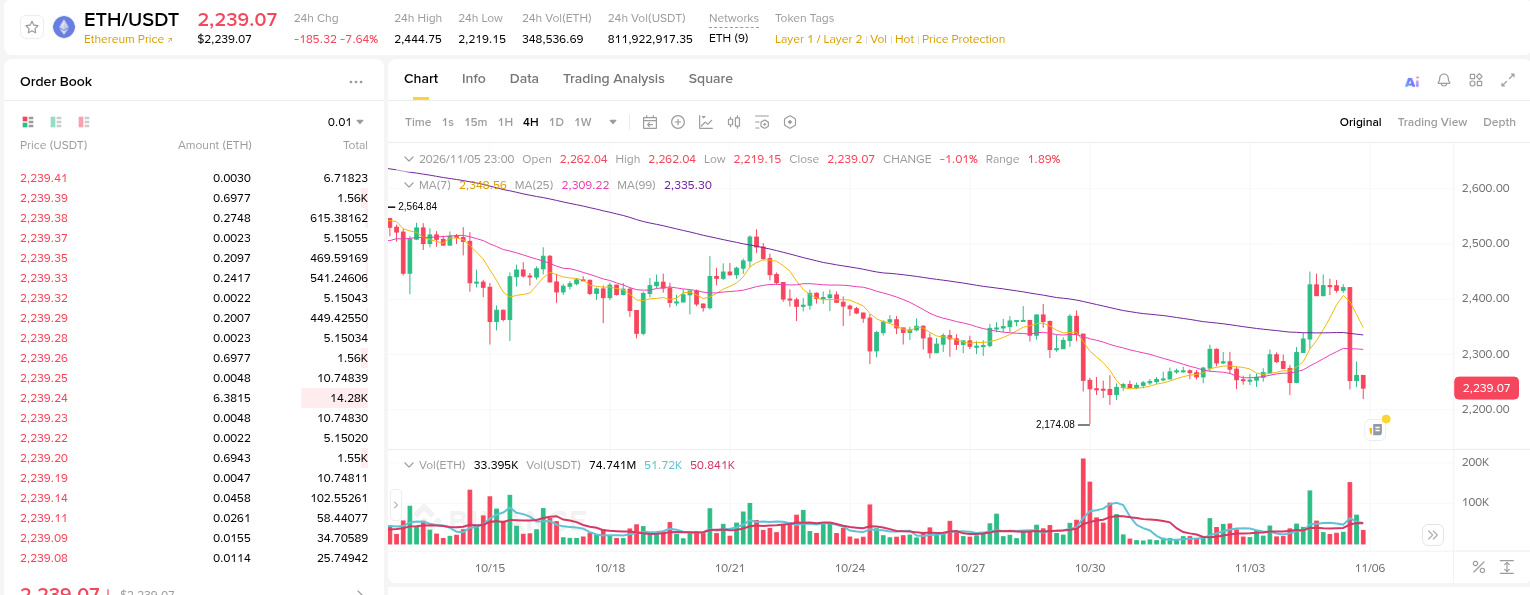
On Binance Spot this morning in Asia/Shanghai (November 6, about 06:10), BTC/USDT sat near USD 75,973, down about 5.57% over 24 hours, after a high near USD 80,962 and a low near USD 75,568. Ether traded around USD 2,236 (-7.79%), Solana near USD 90, and BNB near USD 689. The Block's Jason Shubnell reported the same wipeout on November 5 at 3:11 p.m. EST, tying the crypto slide to a Wall Street and AI-tech selloff and to CoinGlass totals that ran past USD 1 billion in a day.
Open a Binance account with 20LESSFEES for 20% off Spot and Futures fees
What happened on the tape
The move was fast and one-sided on the long side:
Wednesday's reclaim failed: Bitcoin had just climbed back above USD 80,000 after the midterm vote. That story is covered in Bitcoin back above USD 80,000 after the midterm vote explained. By Thursday afternoon US time, that reclaim was gone.
US equities led the risk-off: As of about 2 p.m. ET on November 5, The Block cited Nasdaq down roughly 4.7%, Dow and S&P near -3%, and the VIX up about 60%. AI and big-tech names drove the equity damage, and crypto followed.
Liquidations piled onto longs: CoinGlass figures reported by The Block showed about USD 879.92 million liquidated in four hours (USD 818.90 million longs / USD 61.02 million shorts). Over 24 hours the total reached about USD 1.09 billion across roughly 211,000 traders.
Majors all printed red: Ether lost more than 7% on the day, Solana sat near USD 90, and BNB near USD 689 on Binance Spot as of this Asia/Shanghai morning check.
How a long cascade actually works
A liquidation is not a voluntary sell. When mark price moves against a leveraged long and remaining margin can no longer cover the maintenance requirement, the exchange closes the position into the market. That sell hits the next long already close to its own liquidation price, and the chain continues until buyers show up or the crowded side is cleared.
Entry near USD 80,500 at 20x: USD 20,000 notional needs about USD 1,000 initial margin. A fall of roughly 4% to 5% toward the the mid-USD 76,000 area eats most of that cushion once maintenance margin is counted.
Entry near USD 79,000 at 25x: The same USD 20,000 notional needs about USD 800. The buffer is thinner, so the mid-USD 76,000 print arrives even sooner.
Why longs dominated the print: With USD 818.90 million longs versus USD 61.02 million shorts in four hours, the forced flow was almost entirely selling - the reverse of Wednesday's short-heavy squeeze.
Exact liquidation prices depend on mark price, maintenance tiers, and cross versus isolated mode. If a forced close already hit your book, walk through Binance margin liquidation troubleshooting for beginners before opening another size.
What changed versus Wednesday's squeeze
Wednesday was forced buying after the midterm result. Thursday was forced selling as equities flipped and AI names led the Nasdaq lower. Longs that had rebuilt into the USD 80,000 reclaim were the crowded side.
Jasper De Maere of Wintermute OTC told The Block that the post-election optimism looked short-lived once risk assets rolled over. Paul Howard of Wincent pointed at uncertainty around Democrats, Congress, and the Clarity Act path as another reason traders stayed defensive. Neither comment is a forecast. Both match the tape: the USD 80,000 hold failed, and liquidations flipped from shorts to longs within a day.
Risk checklist for futures and margin traders
Check which side was crowded: about USD 819 million long liquidations in four hours means the long side was overloaded. Adding more long leverage into that washout is a different bet than waiting for funding and open interest to cool.
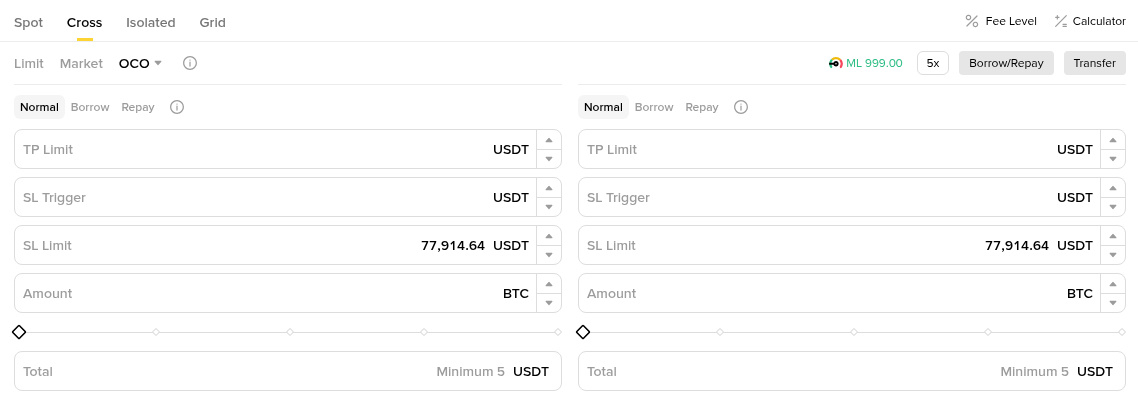
Know cross versus isolated: Cross shares collateral across positions, so one bad BTC long can pull down the whole margin bucket. Isolated keeps the damage on that pair. Confirm the mode before you click buy.
Size to the liquidation distance, not the story: If a 4% to 5% move already liquidates you, the position is too large for the USD 81,000 to USD 75,600 swing you just saw.
Set the invalidation before entry: Decide the price that proves the trade wrong, then place the exit. Do not wait for the cascade candle to finish first.
Count fees on repeated futures trades: Regular USDT-margined taker is 0.05%, so a USD 10,000 round trip costs about USD 10. An account opened with 20LESSFEES pays a flat 20% less on Spot and Futures fees, so that round trip is about USD 8.
Do not average into a falling margin level: Adding size after a partial wipe often just moves the next liquidation closer.
Levels Wintermute and the tape are watching
Wintermute flagged downside references near USD 73,000 and USD 68,000, and said Bitcoin still needs to reclaim and hold USD 80,000 to turn positive again:
USD 80,000: Wednesday's reclaim zone. A sustained hold above it would be the first bullish reset after Thursday's flush.
USD 76,000 to USD 75,500: Where Bitcoin just traded on Binance Spot, near the election-night low region from earlier in the week.
USD 73,000 then USD 68,000: The downside steps Wintermute named if selling continues.
These are reference points traders are quoting, not targets. Cascades can overshoot any of them.
Nothing here is financial advice. Crypto and leveraged products can move against you faster than a checklist can save a position that was already too large. Size so a red day costs money, not the account.
If you are opening an account to trade around moves like this one, you can also check the current Binance welcome bonus campaign before your first deposit.
FAQ
Why did Bitcoin fall under USD 76,000 after reclaiming USD 80,000?
Wall Street and AI-tech sold off hard on November 5, with Nasdaq near -4.7% around 2 p.m. ET. Crypto followed, and CoinGlass data cited by The Block showed about USD 879.92 million liquidated in four hours, mostly longs.
How big were the liquidations?
About USD 879.92 million in four hours (USD 818.90 million longs / USD 61.02 million shorts) and about USD 1.09 billion over 24 hours across roughly 211,000 traders, per CoinGlass figures in The Block on November 5, 2026.
What levels are traders watching next?
Wintermute pointed to USD 73,000 and USD 68,000 on the downside, and a reclaim-and-hold of USD 80,000 to turn constructive. Binance Spot ranged roughly USD 75,568 to USD 80,962 into this Asia/Shanghai morning.
Was this the opposite of Wednesday's midterm squeeze?
Yes in flow terms. Wednesday forced shorts to buy back. Thursday forced longs to sell. The midterm reclaim above USD 80,000 did not survive the equity selloff.
Coins in this piece
#Bitcoin #Ethereum #CryptoMarket #Binance