

The ATOM Flywheel: A Community Strategy for the Terra Liquidity Alliance Erisprotocol
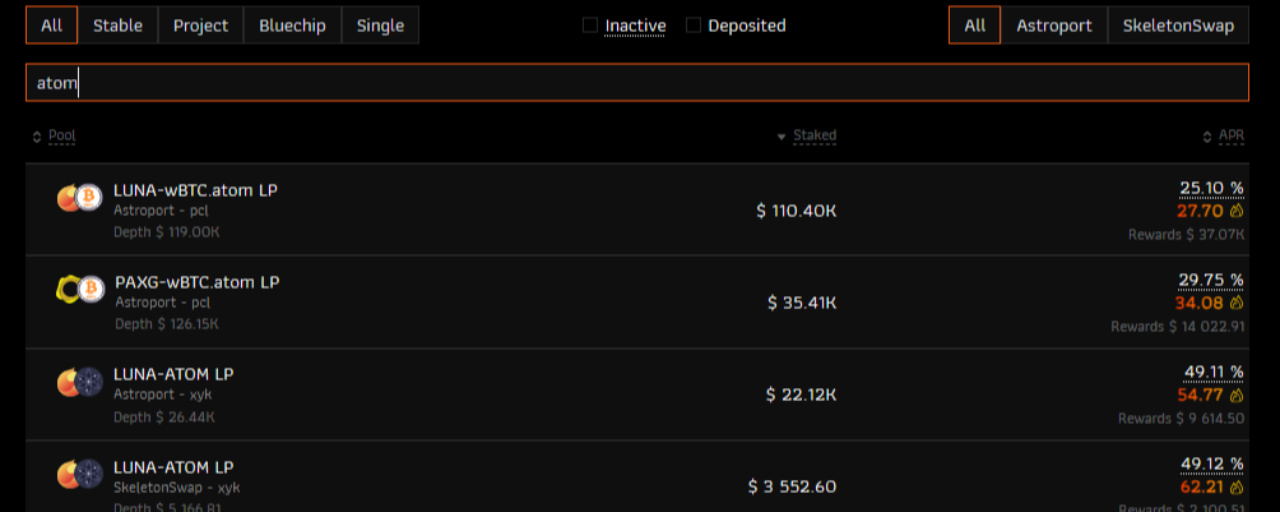
Here's the thing. Most ATOM holders park their tokens and wait. Staking yields are fine, but they're not going to change your position size. The real opportunity sits across the Cosmos ecosystem, on Terra 2.0, where Eris Protocol runs the Terra Liquidity Alliance (TLA). This is a ve(3,3) coordination layer that directs LUNA inflation to whitelisted liquidity pools. ATOM and its liquid staking derivatives are whitelisted. The yields there are not subtle. LST pools on Eris routinely sit near 70% APR, with peaks well above that depending on the epoch and pool weighting. You borrow cheap, you deploy there, and you let the spread work.
Step One: Source Capital Below 10%
You don't sell your ATOM. You use it.
Supply ATOM to a Cosmos-native money market. Rujira's money market accepts ATOM directly from the Hub and pays supply-side interest. That's your base yield while you prepare the next move.
Borrow a stablecoin against that ATOM position. The goal is simple. Keep your borrowing cost under 10% APR. Stablecoin borrow rates in mature lending markets have hovered in single digits for most of 2026, especially when you post blue-chip collateral and monitor your health factor. If you prefer to keep the collateral off Terra entirely, bridge ATOM to an external lending venue, post it, and borrow USDC there. The principle holds. Post collateral where rates are low, take the stablecoin loan, and move it to where the yield is high.
Step Two: Deploy Into the Eris Amplifier
Bridge the borrowed USDC to Terra. Eris Protocol takes that stablecoin and routes it into an ampLUNA or ATOM-LST liquidity position inside a TLA whitelisted pool. The yield comes from three places at once. Trading fees from the pool. TLA incentive emissions paid in LUNA. And the auto-compounding mechanics that Eris builds into its vaults. The combined APR on these positions has been running in the triple digits for extended stretches. Not a one-week promotion. A structural gap between the cost of stablecoin capital and the incentive-subsidized yield on Terra.
Step Three: Harvest, Repay, Reinforce
You don't let the rewards sit idle. Claim the LUNA and fee rewards. Use a slice to service the stablecoin debt. Take the remainder and do two things.
Reinforce the loop. Redeposit into the same Eris position to compound the yield-generating base.
Buy ATOM on the open market. This is the piece most people miss. The loop only matters for the ATOM ecosystem if the profit flows back to ATOM. Every harvest cycle, a community-coordinated buyback converts a portion of the LUNA-denominated yield into ATOM. That creates consistent, programmatic demand. Not a pump. A slow, steady bid underneath the token.
The Infinite Loop in Plain Terms
Borrow under 10%. Deploy near 100%. Harvest. Repay a sliver. Buy ATOM with the excess. Use the larger ATOM position to borrow again, more cheaply relative to your growing collateral, and repeat. Each cycle expands the collateral base. Each cycle removes ATOM from liquid circulation. Each cycle deepens the pool of ATOM-denominated liquidity inside the TLA, which makes ATOM a more useful and more visible asset across the interchain.
Why This Benefits the ATOM Community
The argument is not about one farmer getting rich. It's about what happens when a community does this together.
ATOM utility expands. ATOM stops being a passive staking token and becomes productive collateral. That utility creates demand that staking alone does not generate. Every ATOM locked into the loop is an ATOM that is not sitting on an exchange order book waiting to be sold.
Liquidity deepens on Terra. ATOM-denominated pools on Eris get thicker. Thicker pools mean tighter spreads for anyone who wants to trade ATOM against LUNA or stablecoins. That makes ATOM a more credible cross-chain asset, not just a Hub-native asset.
The buyback is structural, not sentiment-driven. The loop does not rely on a Twitter campaign or a governance vote to create buy pressure. The buy pressure is built into the harvest cycle. As long as the spread between borrow cost and Eris yield exists, the loop generates ATOM demand. And that spread has persisted because the TLA incentive structure is designed to pay for liquidity, not to wait for it to arrive organically.
The community controls the flywheel. This is not a venture-backed strategy where the upside goes to a fund. ATOM holders can coordinate through a community treasury or a working group. The borrowing, the deployment, the repayment, and the buyback are transparent on-chain. Every participant can verify the loop is running and the ATOM is accumulating.
Borrow cheap, deploy where the incentives are paying, and route the profit back into the asset your community already believes in.
The window is open now. ATOM is whitelisted. The Eris pools are running. The borrowing rates are still below the yield threshold. The ATOM community has spent years watching other ecosystems build elaborate DeFi flywheels. Here is one that runs on ATOM collateral, pays in LUNA incentives, and ends with more ATOM in community hands than it started with.
Its complete flywheel for cosmos ATOM waiting for community to trigger it.