
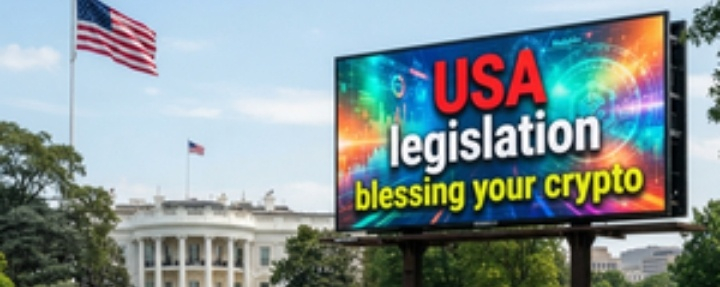

🇺🇸 US DEMOCRATS, CRYPTO LAWS AND THE FUTURE OF DIGITAL ASSETS: WHICH COINS COULD BENEFIT?
November 5, 2026 | LION PROFIT
DISCIPLINE BEFORE PROFIT
The United States is entering a significant period for cryptocurrency regulation.
Following the November 3, 2026 midterm elections, Democrats have gained control of both chambers of Congress. This changes the political environment surrounding cryptocurrency legislation, particularly the proposed Digital Asset Market CLARITY Act.
For cryptocurrency investors, this is more than a political story. It concerns the future of digital payments, financial infrastructure, tokenization, exchanges and institutional investment.
PART 1: US CRYPTO LAWS AND THEIR SIGNING DATES
Here are important legislative and executive milestones traders should understand.
1. Executive Order 14067 — March 9, 2022
Signed by President Joe Biden.
It established a federal approach to the responsible development of digital assets, covering cryptocurrencies, stablecoins, financial innovation and central bank digital currencies.
2. Executive Order 14178 — January 23, 2025
Signed by President Donald Trump.
It established a policy of strengthening American leadership in digital financial technology and created a presidential working group on digital asset markets.
It also revoked the previous administration's Executive Order 14067.
3. GENIUS Act — July 18, 2025
Signed by President Donald Trump.
This is an enacted federal law, not merely a proposal.
Its purpose is to establish a federal regulatory framework for payment stablecoins, including requirements concerning reserves, issuers and supervision.
4. CLARITY Act — July 17, 2025
The US House of Representatives passed the Digital Asset Market CLARITY Act.
However, House passage did not make it federal law.
The Senate subsequently considered the legislation, but its September 2026 procedural vote failed.
Its future is now uncertain following the November 2026 election results.
5. Executive Order 14233 — March 6, 2025
Signed by President Donald Trump.
It established the Strategic Bitcoin Reserve and US Digital Asset Stockpile framework.
The Bitcoin Reserve is based on government-held Bitcoin, while the separate stockpile concerns other eligible digital assets.
PART 2: WHAT ROLES COULD DIFFERENT CRYPTOCURRENCIES PLAY?
These are potential economic and technological roles, not government-approved classifications.
1. BITCOIN (BTC) — DIGITAL VALUE RESERVE
Bitcoin's principal role is as a decentralized digital monetary asset.
Potential areas of importance:
- Long-term digital value preservation.
- Institutional investment.
- Strategic government Bitcoin holdings.
- Digital asset diversification.
- Global settlement and transfers.
The US Strategic Bitcoin Reserve makes Bitcoin particularly important in the American digital asset policy debate.
2. ETHEREUM (ETH) — FINANCIAL INFRASTRUCTURE
Ethereum provides infrastructure for decentralized applications and smart contracts.
Potential roles:
- Tokenization of traditional financial assets.
- Decentralized finance.
- Smart-contract execution.
- Stablecoin settlement.
- Institutional blockchain applications.
Ethereum could become increasingly important if regulated financial institutions expand their use of blockchain infrastructure.
3. SOLANA (SOL) — HIGH-SPEED DIGITAL TRANSACTIONS
Solana is designed for high-throughput blockchain transactions.
Potential roles:
- Fast digital payments.
- Decentralized applications.
- Tokenized assets.
- Digital commerce.
- Stablecoin transfers.
- Blockchain-based financial services.
For SOL traders, the important question is whether institutional adoption and regulated financial applications will expand.
4. BNB — EXCHANGE AND BLOCKCHAIN ECOSYSTEM
BNB is the native asset of the BNB Chain ecosystem and has utility within Binance-related services.
Potential roles:
- Transaction fees on BNB Chain.
- Decentralized applications.
- DeFi participation.
- Blockchain ecosystem utility.
- Network-based services.
Regulatory developments affecting centralized exchanges and blockchain service providers could influence its wider ecosystem.
5. XRP — CROSS-BORDER PAYMENT INFRASTRUCTURE
XRP is designed to facilitate value transfers and liquidity within the XRP Ledger ecosystem.
Potential roles:
- Cross-border payments.
- Currency transfers.
- Liquidity bridging.
- Financial settlement applications.
Its possible institutional expansion depends on regulatory clarity, commercial adoption and market demand.
6. USDT — GLOBAL DIGITAL DOLLAR TRANSFERS
USDT is a dollar-backed stablecoin issued by Tether.
Potential roles:
- Trading liquidity.
- International digital transfers.
- Exchange settlement.
- Digital dollar access.
- Payments across supported blockchain networks.
The GENIUS Act makes stablecoin regulation particularly important, although USDT's precise regulatory treatment depends on the applicable issuer and distribution requirements.
7. USDC — REGULATED PAYMENT AND SETTLEMENT ECOSYSTEM
USDC is a dollar-backed stablecoin issued by Circle.
Potential roles:
- Digital dollar payments.
- Financial settlement.
- Institutional blockchain transactions.
- DeFi liquidity.
- Tokenized financial markets.
The stablecoin regulatory framework could be important to USDC's future institutional adoption.
8. DOGE — DIGITAL COMMUNITY AND PAYMENTS
Dogecoin began as a meme cryptocurrency but has developed an established payment and trading community.
Potential roles:
- Peer-to-peer transfers.
- Online payments where accepted.
- Community-driven digital commerce.
However, it should not be confused with regulated financial infrastructure simply because it has a large following.
PART 3: WHAT SHOULD TRADERS WATCH?
Asset| Main area to monitor
BTC| Strategic reserves and institutional demand
ETH| Tokenization and smart contracts
SOL| High-speed payments and adoption
BNB| Exchange and ecosystem regulation
XRP| Cross-border settlement
USDT| Stablecoin compliance
USDC| Institutional payment adoption
DOGE| Payment utility and market sentiment
PART 4: THE DEMOCRATIC CONGRESSIONAL CHALLENGE
Democratic control of Congress gives the party greater influence over committee leadership, legislative priorities and oversight.
Areas likely to receive attention include:
1. SEC and CFTC responsibilities.
2. Consumer and investor protection.
3. Stablecoin supervision.
4. Exchange transparency.
5. Anti-money-laundering requirements.
6. Conflicts of interest involving public officials and digital assets.
The CLARITY Act now faces a difficult legislative future. The incoming Congress is scheduled to convene on January 3, 2027. The bill's current version may need to be reconsidered or reintroduced.
PART 5: LION PROFIT'S MARKET VISION
We believe cryptocurrency's future should not be evaluated through price movements alone.
The next stage of digital finance could involve several complementary technologies:
- Bitcoin as a decentralized digital monetary asset.
- Ethereum as programmable financial infrastructure.
- Solana as a high-speed transaction network.
- XRP as a cross-border settlement asset.
- BNB as a blockchain ecosystem utility asset.
- USDT and USDC as digital dollar instruments.
These roles are not mutually exclusive, and none guarantees future price appreciation.
OUR QUESTION TO THE CRYPTO COMMUNITY:
Which of these assets do you believe will play the most important role in the next generation of digital finance?
Will it be BTC, ETH, SOL, XRP, BNB, USDT or USDC?
Share your analysis.
Follow, comment and share.
LION PROFIT
DISCIPLINE BEFORE PROFIT.
A PRODUCT OF LION PROFIT.