

Chip stocks bounced hard on Tuesday as investors drifted back into the technology names they had been dumping, even with the midterm results still to come. The rebound closed out a short, ugly selloff in AI and tech shares that began last week. October left the Nasdaq Composite down 5.3 percent, its worst month since March 2025, and on Monday the Nasdaq-100 finished in correction territory, 10.4 percent below its Oct. 6 record close.
Falling oil prices gave buyers some cover too. Traders weighed possible new talks over the Iran war and Russia's war in Ukraine, and Brent crude settled at $103.60 a barrel, its lowest close since Oct. 7.
Set against the $117.64 where Brent finished October, that looks like a steeper fall than it was. The old figure belongs to the expiring December contract. The more active January contract closed that Friday at $113.43.
A Split Tape, Led by Chips
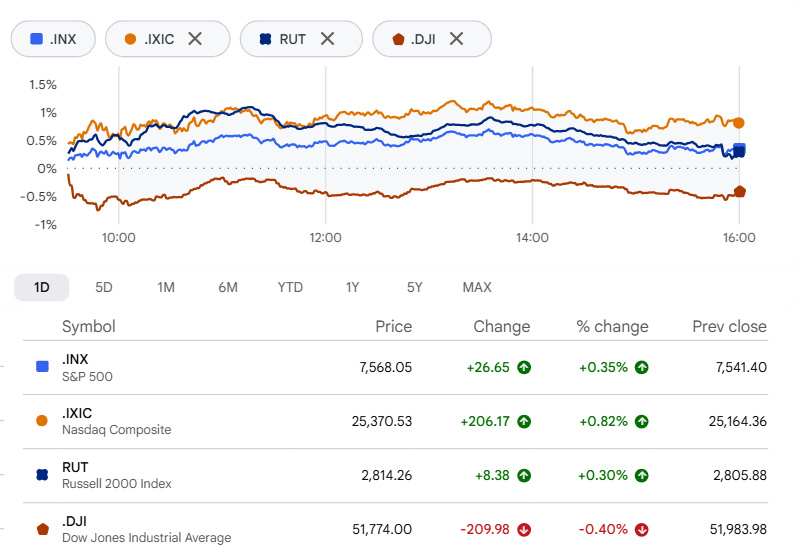
The scoreboard split down the middle. The S&P 500 gained 0.4 percent to 7,568.92, and the Nasdaq Composite climbed 0.8 percent to 25,372.01, both pulled along by chipmakers such as AMD. The small-cap Russell 2000 closed at 2,814.26, a 0.3% gain, while the Dow Jones Industrial Average slipped 197 points, or 0.4 percent, to 51,786.72. Attention was already shifting to the midterms.
A caveat on that S&P gain: most of the stocks inside the index fell. The lifting came from a short list of very large companies.
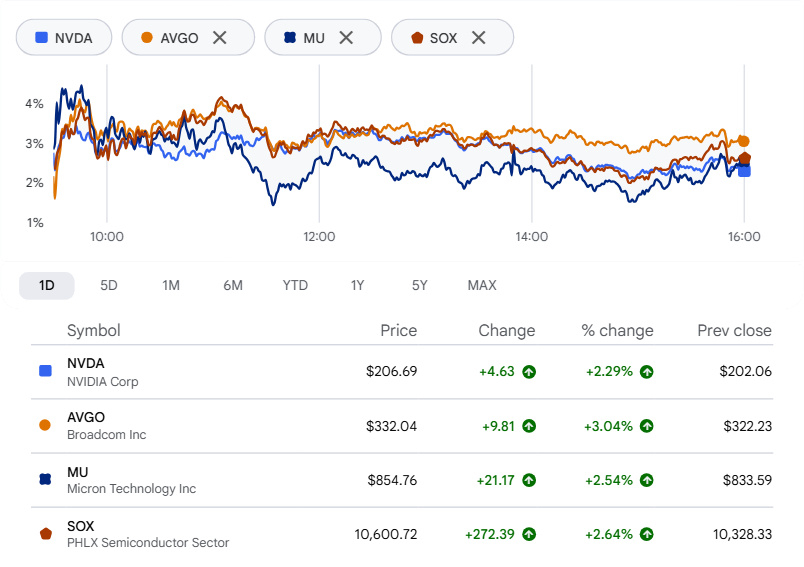
Nvidia did the most work. It rose 2.3 percent after dropping across four straight sessions and was the strongest single push on the S&P 500. Broadcom added 3 percent, Micron Technology gained more than 2, and the Philadelphia Semiconductor Index finished up about 2.6 percent.
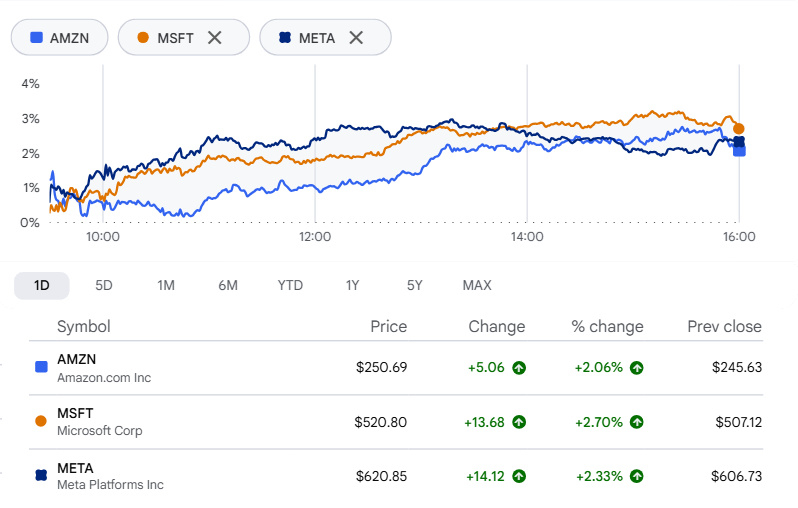
The big AI spenders joined in. Microsoft, Amazon and Meta Platforms each rose more than 2 percent.
Single Stocks Told a Messier Story
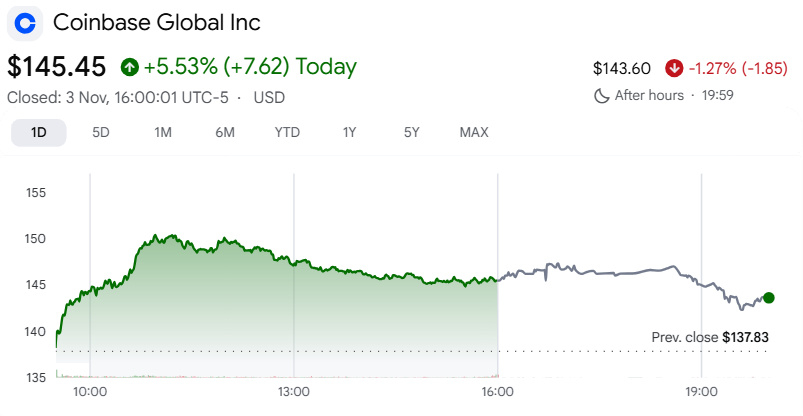
Fifteen percent is a lot to lose in three sessions, and Coinbase had lost exactly that through Monday. It rallied 5 percent on Tuesday. The slide followed third-quarter results last Thursday after the close that showed weaker crypto trading volumes, and Morgan Stanley piled on Monday by cutting its rating to underweight and slashing its price target by 53 percent.
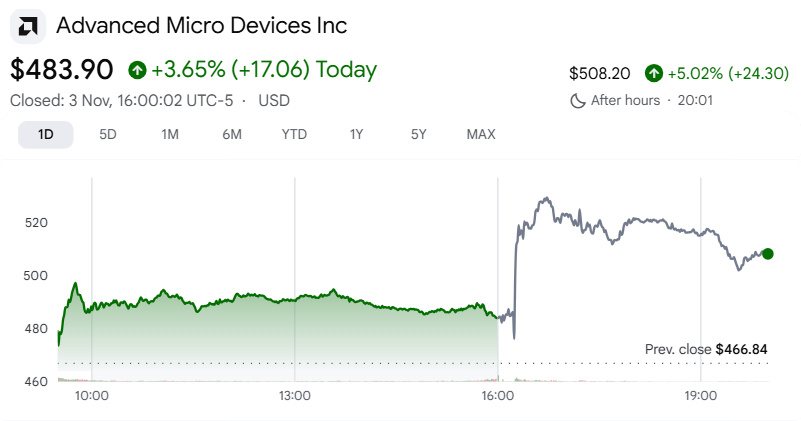
AMD saved its news for after the closing bell. Third-quarter revenue and earnings both beat expectations, and data center revenue grew 97 percent. The shares, which had already closed up about 3.7 percent at $483.90, jumped more than 7 percent in extended trading. CEO Lisa Su said demand for the company's Instinct and EPYC chips "continued to strengthen," and she expects growth to pick up further in the fourth quarter as Helios and Venice production scales.
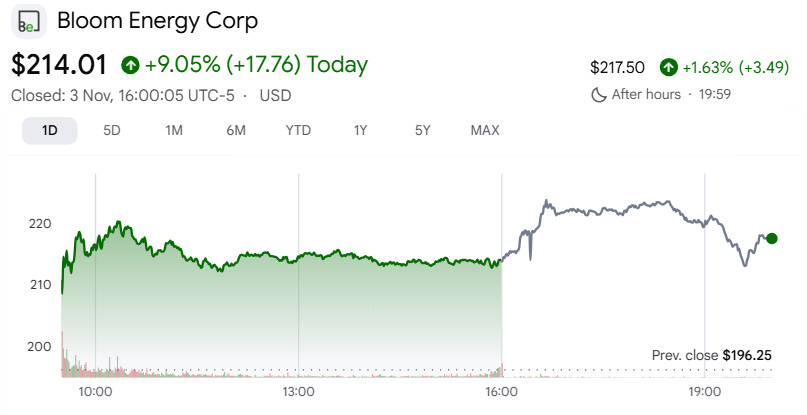
Bloom Energy, the maker of solid oxide fuel cells, gained nearly 9 percent after Barclays upgraded it to overweight from equal weight. The bank pointed to demand running ahead of expectations. Oddly, it also trimmed its 12-month price target to $289 from $316, a level that still implies upside of about 47 percent from Monday's close.
Three Earnings Reports That Went Over Badly
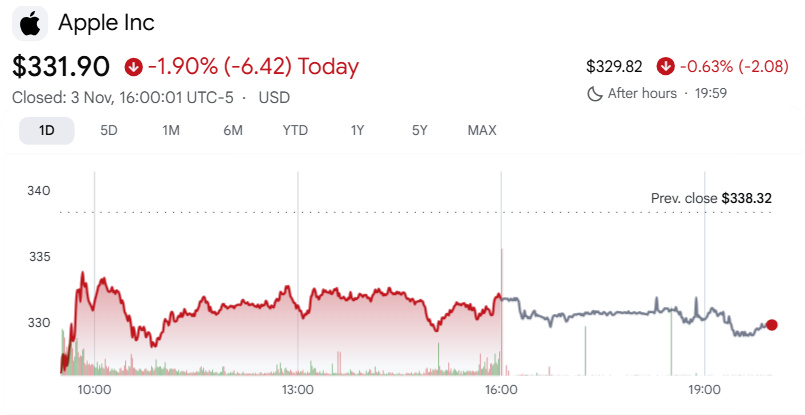
Apple turned in a split report. iPhone sales impressed, revenue from Greater China fell short, and a soft margin forecast sent the shares down about 2 percent.
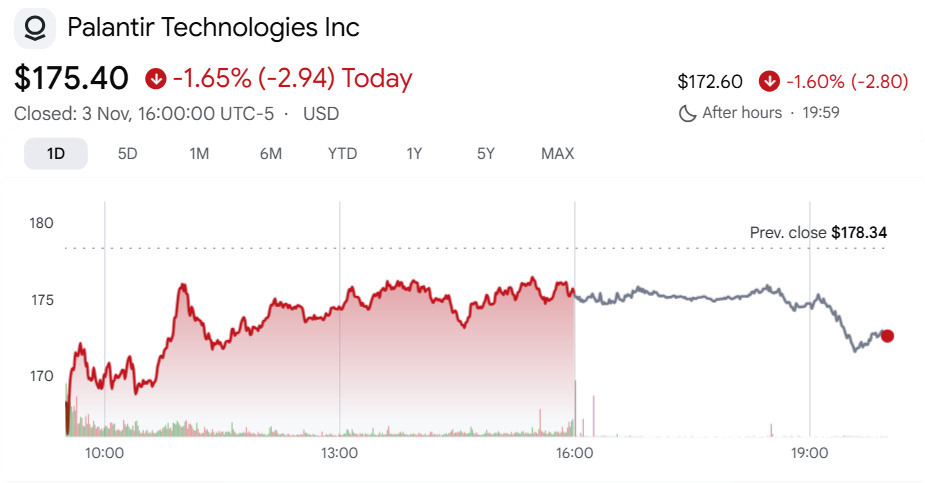
Palantir fell 1.6 percent too, which is hard to square with a profit that beat expectations. The company also hit a first: it earned more from U.S. businesses than from the U.S. government, with U.S. commercial revenue up 148 percent from a year earlier.
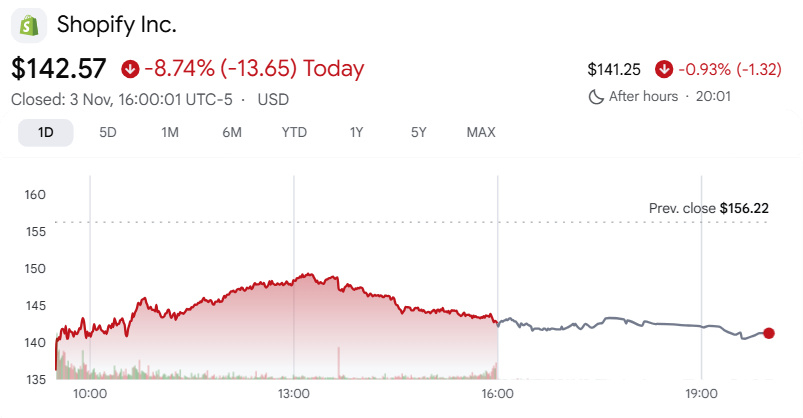
Shopify took the hardest hit of the group, falling more than 8 percent after missing estimates on subscription gross profit and gross merchandise volume. Quarterly revenue of $3.74 billion landed a hair under the $3.75 billion LSEG consensus. For the fourth quarter, the company guided to revenue growth in the "low thirties" range, against LSEG estimates of 32.1 percent, and said free cash flow margin should look like the fourth quarter of 2025.
Sector Analysis:
Best-Performing Sectors
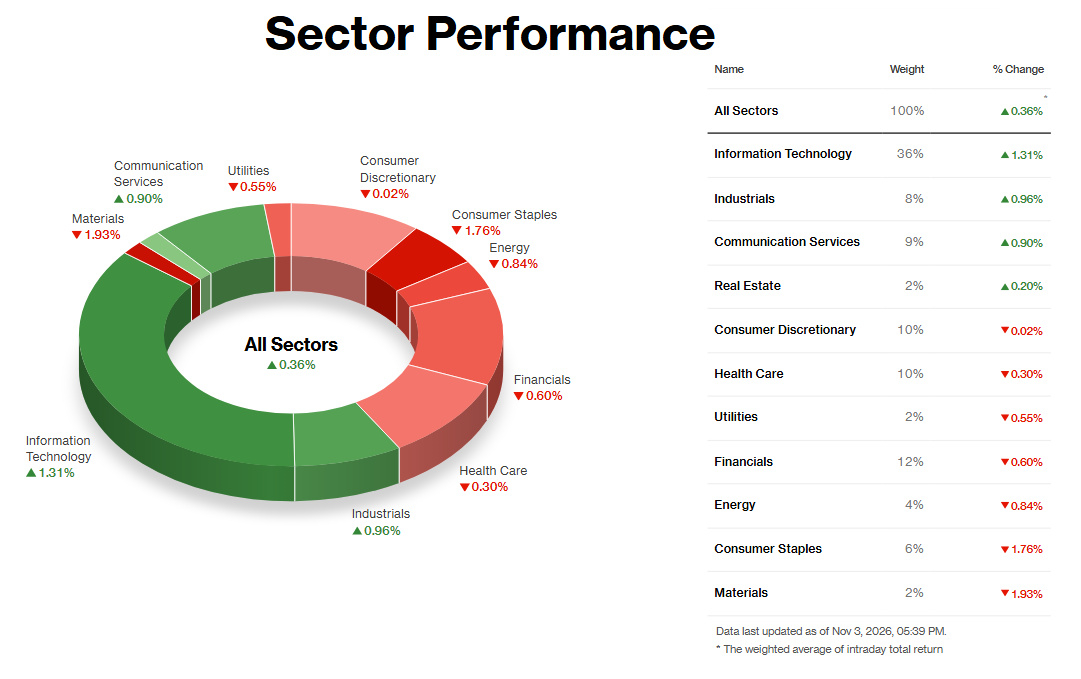
Tech did the heavy lifting on Tuesday, Nov. 3. Up 1.31% at a 36% weight, the sector added roughly 0.47 points to the index on its own, more than the S&P 500’s entire 0.36% gain.
Chips drove it. The Philadelphia Semiconductor Index jumped 2.64%, ending a three-day losing streak, and Nvidia’s 2.3% rise pushed its market value back above $5 trillion. Dip-buyers returned after a selloff stoked by doubts over whether AI spending can keep paying off, with AMD up about 4% ahead of earnings. Apple, down nearly 2% on a weak margin forecast, was the exception.
Industrials (+0.96%) rode the same theme through the power grid. GE Vernova and Eaton each climbed about 6% after Bernstein called election-day fears over data-center restrictions overblown. Communication Services (+0.90%) leaned on Meta, up roughly 2.4% as its first bond sale in six months drew solid demand. Whether it lasts is open: analysts say it’s too early to call the AI correction over.
Worst-Performing Sectors
Materials fell 1.93%, the session’s weakest group. Miners led European declines on softer copper, and Sherwin-Williams dropped 3.3%, the Dow’s worst performer, a day after being its best.
Consumer Staples (-1.76%) had a clear culprit in Sysco, which missed revenue estimates, reporting $21.74 billion against a $22 billion consensus. Its shares fell nearly 8% at the low. Beyond Sysco, no single driver stood out, though Treasury yields rose, with the 10-year near 4.95% after a jump in job openings.
Energy (-0.84%) followed crude. Brent settled 1% lower at $103.60, its weakest close since Oct. 7, on hopes that peace talks will end the wars in Iran and Ukraine, extending Monday’s slide of more than 7%. Iran says a deal remains far off, which kept trading choppy.
One rebound doesn't repair a month. The polls were still open when the closing bell rang, and a senior Iranian official told Reuters that Tehran and Washington remain far from a deal. Whether Tuesday's bounce lasts depends on two things Wall Street doesn't control: how the vote comes out, and whether those talks hold.