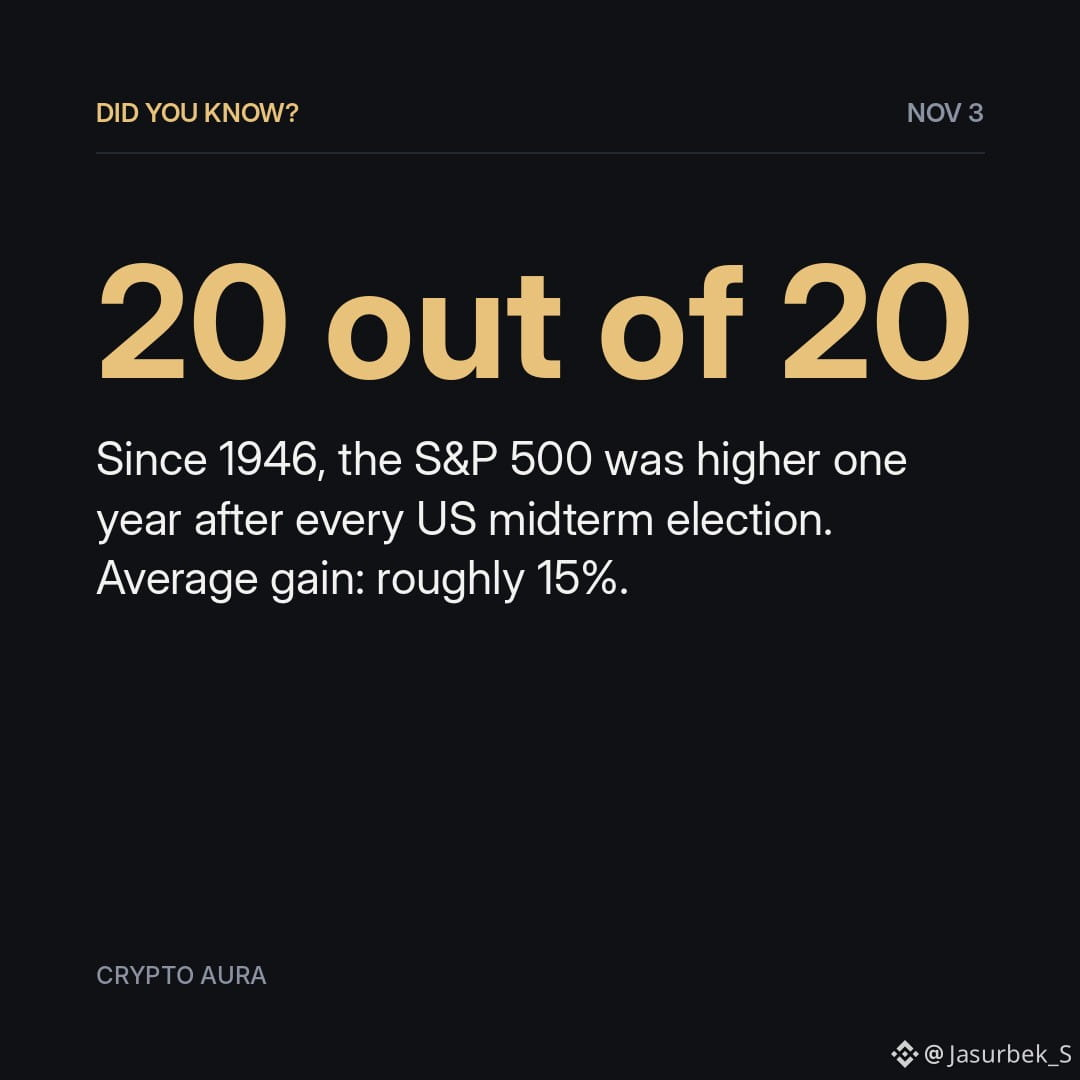
Since 1946 the US has held 20 midterm elections. One year after every single one of them, the S&P 500 was higher. 20 out of 20, with an average gain of roughly 15%. 🗳️
Americans vote today, so you'll see this stat everywhere this week. My problem with it: 20 data points is a tiny sample, and the weakest year, 1946, scraped out just +0.8%. Meanwhile the Fed hiked in September, the 10-year yield sits near 4.9%, and $BTC is chopping around $76K with spot ETF outflows.
What years of trading teach you: seasonal stats are fine for a bias, useless for sizing. If a position only works because "midterms are bullish", it's a hope, not a trade. Put your stops where the chart says, not where the calendar says.
Do you trade seasonality, or ignore it?
#Midterms #stockmarket #BTC