
The NEAR Protocol community approved proposal HSP-029 to gradually reduce the maximum annual issuance of the NEAR token from 2.5% to 1.6%. The decision was made following a vote in House of Stake — the ecosystem’s decentralized governance system.
According to the results, the vote ended on November 2, 2026. The initiative was backed by 99.97% of participating veNEAR, with turnout at around 62%. A total of 32 participants voted in favor, representing roughly 3.29 million veNEAR.
The approved plan calls for a gradual reduction in issuance over 24 months. The rate will decrease by about 0.0375 percentage points per month, with adjustments each network epoch.
At the same time, the current model for distributing newly issued tokens will remain unchanged. As before, 90% of issuance will go to staking participants, and the remaining 10% — to the protocol treasury.
The authors of the initiative believe the change will reduce dilution for NEAR holders who do not participate in staking and slow the growth of the asset’s total supply.
The HSP-029 document provides the following projections:
daily issuance will fall from about 89,517 to 57,291 NEAR after the target level is reachedover the first two years, issuance will be 11.8 million NEAR lower than under the current modelover six years, the difference could reach 66.1 million NEAR, or about 4.36% of total supply versus the baseline scenarioestimated gross staking yield will drop from 5.27% to 3.37% if the share of locked tokens remains unchanged
The proposal also examines the impact of the changes on validator economics. The authors estimate that once the target rate is reached, 24 out of 405 pools may lose the ability to cover operating costs solely from earned rewards.
The approved decision does not yet mean an immediate change to the network parameters. The proposal still has to undergo a review by the House of Stake Security Council, after which a protocol upgrade and its adoption by validators will be required.
In addition, the document provides for a transition period of about 90 days. It is needed to adapt wallets, crypto exchanges, custodial services, and staking platforms. Only after that will the phased reduction in issuance begin.
The initiative was authored by SVRN CEO Sal Ternullo. Previously, he also proposed eventually fully abandoning the issuance of new NEAR and moving to a fixed-supply model. However, this option was not included in the approved plan and requires separate discussion.
Separately, the initiative noted that SVRN holds more than 55 million NEAR, mostly staked. According to Ternullo’s estimate, the reduction in issuance could cut the company’s annual income by about 970,000 tokens.
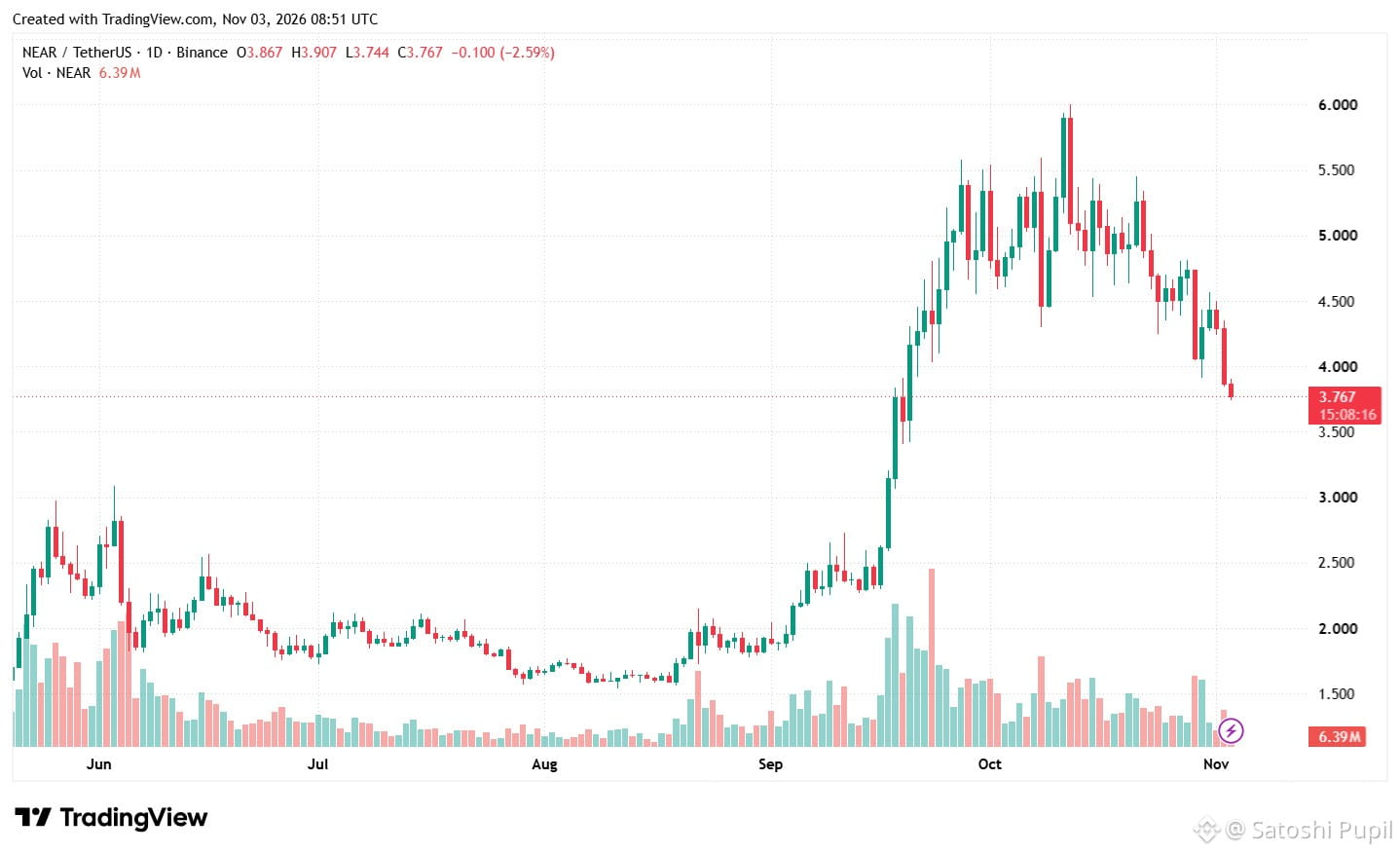
Amid the proposal’s approval, NEAR extended its decline. On November 3, the asset traded below $4 after falling by about 10% in the previous session.