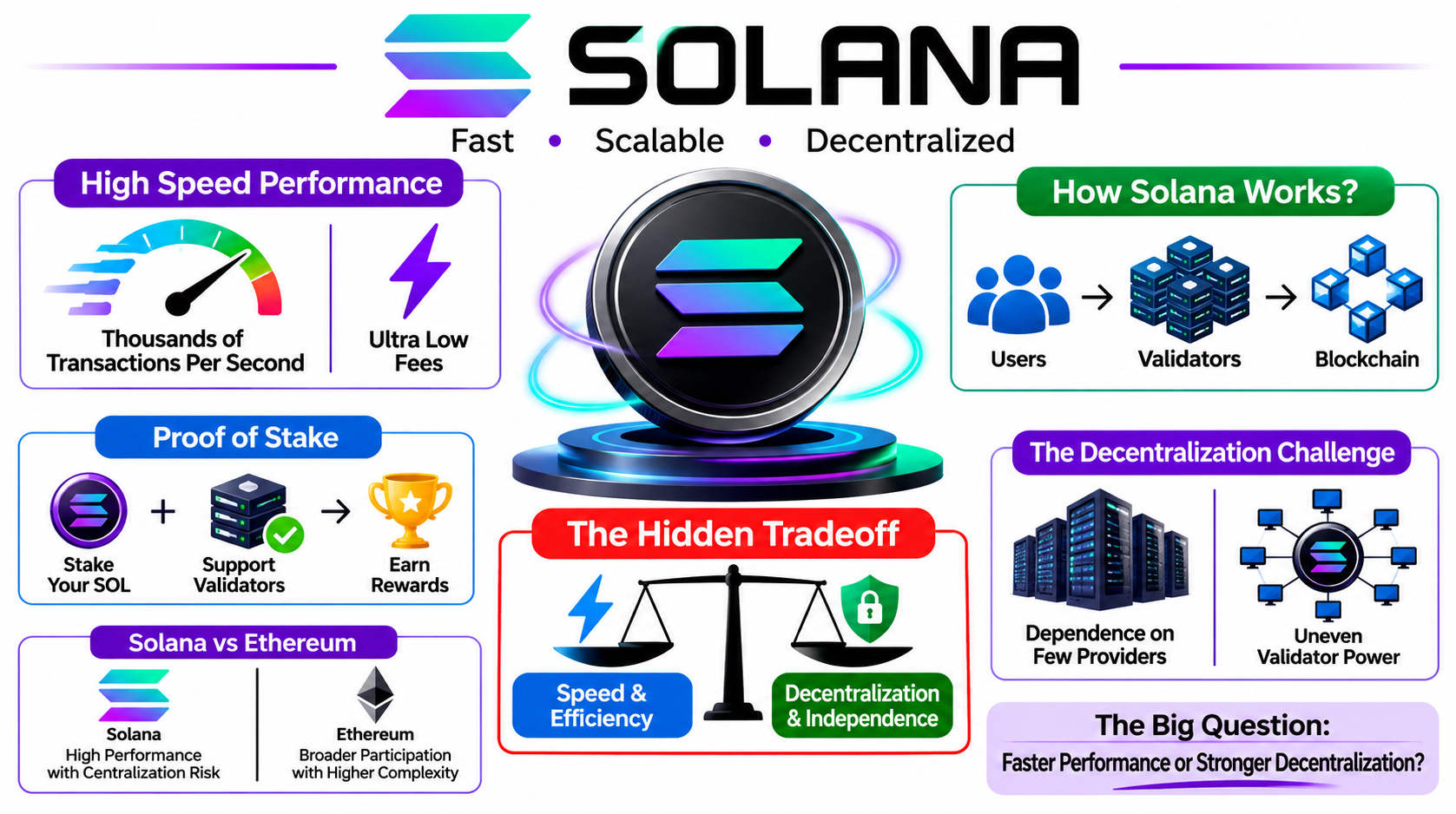

Solana is designed to make transactions publicly verifiable, yet its greatest strength, high-speed performance, introduces a structural tradeoff that investors rarely examine: the difference between decentralization on paper and decentralization in practice.
Every transaction on Solana records publicly on its blockchain. Anyone can inspect wallet balances, transfers, and account activity. But transparent transactions do not automatically mean that the infrastructure processing them is equally distributed.
Solana uses Proof of Stake, where validators vote on transaction ordering and consensus. SOL holders can delegate their stake to validators without surrendering token ownership. However, voting power is weighted by stake, meaning economic influence is not distributed equally across participants.
The overlooked issue is infrastructure concentration. Multiple independent validators can still rely on the same hosting provider, cloud infrastructure, or network operator. This creates a potential single point of failure even when validator numbers appear impressive. The Solana Foundation itself recognizes this risk through delegation criteria addressing data center and hosting concentration.
Ethereum approaches this challenge differently, emphasizing broader participation through its validator design and relatively accessible hardware requirements. Yet Ethereum also faces its own staking concentration and infrastructure dependencies. Neither network completely eliminates these risks.
For long-term SOL holders, the important question is whether transaction speed and network efficiency can continue improving without increasing dependence on a smaller group of infrastructure providers.
Would you choose faster blockchain performance or stronger infrastructure decentralization if you had to pri