𝗪𝗜𝗡𝗸𝗟𝗶𝗻𝗸: 𝗙𝗿𝗼𝗺 𝗧𝗼𝗸𝗲𝗻𝗼𝗺𝗶𝗰𝘀 𝗧𝗼 𝗘𝘅𝗲𝗰𝘂𝘁𝗶𝗼𝗻 — 𝗧𝗵𝗲 𝗩𝗮𝗹𝘂𝗲 𝗢𝗳 𝗔𝗰𝘁𝗶𝗼𝗻
In the blockchain industry, announcing a token buyback program is one thing. Actually executing it, recording the activity on-chain, and permanently reducing token supply is another.
That distinction matters.
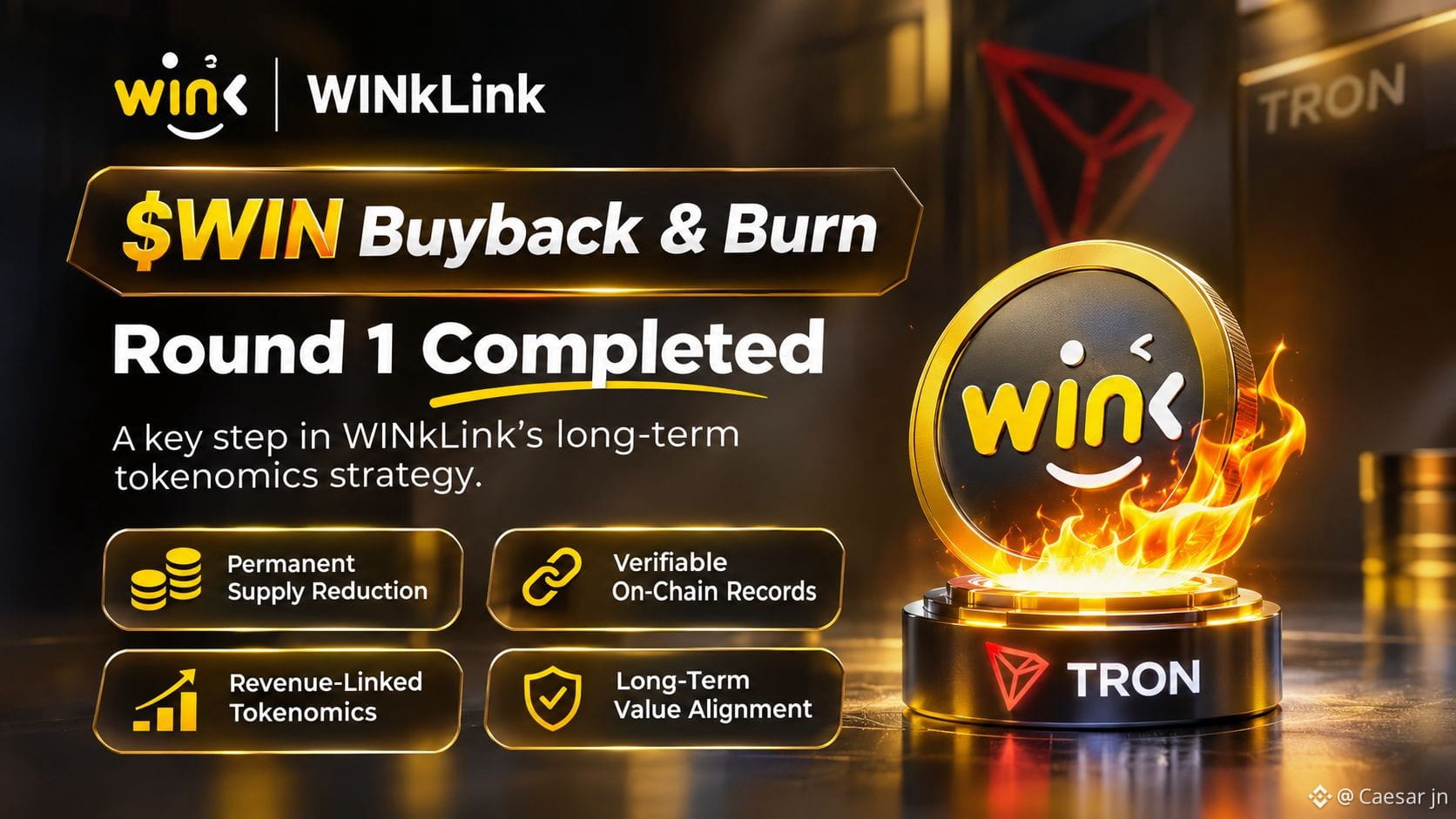
WINkLink has completed Round 1 of its $WIN buyback and burn program, marking an important step in turning its tokenomics strategy into measurable execution.
But the bigger conversation goes beyond the completion of one round.
Why Does Buyback And Burn Execution Matter?
🔹 Permanent Supply Reduction: Burning tokens removes them from circulation permanently, reducing the existing token supply.
🔹 Verifiable Transparency: On-chain records allow the community to independently examine transactions and verify that the mechanism has been executed.
🔹 Revenue-Linked Tokenomics: WINkLink's buyback initiative connects revenue generated by its oracle services with a structured token buyback and burn mechanism.
🔹 Long-Term Alignment: A clearly executed mechanism creates a more transparent relationship between project activity and its token economics.
There is an important distinction worth understanding: reducing token supply does not automatically guarantee price appreciation. Market demand, utility, liquidity, revenue generation, and broader market conditions remain important factors.
What makes this development particularly interesting is the emphasis on execution.
The wider TRON ecosystem is also demonstrating how buyback and burn mechanisms are becoming part of its economic strategy. The accompanying TRON ECO Deflation Report highlights more than $30.90 million in cumulative buyback and burn value across the ecosystem.
That figure represents the broader ecosystem, not WINkLink alone.
For WINkLink, the next important measure will be consistency: continued oracle adoption,
👇
@WINkLink_Official @Justin Sun孙宇晨 #TRONEcoStar