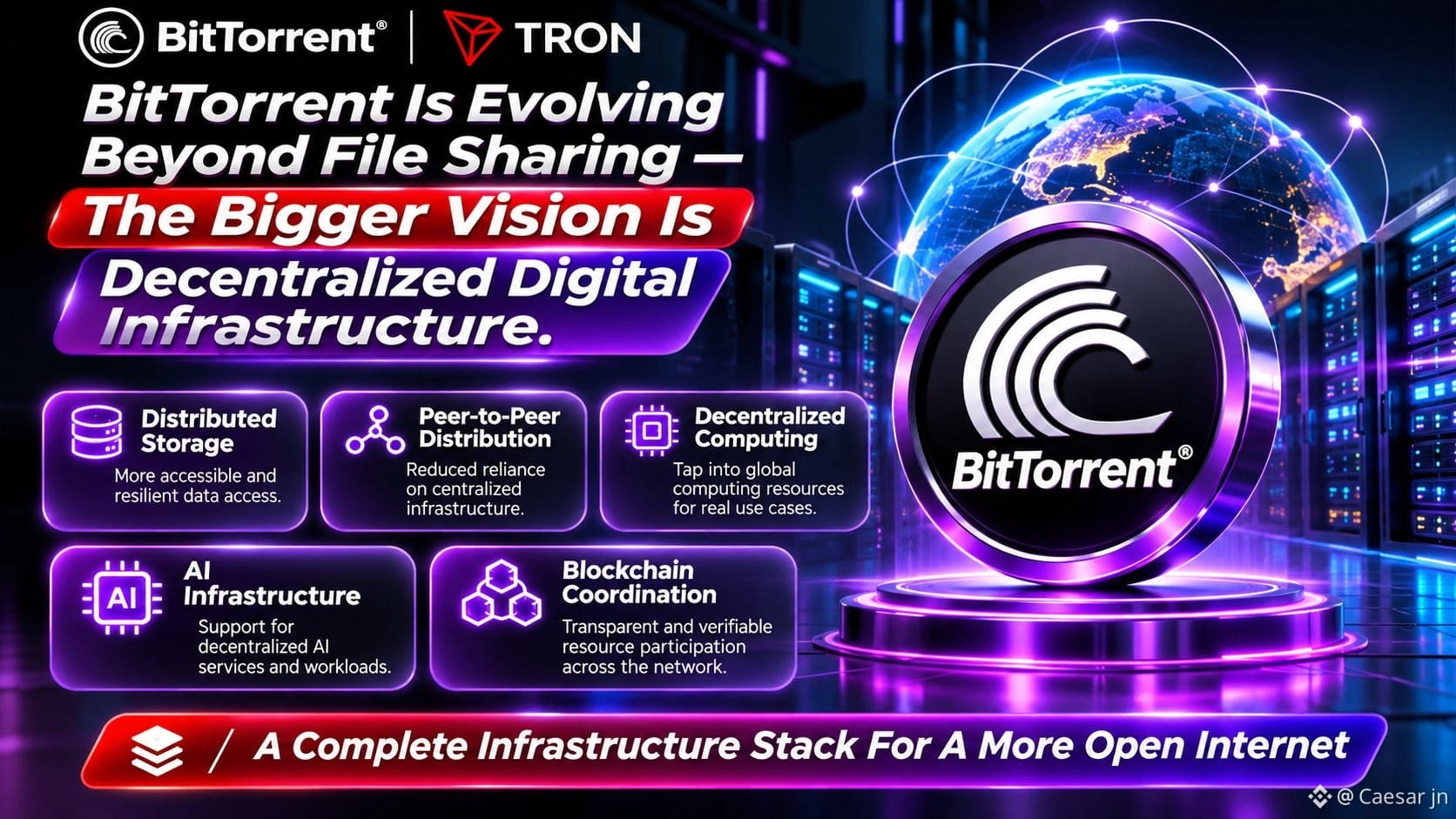
𝐁𝐢𝐭𝐓𝐨𝐫𝐫𝐞𝐧𝐭 𝐈𝐬 𝐄𝐯𝐨𝐥𝐯𝐢𝐧𝐠 𝐁𝐞𝐲𝐨𝐧𝐝 𝐅𝐢𝐥𝐞 𝐒𝐡𝐚𝐫𝐢𝐧𝐠 — 𝐓𝐡𝐞 𝐁𝐢𝐠𝐠𝐞𝐫 𝐕𝐢𝐬𝐢𝐨𝐧 𝐈𝐬 𝐃𝐞𝐜𝐞𝐧𝐭𝐫𝐚𝐥𝐢𝐳𝐞𝐝 𝐃𝐢𝐠𝐢𝐭𝐚𝐥 𝐈𝐧𝐟𝐫𝐚𝐬𝐭𝐫𝐮𝐜𝐭𝐮𝐫𝐞.
The next chapter of the internet will not be defined by content alone. It will also depend on the infrastructure that makes content, data, applications, and computing resources accessible across a globally connected network.
This is where BitTorrent's broader evolution becomes interesting.
For years, BitTorrent established itself as a recognizable name in peer-to-peer file distribution. Its underlying principle was simple but powerful: enable participants to share resources directly rather than depend entirely on centralized distribution systems.
Today, that foundational concept has much broader relevance.
Consider the infrastructure opportunities emerging around decentralized technology:
🔹 Distributed Storage: Making digital information more accessible through decentralized resource-sharing networks.
🔹 Peer-to-Peer Distribution: Reducing dependence on centralized delivery infrastructure.
🔹 Decentralized Computing: Connecting available computing resources to support increasingly demanding applications.
🔹 AI Infrastructure: Creating new possibilities for distributed computational workloads and decentralized AI services.
🔹 Blockchain Coordination: Introducing transparent, verifiable mechanisms for coordinating digital resources and network participation.
The important distinction is that these components should not be viewed as isolated products. Their real potential becomes clearer when they operate as complementary layers of a broader infrastructure ecosystem.
BitTorrent's challenge and opportunity are therefore bigger than maintaining its legacy.
@Justin Sun孙宇晨 @BitTorrent_Official
#TRONEcoStar