$BTC: A Useful Cross-Check: Attention Is Easy. Trust Takes More Work: For a Clearer Watchlist
When a chart shows hourly direction up while volume sits above baseline, the immediate reaction is often to treat the signal as confirmation. That reaction, however, can mask the underlying uncertainty that any single metric carries. A fair dilemma emerges: should a creator highlight the conditions that could invalidate the view before presenting a target, or risk reinforcing a narrative that may not hold?
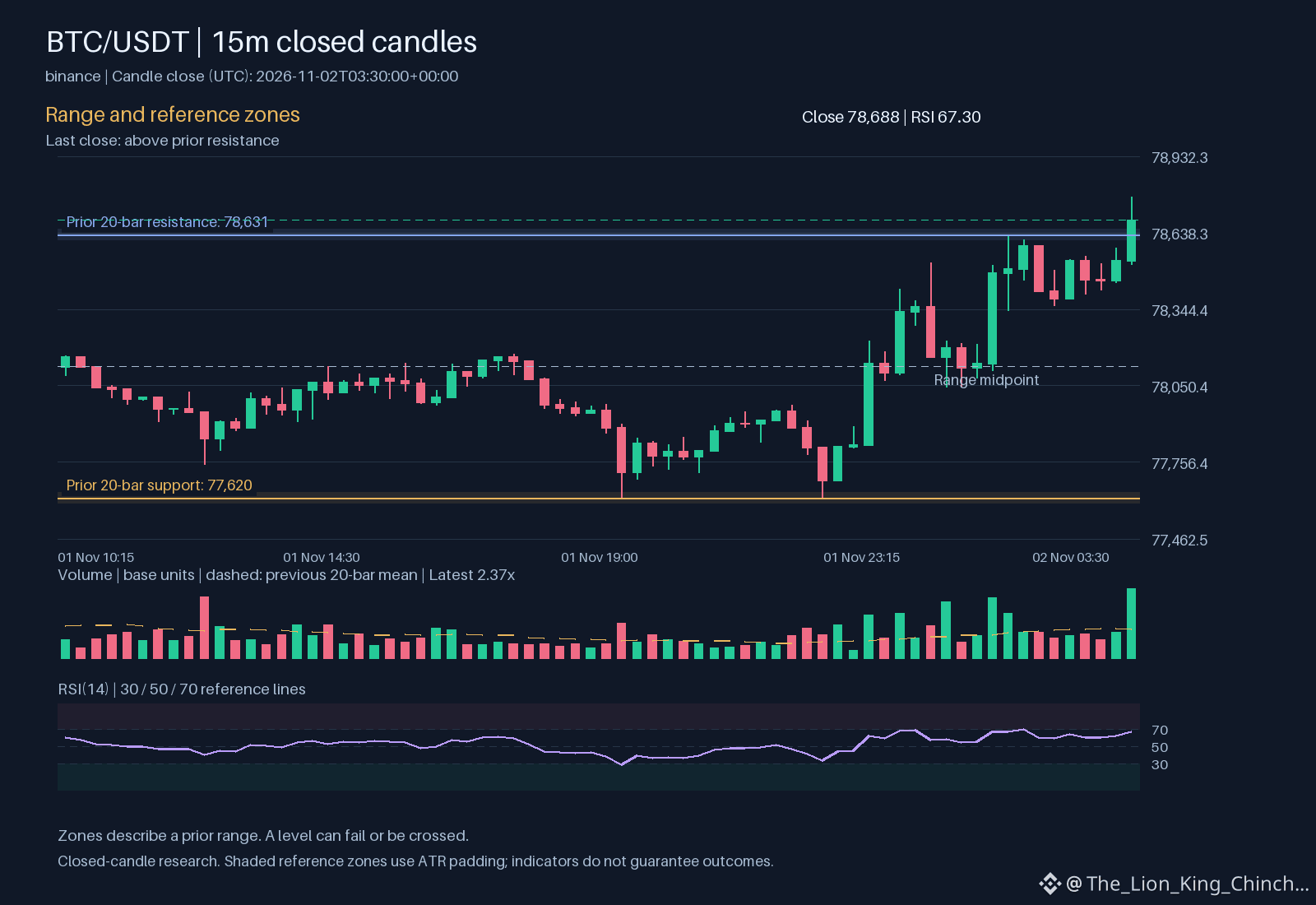
Reasonable readers might disagree because they see the same volume spike as a short‑term flush rather than a sustainable push. The observation that price sits near 78631 and relative volume reads 2.37498 suggests pressure, yet the same data can be interpreted as a temporary imbalance that will dissolve once resting orders are cleared. This duality illustrates how social proof can amplify confidence without addressing the counter‑scenario.
A transparent approach is to frame the analysis as a thought experiment. First, state the observed facts – hourly direction up, volume above baseline, price near 78631 – then explicitly list what could change the outlook: a sudden shift in 78342.6, a drop in 168.946, or a reversal in 155.037 relative to 130.775. By naming these possibilities, creators invite readers to test the hypothesis rather than accept it passively.
To reassess, readers can monitor the next hourly candle for a move that breaches 77620 or for a shift in 67.3004. If either occurs, the original premise loses weight and the target should be reconsidered. 🤔
Should creators consistently outline potential invalidators before sharing a target? The answer lies in fostering critical thinking rather than reinforcing certainty.
Probabilistic market research, not a recommendation or guaranteed return.
Should a creator explain what could invalidate the idea before sharing a target?
#BTC #CryptoCommunity #CryptoLearning