

If you live in South Africa and trade on Binance, SARS expects you to declare the results on your ITR12 like any other income or capital gain. There is no special crypto tax. Normal income tax rules apply, and the question SARS asks is whether your gains are revenue (taxed in full at your marginal rate) or capital (taxed through capital gains tax).
👉 Create a Binance account with code GETREWARD
Below are ten of them, with what SARS has said and what to do instead. This is general information, not tax advice. If your situation is complicated, speak to a registered tax practitioner.
The figures this guide works with
These numbers come from SARS and the 2026 Budget tax guide. Check them again before you file, since amounts change with each Budget.
Tax year: 1 March to the last day of February. The 2027 year of assessment runs from 1 March 2026 to 28 February 2027.
Annual exclusion: R50,000 of net capital gain or loss for individuals in the 2027 year, up from R40,000 for the 2017 to 2026 years.
Inclusion rate: 40% of your net capital gain, after the exclusion, is added to taxable income.
Top marginal rate: 45% on taxable income above R1,878,600, which puts the maximum effective CGT rate for individuals at 18%.
Trading income code: the 2026 Budget FAQ gives 4522 as the ITR12 source code for income from crypto trading.
Mistake 1 thinking the rand withdrawal is the taxable moment
Plenty of people believe nothing happens for tax until money lands in their bank account. That gets it backwards. The tax event is the disposal of the crypto, which happens when you sell BTC for rand or USDT, or swap one coin for another. Moving rand that is already rand from an exchange balance to your bank is not a crypto disposal at all.
So a trader who sold ETH in January, left the proceeds sitting as stablecoins and only withdrew to a bank in May has a disposal in January, in the tax year that ends in February. The withdrawal date does not move the gain into the next year.
Mistake 2 choosing capital treatment because it is cheaper
Capital gains tax is lighter than full income tax, so it is tempting to tick that box for everything. SARS does not let you choose. Whether a gain is revenue or capital is decided by existing case law: your intention when you bought, how often you trade, how long you hold, and whether you run it like a business. The Budget 2026 FAQ puts it in two lines. Frequent or business-like trading is ordinary income at your marginal rate. Long-term investment is capital.
The SARS draft guide on crypto assets, published for comment on 1 July 2026, gives an example of an employee who made 200 disposals across 10 coins in one year and 800 across 30 coins the next, checking the market most evenings. Even though the long-term goal was retirement savings, SARS treats those profits as revenue. Holding one coin for years with a clear investment intention points the other way.
Signs of revenue: many trades, short holding periods, the profit itself is the only return, time spent watching charts daily.
Signs of capital: few disposals, long holding periods, a stated long-term reason for buying, no change in behaviour after the purchase.
Mistake 3 believing small personal amounts are exempt
Under CGT, most personal-use assets are left out, so a car or furniture sold at a gain is ignored. Crypto does not get that treatment. The draft guide says crypto assets are financial instruments and are specifically excluded from the personal-use asset rule. Every disposal counts, even a few hundred rand. The R50,000 annual exclusion is what keeps small gains out of the tax, and it only works if you add your gains and losses up first.

Mistake 4 averaging your purchase prices
Many portfolio trackers show a weighted average cost per coin, and people carry that number straight onto their return. For crypto held on capital account, SARS does not accept it. Units of the same coin count as identical assets, and the base cost has to be worked out with either specific identification or first in, first out (FIFO). The weighted average method is not available because crypto exchanges are not currently recognised exchanges under the Eighth Schedule.
A quick illustration. You buy 0.1 BTC for R100,000 in April and another 0.1 BTC for R140,000 in August, then sell 0.1 BTC in December for R150,000. Under FIFO the April lot goes first, so the capital gain is R50,000. An average cost of R120,000 would show R30,000, which is the figure SARS rejects.
Mistake 5 using the wrong rand rate
Binance shows most values in USDT or US dollars, but your return is in rand. The draft guide explains that when a crypto value is expressed in a foreign currency, that amount has to be translated to rand under section 25D (revenue) or paragraph 43 (capital), generally at the spot rate on the date of the transaction. Using one year-end exchange rate for a whole year of trades, or forgetting to convert at all, gives a number SARS can easily challenge.
What to record: the date and time of each trade, the USDT or dollar value Binance showed, and the USD to ZAR rate on that date.
Where the rate comes from: pick one dated, published USD to ZAR source and use the same one for every trade, so your figures can be checked.
Stablecoin balances: holding USDT is still holding a crypto asset. Swapping it back to BTC or selling it for rand is another disposal to value.
Mistake 6 ignoring swaps between coins
Swapping SOL for ETH, or BTC for USDT, never touches rand, so it feels like nothing happened. SARS treats it as a barter. You have disposed of the first coin, and the amount you received is the market value of the coin you got. That same value becomes the cost of the new coin. Two trades on a busy day can mean two disposals and two new base costs to track.
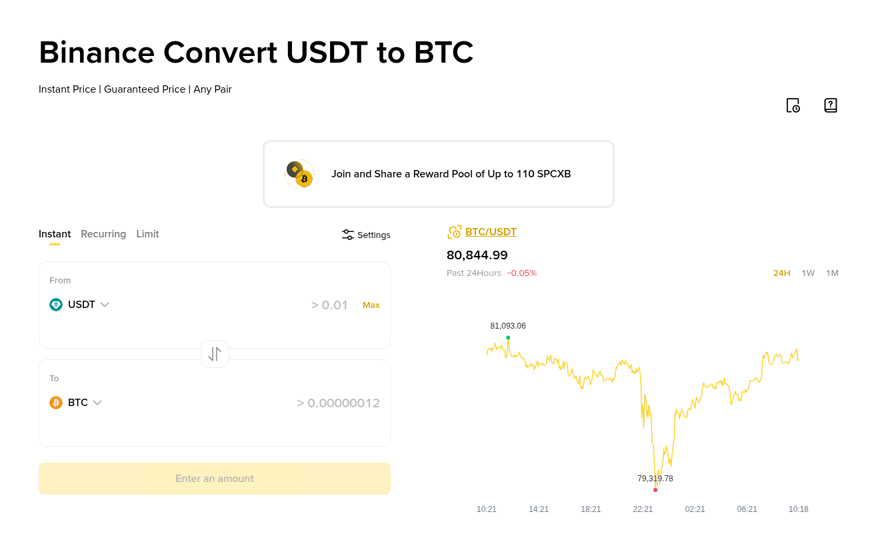
Either way, every swap needs a rand value on the day it happened. For more examples of how one trade turns into a tax line, see our eight worked Binance tax scenarios.
Mistake 7 leaving fees out of the numbers
Trading fees are a real cost, and leaving them out overstates your gain. If you hold on capital account, fees on the purchase form part of base cost and fees on the sale reduce your proceeds. If you are on revenue account, SARS allows expenditure incurred in the production of income, and the draft guide says the cost of acquiring the crypto is generally deductible under section 11(a).
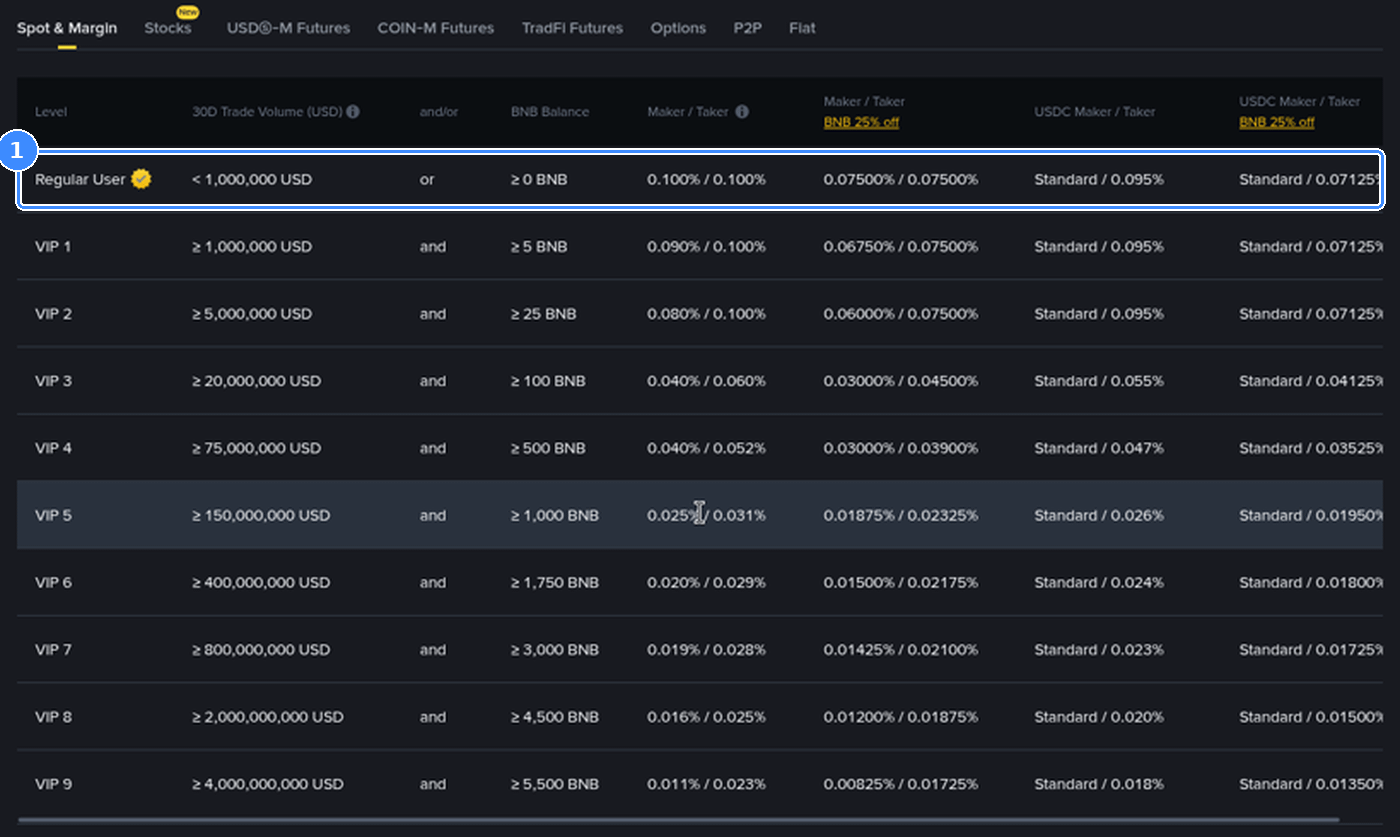
On Binance, the fee on each fill shows in your trade and order history, and the rate you are charged depends on your fee level and whether you settle fees in BNB. A fee charged in BNB can itself be a small disposal of BNB, so very active traders who settle fees that way should keep those entries in their records too.
Mistake 8 treating staking and airdrops as free money
Coins that arrive without you selling anything still have tax consequences. The draft guide says staking rewards follow the same logic as mining: the market value of the reward when you receive it goes into gross income, and that value is the starting point when you later sell. In its example, a validator receives a reward worth R50,000 on the last day of year one, which is income in that year, and a sale at R65,000 the following year adds R15,000. SARS also says staking arrangements differ, so the exact outcome depends on the facts of each one.
Airdrops depend on the facts. SARS distinguishes between an airdrop you did nothing to get, which in its example is not income and carries a cost of zero, and one you worked for by doing promotional tasks, which is revenue at market value. Either way you need a record of what arrived, when, and what it was worth.
Mistake 9 selling at a loss and buying straight back
Selling a coin at a loss near year end to cut your gain, then buying it back a few days later, is a well-known move elsewhere. In South Africa, paragraph 42 of the Eighth Schedule blocks it for financial instruments held on capital account. The draft guide confirms crypto falls under it: if you sell at a capital loss and you or a connected person acquire the same coin within 45 days before or after the sale, the loss is not allowed at that point. It is added to the cost of the replacement coin instead.
Mistake 10 assuming SARS cannot see your trades
SARS already has wide powers to request data from third parties. On top of that, the Crypto-Asset Reporting Framework (CARF) took effect in South Africa on 1 March 2026. Crypto-asset service providers now collect user details and transaction data, the first reporting period runs to 28 February 2027, and the first returns are due to SARS by 31 May 2027. Data from foreign providers is set to flow between countries from September 2027. Individuals do not report under CARF themselves, but you still declare everything on your own return.
If you left crypto off past returns, the Voluntary Disclosure Programme is the route SARS points to. It is applied for on eFiling and only works before SARS opens an audit or inquiry into you. SARS describes 100% relief from understatement penalties where there was no intent to evade, while interest stays due.
Records that make the return easy
SARS expects records of every crypto transaction, kept for at least five years from the date you submit the return. That applies even if a threshold such as the annual exclusion means you end up owing nothing. On Binance, the Wallet History and the export options are the starting point. For a step-by-step method to download and check those files, follow our statement checklist from download to final check.
Trades: date, pair, side, amount, price and fee for every fill.
Swaps: Convert history with the rate you accepted, since that is the market value of each barter.
Deposits and withdrawals: to show which coins came in from outside and which were moved between your own wallets.
Rewards: staking rewards and airdrop credits with their rand value at the date received.
Rand rates: the USD to ZAR rate you applied for each date, from one consistent source.
Wallet transfers between accounts in your own name are not automatically tax free or taxable. The draft guide says the answer depends on the specific facts, such as the asset, the platform and how the transfer was done, so keep the transaction IDs.
A worked number from start to finish
Illustration only: Thandi holds BTC and ETH as long-term investments. In the 2027 year she has capital gains of R95,000 and a capital loss of R15,000, both worked out with FIFO, rand rates on each date and fees included.
Net capital gain: R95,000 minus R15,000 is R80,000.
After the annual exclusion: R80,000 minus R50,000 leaves R30,000.
Taxable capital gain: 40% of R30,000 is R12,000, added to her other taxable income.
Tax on it: if her salary puts her in the 31% bracket, the extra tax is about R3,720.
If Thandi instead traded daily and SARS saw her as a trader, the full R80,000 profit would be income at her marginal rate, with no exclusion and no 40% inclusion. That gap is why the revenue or capital decision in mistake 2 matters more than anything else on this list.
Deadlines and provisional tax
For the 2026 year of assessment, returns for non-provisional individuals were due by 23 October 2026. Provisional taxpayers have until 22 January 2027. If your crypto income is not taxed through PAYE, you may count as a provisional taxpayer, which means estimating your income and settling tax in at least two instalments during the year. The draft guide says those estimates must take crypto transactions into account.
Regulation and risk
The Financial Sector Conduct Authority declared crypto assets a financial product under the FAIS Act on 19 October 2022, so firms offering crypto financial services in South Africa need FSCA authorisation. Before you use any platform, check its status on the FSCA register yourself. Crypto prices can fall sharply, and nothing in this guide is a forecast. Tax law and SARS guidance can change, and the crypto guide quoted here is still a draft. This is not tax advice.
Setting up an account
If you are opening an account for the first time, check that sign-up is open where you live, use code GETREWARD, and complete identity verification in the same name that appears on your tax return so your records line up. New users can also look at the current Binance welcome bonus event to see which tasks are open. Disclosure: GETREWARD is my own sign-up code.
FAQ
Do I owe tax if I never withdraw rand to my bank?
Possibly yes. The disposal of the crypto is the event, whether you sell for rand, sell for a stablecoin or swap for another coin. Withdrawing rand you already hold is not a disposal.
Is the R50,000 exclusion available to traders?
No. The annual exclusion is part of capital gains tax. If SARS treats your activity as trading, the profit is ordinary income and the exclusion does not apply.
Where does crypto go on the ITR12?
Trading income uses source code 4522 according to the SARS Budget 2026 FAQ. Capital gains and losses go in the capital gains section of the return.
What if I forgot to declare crypto in earlier years?
Look at the Voluntary Disclosure Programme on eFiling before SARS contacts you. Once SARS has started an audit or inquiry, the programme is no longer open to you for that matter.