
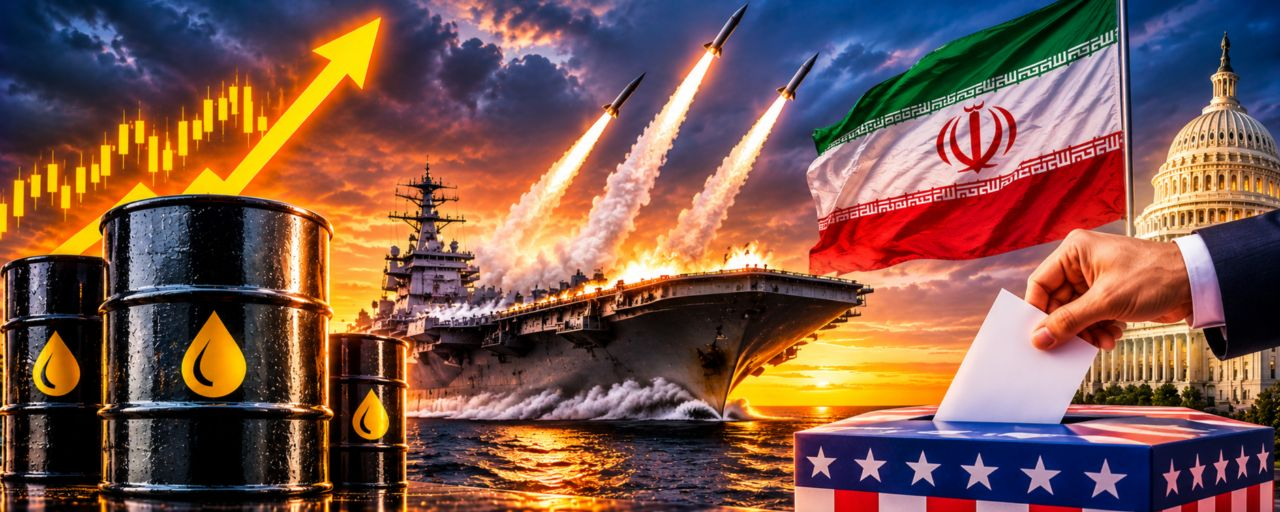

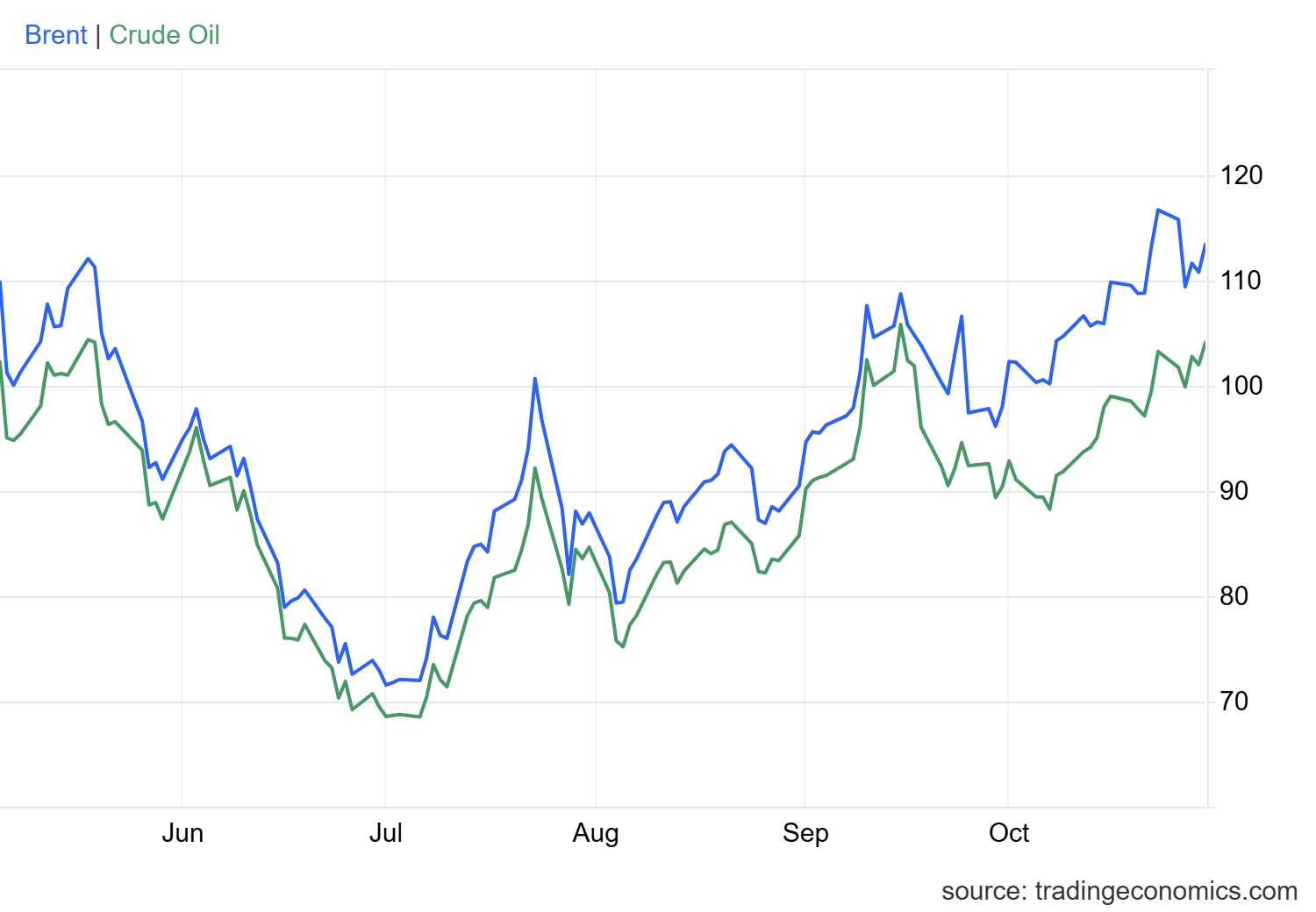
Oil ended a choppy Friday higher and wrapped up October with yet another monthly gain, as traders balanced the Iran conflict against emergency barrels leaving the US Strategic Petroleum Reserve. West Texas Intermediate rose 2.1% to settle at $104.12. Brent's more active January contract added 2.4% to $113.43, while the expiring December contract finished at $117.64 after touching $118.
Both marked the highest settlements since the end of April. Across the month, WTI gained about 15% and Brent 13.6%.
Diplomacy took some heat out of the rally, though not much. A Qatari delegation led by a senior adviser to Prime Minister Mohammed bin Abdulrahman Al Thani reached Tehran on Friday, Iranian state media said, on its second visit in under a week. Doha is working to head off a return to open fighting between Washington and Tehran.
The urgency has a date attached: Tuesday's US midterm elections. Markets fear President Donald Trump could order fresh strikes once the votes are counted, and he did little to calm that on Friday. Speaking to a Kansas City radio station, he said the war would end "one way or the other, it's going to end very soon." A day earlier, Adm. Brad Cooper, who commands US Central Command, travelled to brief the president on military options in person, a step he takes rarely. The Wall Street Journal reported that Defence Secretary Pete Hegseth and Joint Chiefs Chairman Gen. Dan Caine were also in the room as Washington weighs a return to major combat operations. The Pentagon and CENTCOM declined to comment. The staging alone fed speculation that the administration is edging towards renewed action.
Gulf capitals are hearing the same message in private. US officials have told Arab Gulf states to prepare for a short, intense campaign once the elections are over, the Journal reported. Qatar has its own reasons to want the war finished: like other Gulf hosts of US bases, it absorbed some of Iran's heaviest retaliation for American strikes.
Regional powers are working the problem from several angles. On Monday, Saudi Defence Minister Prince Khalid bin Salman, Turkish intelligence chief Ibrahim Kalin and Pakistani army chief Field Marshal Asim Munir met Mohsen Rezaee, who heads Iran's Supreme National Security Council, in Tehran. Their three countries are bound by the Mecca Joint Defence Agreement, signed in August. Qatari mediators had reached the Iranian capital the day before.
Trump confirmed that talks with Tehran continue and said Iran is keen to keep them going. Vice President JD Vance has also written to Rezaee in an effort to revive negotiations, according to the Journal. Iran received the letter but has not replied. Tasnim, the semi-official news agency, added that Tehran wants its conditions met first and that "any position that contradicts this framework is unacceptable."
Tehran's terms have not moved. On Tuesday, Supreme Leader Mojtaba Khamenei restated that Iran's conditions must be met before the war can end. Those include an end to the US naval blockade and sanctions relief ahead of any formal negotiations.
Traders, though, fixated on what they could verify, and that was the shipping attacks, which have not eased. UKMTO, the British maritime security agency, logged a string of incidents around the Strait of Hormuz. One tanker was hit by explosive devices attached from a small boat, which maritime sources called the first known successful limpet-mine strike in the waterway since the war began.
A separate vessel took a hit from an unidentified projectile about 40 nautical miles south of Iran's Lavan Island, starting a fire. The crew was safe, and no environmental impact was reported. Another delayed report described a crude tanker struck by an unknown projectile as it completed an outbound transit of the strait. By the agency's own numbering, the tally is closing in on 4 attacks just this week and 190 incidents since the incident began.
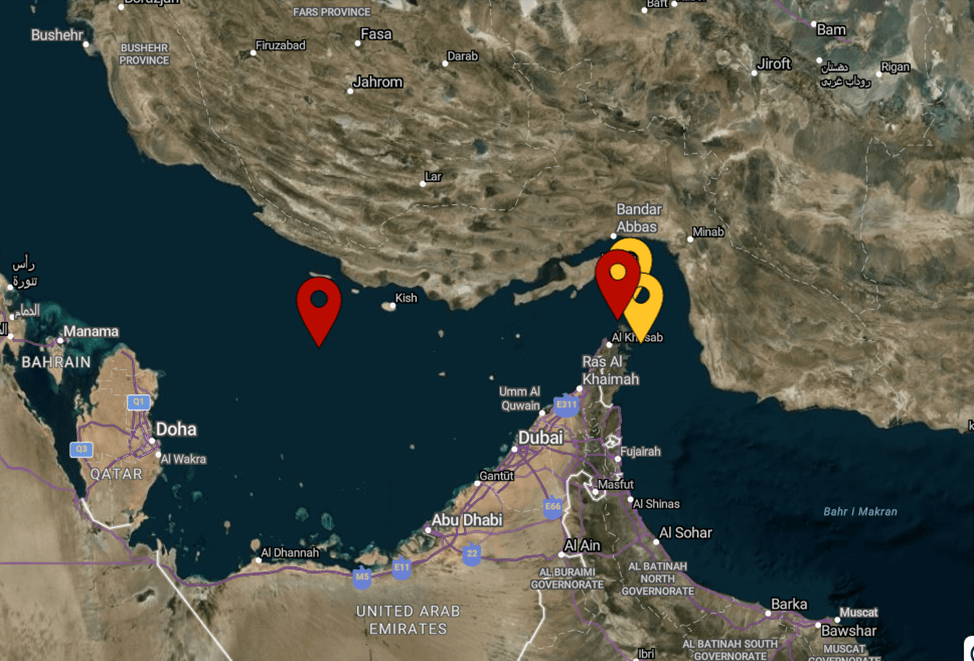
Separately, the Islamic Revolutionary Guard Corps claimed a supertanker carrying more than two million barrels struck a sea mine on a route Tehran calls unauthorised. Independent confirmation of the Guards' mine claims has been thin. Verified or not, each claim nudges the risk premium higher.
Ukraine added another strand. Ukrainian drones hit Rosneft's Novokuibyshevsk refinery in Russia's Samara region overnight, the first reported refinery attack in about two weeks and a direct break from Washington's repeated calls for Kyiv to stop. The pause had run since mid-October. Kyiv's decision to end its restraint came as Russian bombardment of Ukrainian cities intensified.
Even peace may not bring the old floor back. Saxo Bank expects crude to trade between $70 and $90 a barrel after the conflict ends, against $60 to $70 before it began.
Sunday brings a meeting of seven OPEC+ producers, who have held output flat for October and November. Tuesday brings the midterms. In between sits a market trading the calendar as much as the barrels, and the question on every desk is whether the week after the vote delivers a deal or a strike.