
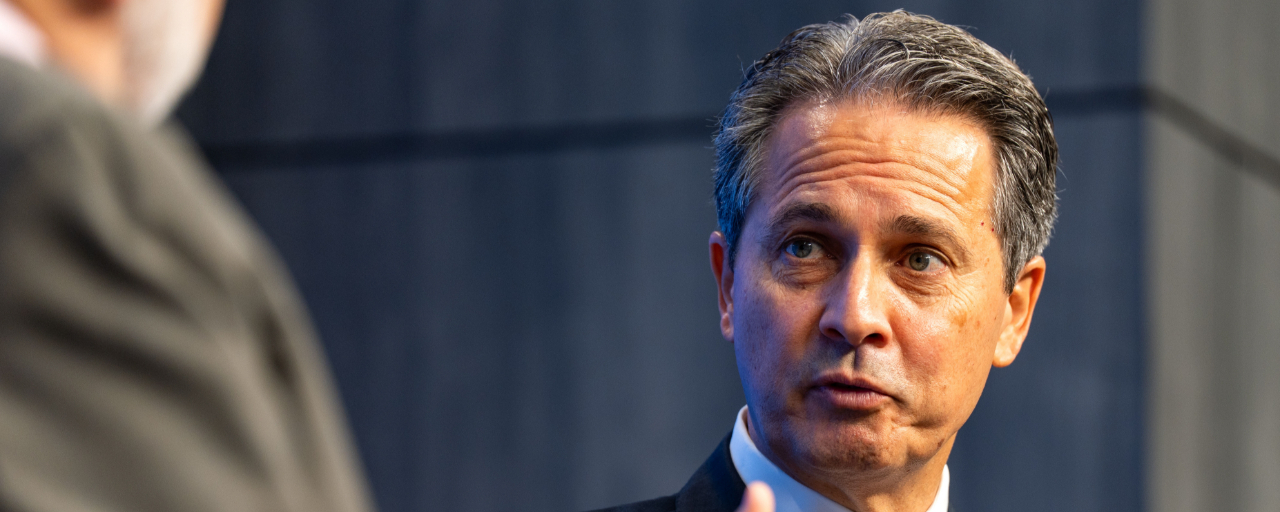

Federal Reserve Bank of St. Louis President Alberto Musalem, who is not a voting member of the Federal Open Market Committee (FOMC) in 2026, judged that additional firming of monetary policy will be necessary, and soon.
In remarks on the US economy and monetary policy at the Shadow Open Market Committee on Oct. 30, he argued that moving sooner in smaller steps, while inflation expectations are anchored, has a better chance of succeeding without hurting the labor market or growth.
Inflation drives his case. He called it too high, exceeding the FOMC’s 2% target, and said the risks skew toward persistent above-target inflation. He laid out two scenarios. In the more likely one, inflation stays too high unless the Fed raises rates further.
In the less likely but plausible one, falling energy prices, lower shipping costs, a sharp pullback in AI and data-center spending, or a sudden tightening in financial conditions make more hikes unnecessary.
Turning to the economy, he said Q3 data confirm its underlying strength, with persistent demand forces keeping growth at or above potential despite a series of negative supply shocks, and the labor market stable and balanced around full employment.
Financial conditions have tightened only slightly and remain accommodative, he said, while elevated long-term bond yields reflect expectations of higher policy rates. His bottom line: the best move now is restoring price stability, and he committed to working expeditiously with his FOMC colleagues until the job is finished.
Key Quotes:
Monetary Policy
I judge that additional firming of monetary policy will be necessary, and soon
Incremental adjustments made earlier are usually less disruptive than larger and abrupt actions taken later
Moving sooner in smaller steps while inflation expectations are anchored has a better chance of succeeding without adverse impact on the labor market or economic growth
Current monetary policy remains accommodative
Inflation
Inflation is too high, exceeding the FOMC’s 2% target
I perceive inflation risks are skewed toward persistent above-target inflation
Inflation expectations remain steady
Focused on preventing second-round inflation impact like in the service sector
Inflation Scenarios
Scenario 1, which he says is more likely: inflation stays too high unless the Fed raises rates further
Scenario 2, which he says is less likely but plausible: no more hikes needed. Under this scenario, the economy sees some combination of falling energy prices and lower shipping costs; AI and data-center spending pulls back sharply; or financial conditions tighten suddenly, leading to slower consumer spending driven by wealth effects
Growth & Economy
Q3 data confirm the underlying strength of the economy
Persistent demand forces have kept the US economy growing at or above potential despite a series of negative supply shocks
Labor Market
The labor market is stable and balanced around full employment
Financial Conditions
Financial conditions are tighter, but only slightly
Financial conditions continue to be accommodative
Elevated long-term bond yields fueled by anticipated higher policy rates
Fed Mandate
Best move now is restoring price stability
I am committed to achieving price stability and maximum employment for the American people and to working expeditiously with my FOMC colleagues until the job is finished
Forward Guidance
Communications are not necessarily the same as forward guidance