


One mistake I always try to avoid is confusing a temporary bounce with a real recovery. Watching green candles after a sharp decline can create powerful FOMO, but buying without confirmation can be expensive.
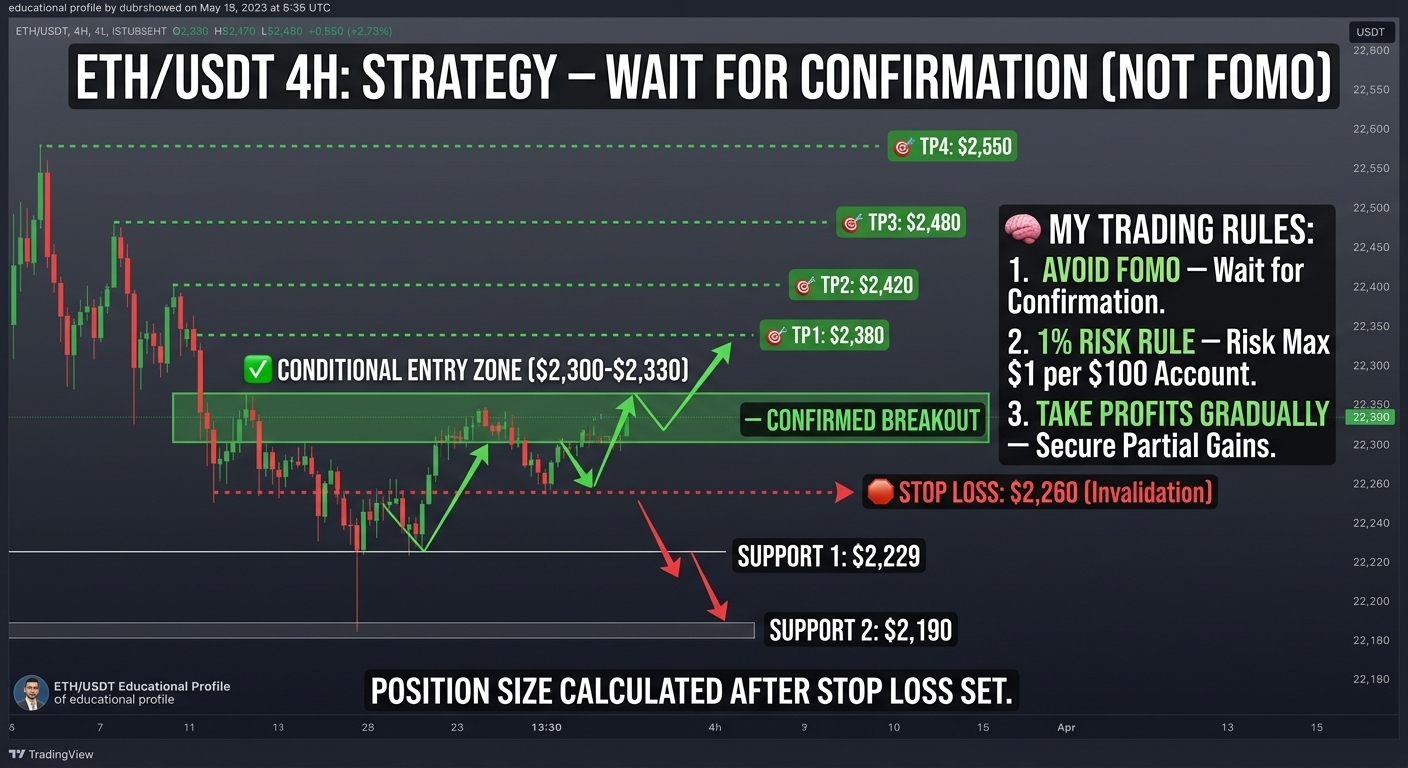
Ethereum has recently traded around $2,220–$2,250. Its short-term trend remains weak, with support around $2,229 and resistance near $2,281. Although a recovery is possible, buyers haven't clearly regained control.
🟢 #ETH/USDT Conditional LONG Setup
- Entry: $2,300–$2,330
- Stop Loss: $2,260
- TP1: $2,380
- TP2: $2,420
- TP3: $2,480
- TP4: $2,550
These are proposed trading levels, not confirmed signals.
🐂 Bullish Scenario
If $ETH reclaims $2,300 and successfully retests the breakout zone, buyers could target higher resistance levels.
I would wait for a confirmed candle close and supporting volume before considering an entry.
🐻 Bearish Scenario
If $ETH fails to recover and breaks below $2,229, selling pressure could increase toward $2,190 and $2,154.
A weak bounce isn't enough to justify risking my capital.
🧠 My 3 Trading Rules
1. Avoid FOMO. I don't chase a breakout without checking whether the entry still offers a reasonable reward compared with the risk.
2. Respect the 1% rule. On a $100 account, I plan to risk no more than $1 per trade, allowing for fees and possible slippage.
3. Take profits gradually. Partial exits help me protect gains instead of expecting every target to be reached.
💰 My Current Rule
I choose my stop loss before calculating position size. If ETH fails to confirm the breakout, I skip the trade.

Protecting capital matters more than catching every move.
💬 Community Question: Will $ETH recover toward $2,500, or will sellers push it below $2,200 first?
If this lesson saved you from one bad trade, you can support my education content with a Tip. It helps me share more free lessons daily.