

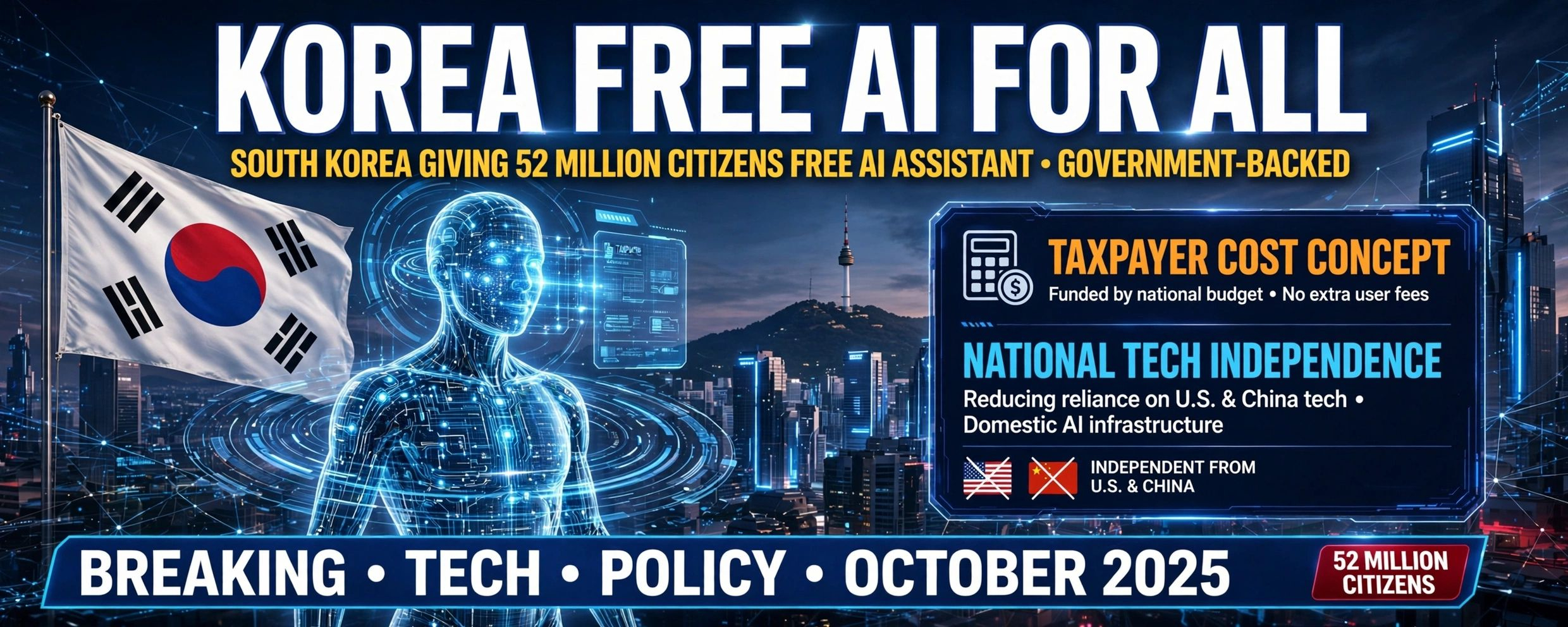

Three of the country's biggest tech companies will run it, with the official launch planned before the end of this year.
The goal goes beyond convenience. The rules require a big share of the answers to come from Korean-built AI models, so the country depends less on American and Chinese tech.
I can see why that's appealing. AI is quickly becoming as basic to work and school as the internet, and South Korea doesn't want a gap between the people who can pay for it and the people who can't.
But "free" always comes with a bill. The government is lending the companies computer chips now and has promised to help cover operating costs starting in 2027, without saying how much.
That means taxpayers will end up footing it, and a national AI assistant also means a lot of personal questions flowing through a system the government helped build.
I'd want to see who keeps that data, and for how long, before I called it a win.
The U.S. has left AI access entirely to the private market. South Korea went the opposite direction.
Both choices have a price, and every American will be paying one of them either way.