


Yes, you can buy tokenized stocks on Binance when the U.S. stock market is closed, including weekends, through bStocks. Available to eligible users in permitted jurisdictions, bStocks trade 24/7 and provide exposure to underlying U.S. stocks rather than direct share ownership.
It's Saturday afternoon in Lebanon. The New York Stock Exchange is closed, Wall Street traders have logged off, and you're scrolling through your phone when you notice that NVIDIA has been making headlines. You want exposure to the stock, but waiting until Monday feels like an eternity in crypto time. Do you really have to wait for the opening bell?
Not necessarily. Traditional stock exchanges operate on scheduled trading hours, but Binance's bStocks bring tokenized securities into a market that operates around the clock. Eligible users can buy and sell available bStocks on Binance Spot, including during weekends and holidays.
There's an important distinction, though: 24/7 trading doesn't mean you're buying ordinary company shares or that the stock market itself has become a weekend market. bStocks are tokenized securities designed to provide economic exposure to specified underlying stocks or other eligible securities. They have their own trading prices, product terms, and risks.
For beginners across Lebanon and the wider MENA region, understanding that difference is the key to knowing what you're buying, how it works, and what to check before placing an order.
How Does Binance bStocks Enable 24/7 Trading?
Traditional U.S. stock trading follows the schedules of stock exchanges and their available trading sessions. When the regular market closes, ordinary stock trading doesn't simply continue as usual throughout Saturday and Sunday. Crypto markets, on the other hand, generally operate 24 hours a day, seven days a week.
Binance bStocks use tokenization to bring exposure to selected underlying securities into the crypto trading environment. Issued as digital tokens on BNB Smart Chain, bStocks are designed to track the economic performance of specified underlying assets, with the corresponding securities or eligible assets held through the custody arrangements described in their offering documents.
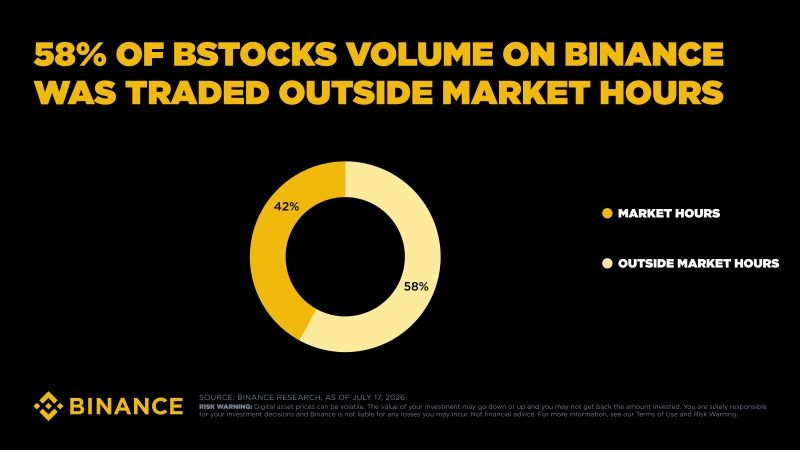
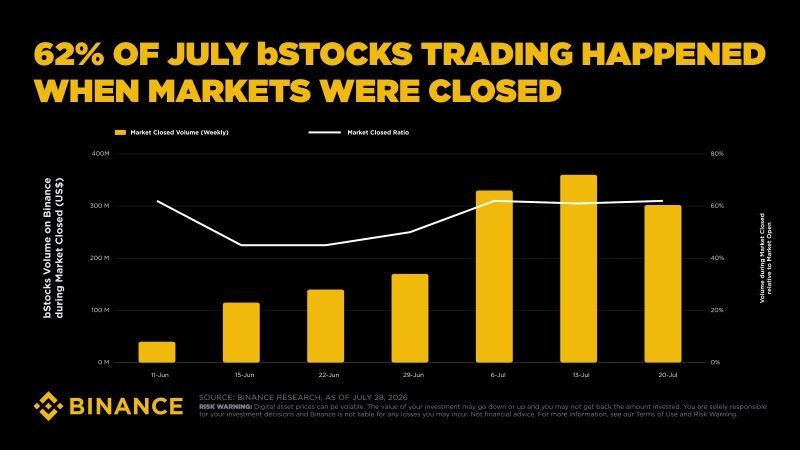
The practical difference is that bStocks can be traded on Binance Spot around the clock, including when the underlying U.S. stock market is closed. You can place a trade on a Sunday without waiting for the next regular U.S. market session, provided the asset is available and you're eligible to use the product.
Imagine you want exposure to NVIDIA. Instead of waiting for the U.S. market to reopen, you could look for the corresponding NVIDIA bStock trading pair on Binance and check its current price and available liquidity. If you decide to buy, you can place an order under the trading conditions available at that moment.
But there's a catch, and it's worth paying attention to: the bStock price may differ from the underlying stock's last traded price, especially outside traditional market hours. When the U.S. market is closed, pricing on Binance can respond to supply and demand within the bStocks market, available liquidity, market-maker activity, and other factors. This can cause a bStock to trade at a premium or discount to its underlying security.
In other words, the company isn't holding a secret weekend trading session just for crypto users. You're trading a tokenized security whose price can move while the underlying exchange is closed. That flexibility can be useful, but it also means you need to pay attention to spreads, order-book depth, and the difference between the token's current price and the underlying stock's most recent market price.
Availability is another consideration. bStocks are restricted to eligible users in permitted jurisdictions, and access depends on applicable rules and account verification. Users in Lebanon should check whether the product is actually available to their verified account before planning a trade.
How Do You Buy bStocks on Binance?
If bStocks are available to your verified Binance account, the process is similar to buying a crypto asset on Spot. The main difference is that you're buying a tokenized security linked to an underlying stock, so you need to understand the product before confirming the order.
1. Check your eligibility and open Binance
Log in to your verified account and check whether bStocks are available in your region. If the product doesn't appear, don't assume you can access it by changing settings or using another person's account.
2. Find the bStock you want to buy
Open Spot and look for the available bStocks or search for the relevant trading pair. For example, Binance lists NVIDIA's tokenized security under the ticker NVDAB, with available trading pairs depending on the current market.
3. Choose your amount and review the order
Select the available trading pair, enter the amount you want to spend, and review the quoted price, spread, fees, and order details. Make sure you understand the token you're purchasing rather than assuming you're buying an ordinary share.
4. Confirm and monitor your position
If the order terms make sense, confirm the trade and check your resulting balance. You can then monitor the bStock through your Binance account and review its price, which may move independently of the underlying stock's last closing price when traditional markets are shut.
Binance also documents other ways to obtain bStocks, including buying an eligible underlying stock and enabling tokenization for the order, or using the supported conversion feature. The options available depend on your eligibility, the asset, and the product terms.
For beginners, the direct Spot route is usually the easiest concept to understand: find the token, check the market, review the order, and confirm only if you're comfortable with the terms.
What Should You Check Before Trading bStocks Over the Weekend?
The ability to trade on a Sunday doesn't mean Sunday is automatically a good time to buy. Before placing an order, check a few things that can make a meaningful difference to your experience.
First, compare the bStock's price with the underlying stock's last available market price. If NVIDIA closed at one price on Friday but its bStock trades at a premium or discount on Saturday, understand the difference before buying. Outside traditional market hours, the token's price can be influenced by its own order book and available liquidity rather than live trading in the underlying shares.
Second, check liquidity and the bid-ask spread. The bid is the price buyers are offering, while the ask is the price sellers want. A wide gap between them can make entering or exiting a position more expensive. If you're buying a small amount, a market order may be convenient, but it can execute at a less favorable price than expected when liquidity is thin. A limit order can help you specify the price you're willing to accept, although execution isn't guaranteed.
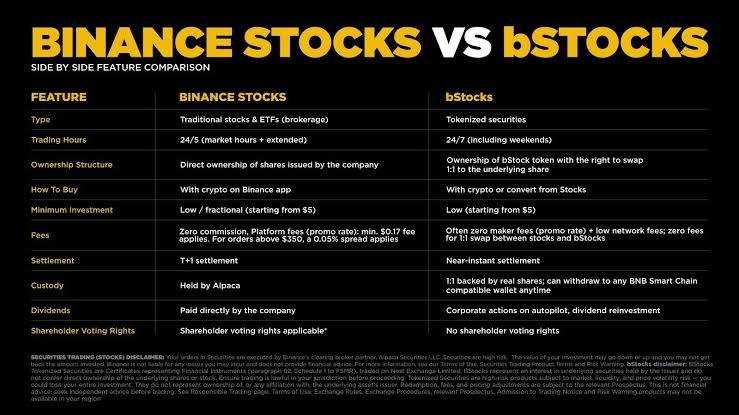
Third, understand what you actually own. bStocks do not give you direct shareholder status or the ordinary voting rights attached to owning the underlying shares. Their treatment of dividends and corporate actions also differs from direct share ownership. Under the published bStocks structure, dividends are generally reflected through a reinvestment mechanism rather than paid directly to holders as cash, subject to the applicable product terms.
Fourth, check fees, eligibility, and product restrictions. Review the applicable trading fees and terms, and confirm that bStocks are available in your jurisdiction. If you intend to withdraw tokens to an external wallet, check network compatibility and any withdrawal charges or restrictions before moving funds.
Finally, remember that 24/7 access cuts both ways. You can respond to new information on a weekend, but you can also trade during periods of uncertainty, thinner liquidity, or sharp price movements. Just because a market is open doesn't mean you need to make a move.
For example, suppose a major technology company announces unexpected news on Saturday. Its bStock could react before the U.S. market reopens. That may give you an opportunity to trade earlier, but the price could also overshoot, spreads could widen, or the token's price could move differently from the underlying stock's next opening price. Flexibility is useful, but it doesn't remove risk.
Frequently Asked Questions
Can I buy stocks when the U.S. market is closed? Yes, eligible users can trade tokenized securities called bStocks on Binance Spot when the U.S. stock market is closed. These tokens provide economic exposure to specified underlying securities, but they are not the same as directly owning ordinary shares. Their prices can also differ from the underlying stock's last traded price outside regular market hours.
Can I trade bStocks on Saturday and Sunday? Yes. Binance bStocks are available for trading 24 hours a day, seven days a week, including weekends and holidays, subject to product availability, eligibility, and any applicable restrictions. However, liquidity and pricing conditions may differ when the underlying U.S. stock market is closed.
What is the difference between Binance Stocks and bStocks? The key difference is the type of asset and ownership rights. Binance Stocks refers to the platform's stock-trading service, where eligible users can access underlying securities through the applicable stock account and trading arrangements. bStocks are tokenized securities designed to provide economic exposure to specified underlying assets and can be traded on Binance Spot around the clock.
Holding a bStock does not make you a direct shareholder of the underlying company and does not provide direct shareholder voting rights. The products also differ in how dividends and corporate actions are handled. Check the current product terms before deciding which structure suits your needs.
Can I buy bStocks on Binance from Lebanon? Availability depends on your verified region, eligibility, and the applicable legal restrictions. Binance limits bStocks to eligible users in permitted jurisdictions, so users in Lebanon should check their account and the official product terms to confirm access rather than assume that global availability means local access.
Do bStocks prices move when the U.S. stock market is closed? Yes. bStocks can trade based on supply and demand on Binance even when the underlying stock exchange is closed. Their prices may differ from the underlying stock's last closing price because of liquidity, market-maker activity, spreads, and other factors. This means you should review the current price and trading conditions rather than assume the token will match Friday's closing price exactly.
Final Verdict: Do You Have to Wait Until Monday to Buy Stocks?
Not necessarily. Binance bStocks give eligible users access to tokenized securities that can be traded around the clock, including on weekends and holidays. That means you can seek exposure to selected U.S. stocks without waiting for the next regular market session.
But remember the distinction: you're trading a tokenized security, not directly buying an ordinary share of the company.Prices may diverge from the underlying stock, liquidity can change outside market hours, and availability depends on your jurisdiction and eligibility.
For traders in Lebanon and across MENA, the first step is to check whether bStocks are available to your verified account. If they are, compare prices and spreads, understand the product's ownership rights and terms, and consider the risks before placing an order.
Wall Street may close for the weekend. Your research shouldn't.
This article is for educational purposes only and is not investment or legal advice. bStocks availability, product terms, and fees may change.