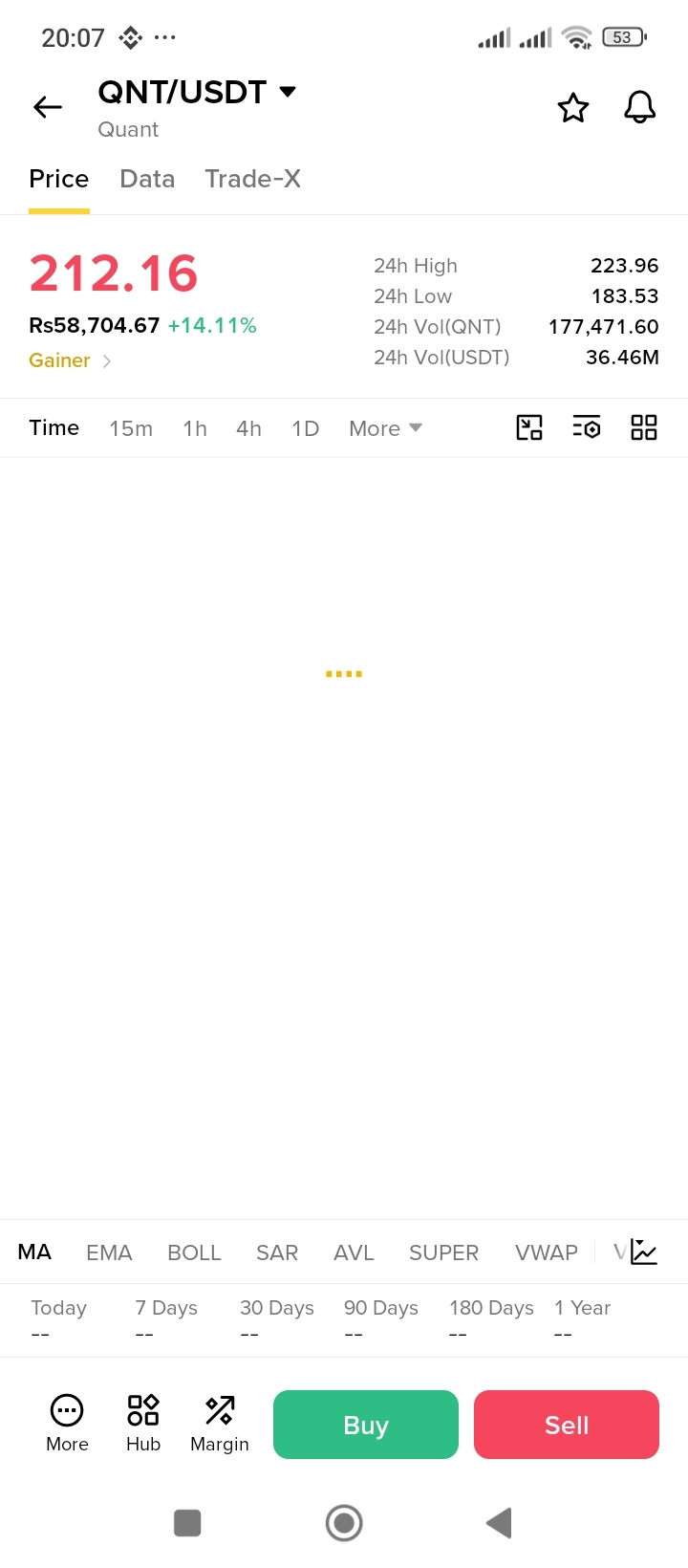
Here is a concise, trader-focused tear sheet for Quant (QNT) breaking down price metrics, technical pivot points, and practical execution strategies.
1. Market Overview & Snapshot
Current Trading Price: ~$185.00 – $193.00 USD
Market Cap: ~$2.2 Billion (Ranked ~Top 40–50 crypto assets)
Circulating Supply / Max Supply: 12.07M / 14.88M QNT (~81% circulating)
Primary Narrative & Catalysts: Enterprise interoperability (Overledger OS). institutional demand driven by bank adoption pilots (e.g., UK GBD Project and US clearing house settlement tests).
2. Key Tearing Points (Technical Levels)
Support Levels (Invalidation & Entry Bands)
Immediate Support ($180 – $182): Recent pull-back base and short-term 4H structural demand zone.
Major Support ($150 – $158): The macro demand zone. Losing this flips the medium-term bias from bullish-consolidation to bearish.
Macro Baseline ($60 – $67): Historical long-term accumulation floor.
Resistance & Target Levels
Immediate Pivot / Resistance ($225 – $230): Trendline resistance on lower timeframes. Breaking above re-establishes bullish momentum.
Major Target 1 ($270 – $290): Order block level from recent consolidation ranges.
Major Target 2 ($350 – $375): Recent local high sweep zone.
All-Time High ($428): Major psychological overhead level
3. Direct Trading Ideas & Tips for Traders
The Retest & Breakout Setup (Swing Long)
Entry: Look for a 4-hour candle close above $230.00 on expanding volume, or bid near the $180.00–$182.00 support retest with tight risk.
Stop-Loss (SL): Below $174.00 for tight setups, or below $148.00 for macro swings.
Take-Profit (TP): Scale out at $270, $350, and leave a runner for $420+.
Range / Grid Strategy
QNT frequently experiences sudden sharp impulses followed by prolonged flag consolidations. Range trading between $180 (accumulation) and $250 (distribution) offers clean risk/reward profiles.
Risk Management & Execution Rules
Watch Supply Caps: QNT has a tight total supply (~14.8M QNT max), making it prone to high slippage and rapid volatility spikes on low liquidity exchange order books. Always use limit orders rather than market entries.
RSI & Open Interest (OI) Divergence: Monitor futures Open Interest (OI). Longs should ideally be entered when OI flattens after sharp deleveraging events.