

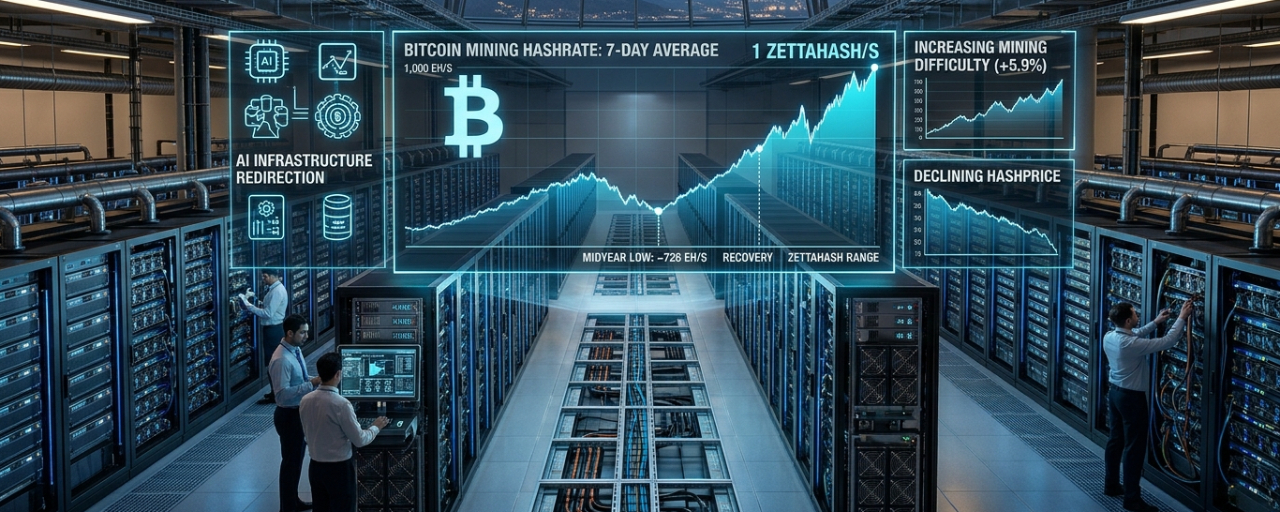


Bitcoin’s seven-day average mining hashrate has returned to approximately 1 zettahash per second (ZH/s), equivalent to 1,000 exahashes per second, reaching its highest level since March 3, 2026. The recovery from a midyear low of around 726 EH/s highlights the growing computational power dedicated to securing the Bitcoin network and competing for block rewards. $BTC

This rebound comes despite several major publicly traded mining companies redirecting part of their infrastructure toward artificial intelligence (AI) and high-performance computing. More efficient next-generation mining machines, combined with smaller and private operators bringing existing equipment back into use, have helped restore Bitcoin’s mining capacity. The development suggests that mining incentives remain strong enough to attract computing resources even as some large operators diversify into AI. $SOL

However, rising hashrate also intensifies competition among miners. Mining difficulty increased by approximately 5.9% in the latest adjustment and could rise by another 5% if current conditions persist. At the same time, declining hashprice and weaker Bitcoin prices are putting pressure on mining revenue, particularly for operators with older equipment or high electricity costs. Although higher hashrate strengthens network security by making attacks more expensive, it also means that only the most efficient miners may remain consistently profitable. The next difficulty adjustment, Bitcoin’s price, electricity costs, and hashprice will be key indicators of whether this growth can continue sustainably. $XRP
