🚨 WARNING:
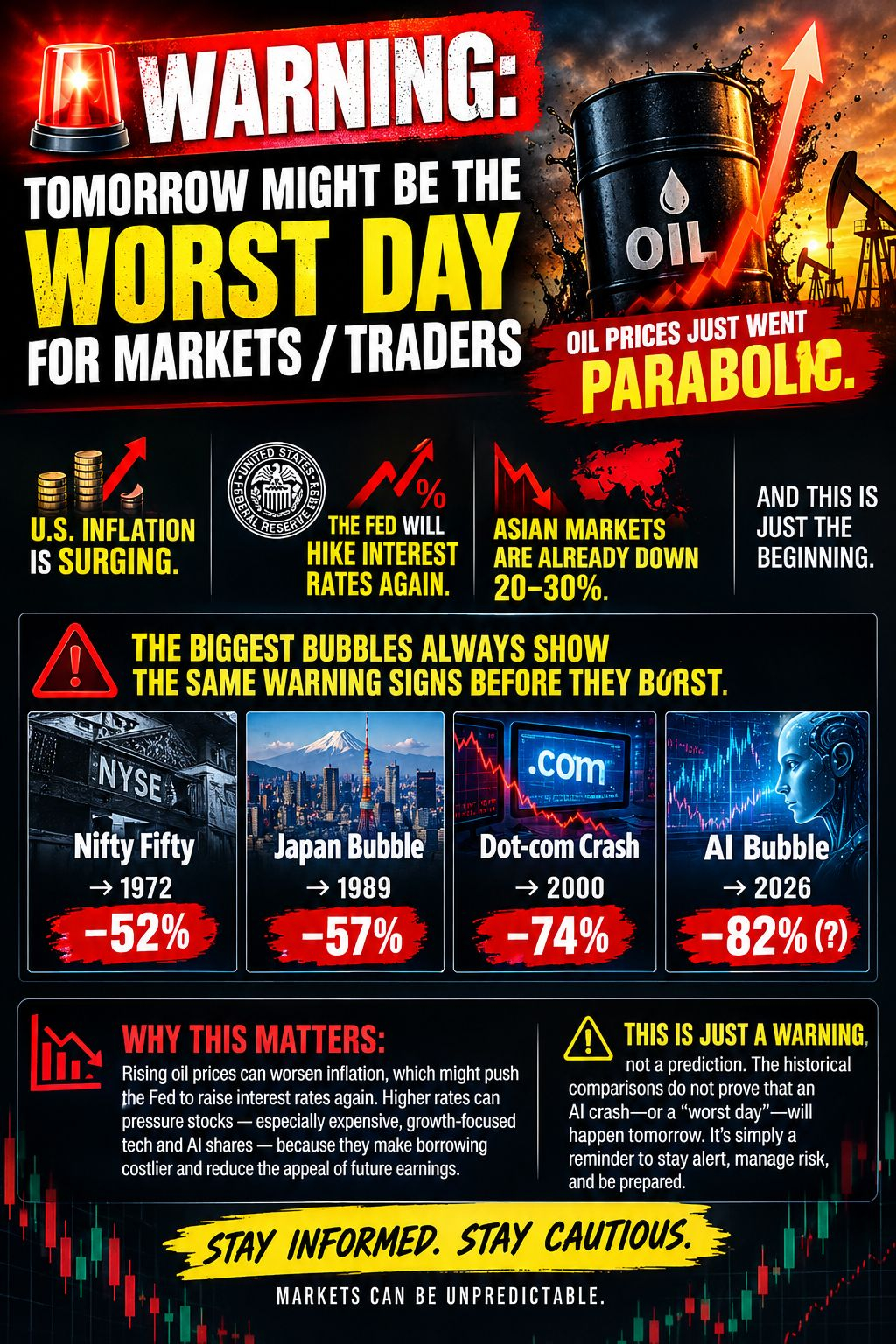
Tomorrow might be the worst day for market/ Traders as Oil prices just went parabolic.
U.S. inflation is surging. The Fed will hike interest rates again. Asian markets are already down 20-30%. And this is just the beginning.
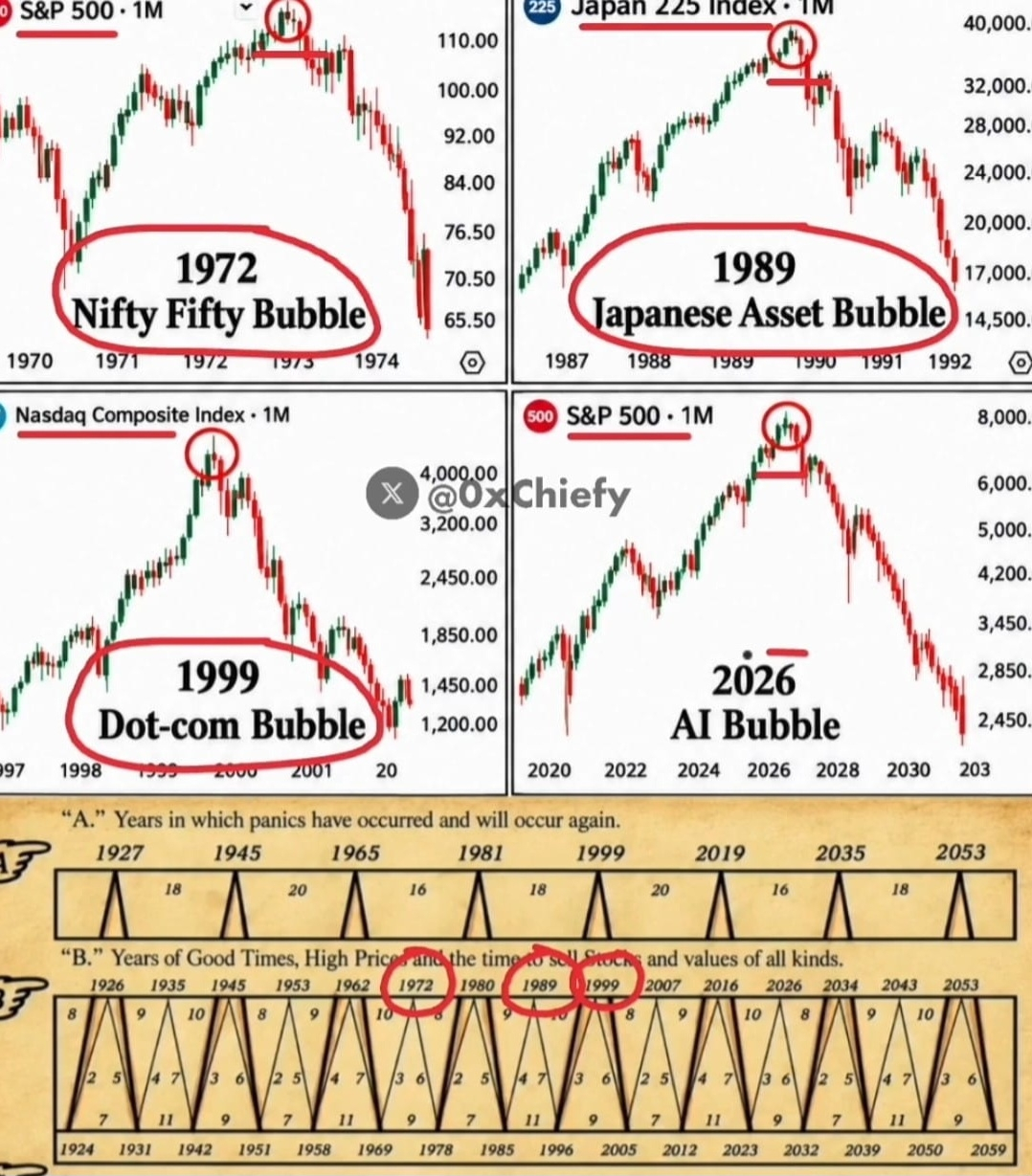
The biggest bubbles always show the same warning signs before they burst. Nifty Fifty → 1972 → −52% Japan Bubble → 1989 → −57% Dot-com Crash → 2000 → −74% AI Bubble → 2026 → −82% (?)" is a highly bearish market-warning.
This argues that rapidly rising oil prices could worsen inflation, which might push the U.S. Federal Reserve to raise interest rates again. Higher rates can pressure stocks—especially expensive, growth-focused technology and AI shares—because they make borrowing costlier and reduce the appeal of future earnings.
This has compares today’s AI enthusiasm with past market bubbles. It cites major historical declines after the Nifty Fifty era, Japan’s late-1980s asset bubble, and the dot-com boom.
The “AI Bubble → 2026 → −82% (?)” line is not a fact or forecast; it is a speculative, attention-grabbing suggestion that AI-related assets could suffer an extremely large decline if a bubble bursts.
In simple terms: This is just a warning that a mix of inflation, oil-price shocks, potential rate hikes, and weak Asian markets may signal a wider sell-off. However, this is just an educational purposes as the historical comparisons do not prove that an AI crash—or a “worst day”—will happen tomorrow.#NFA✅ #DYOR #FranklinTempletonFilesForTwoDividendToBitcoinETFs #StrategyMSTRSurpassesNasdaqInMarketCap #USQ3GDPAndSeptemberPCEDueNextWeek $HBAR
$ANKR
$XPIN