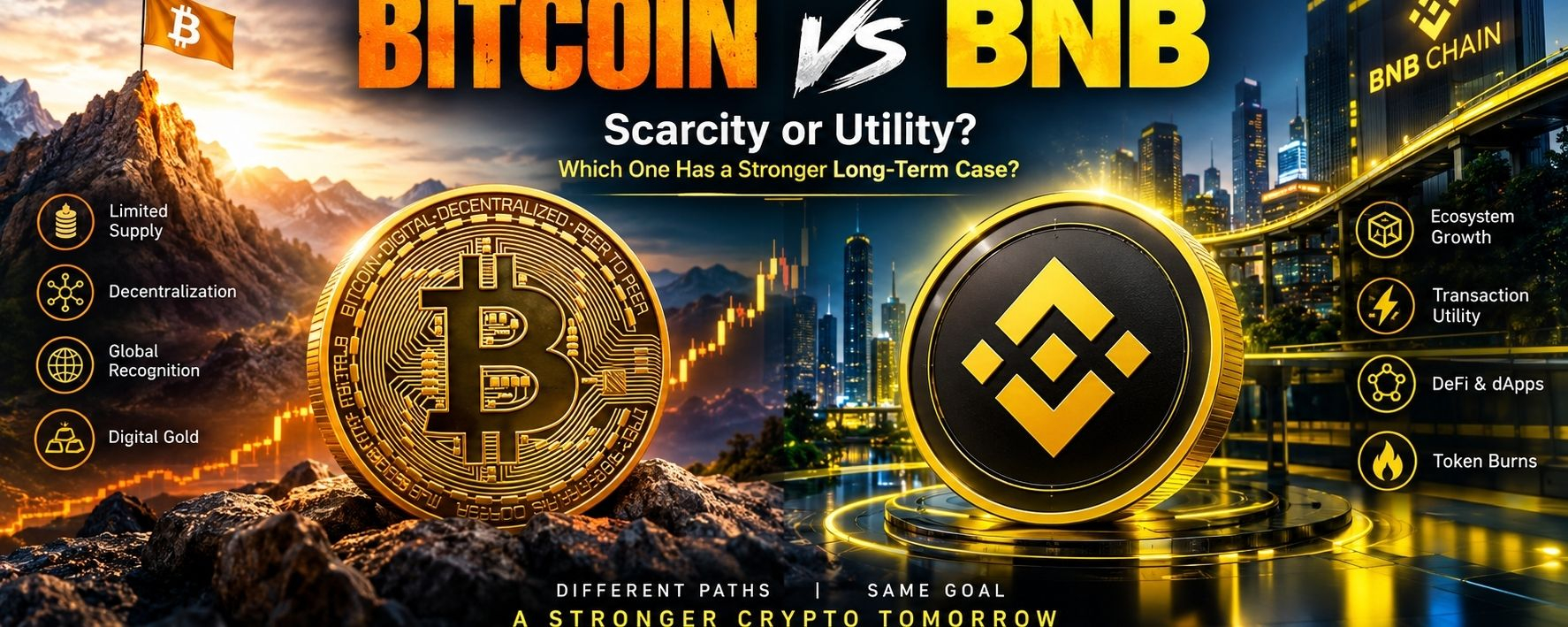

The crypto market never stays quiet for long. One day, everyone is talking about a breakout. The next day, a sudden drop has traders questioning everything. But if you look beyond the daily price movements, you start to notice something more interesting: not every cryptocurrency grows for the same reason.
Bitcoin (BTC) and BNB are good examples of this.
Bitcoin has built its reputation around scarcity, decentralization, and the idea that people should have access to money that doesn't depend on a central authority. BNB has a different story. Its value is closely connected to the activity happening across the BNB Chain ecosystem.
Both are important names in crypto, but understanding what makes them different is where the real conversation begins.
Bitcoin: Why People Still Believe in BTC
Bitcoin has something that is difficult to reproduce: a clear identity.
Since its launch, Bitcoin has attracted people who believe digital money should have a limited supply and operate independently of traditional financial institutions. Its maximum supply is capped at 21 million BTC, which is one of the main reasons people often compare it to gold.
But Bitcoin's story isn't just about scarcity. It's also about trust in its network, its global recognition, and the growing number of ways investors can gain exposure to it.
Of course, Bitcoin isn't immune to fear or uncertainty. When market liquidity dries up or investors become nervous, BTC can fall sharply. Even people who believe in its long-term future have to deal with those uncomfortable moments.
That's what makes Bitcoin interesting. Its long-term idea can remain the same while its market price changes dramatically.
BNB: A Token With a Different Purpose
BNB is interesting for another reason. It isn't simply a coin people buy and hold while waiting for the market to rise.
BNB has a practical role in the BNB Chain ecosystem. Users can spend it on network transaction fees and use it in supported blockchain applications. Its ecosystem includes decentralized finance platforms and other services that depend on blockchain infrastructure.
Think about it this way: a blockchain becomes more useful when people have genuine reasons to use it. They might want to transfer assets, interact with applications, or access decentralized financial services.
That activity can support demand for the network's native token, although demand and token prices don't always move together.
BNB also has token-burning mechanisms that remove coins from circulation. This is an important part of its supply story, but it shouldn't be mistaken for a guarantee of price growth.
Ultimately, BNB's future depends partly on whether its ecosystem continues to offer something people actually want to use.
BTC vs BNB: Which Story Is Stronger?
Honestly, there isn't one answer that works in every market condition.
Bitcoin appeals to people who believe decentralized digital scarcity will remain valuable over time. BNB appeals to those who see potential in the growth and usefulness of its blockchain ecosystem.
The difference becomes especially important during uncertain markets.
If Bitcoin starts falling sharply, fear can spread across the crypto market, putting pressure on altcoins as investors reduce risk. BNB can be affected by that broader movement, but its own ecosystem developments may also influence performance.
The reverse is possible, too. A strong altcoin rally doesn't automatically mean Bitcoin will outperform every other asset.
Instead of choosing a side based on excitement, investors should understand what they're buying and what would make their original reasons for buying no longer valid.
The Part Many Traders Ignore: Patience
One of the biggest mistakes in crypto is believing that a good project must be a good buy at every price.
It doesn't work that way.
Bitcoin can have strong fundamentals and still experience a major correction. BNB can have a useful ecosystem and still lose value during a market downturn.
This is where patience and risk management matter.
Before entering a trade, it's worth asking a few simple questions. Is the market trending upward or downward? Is price approaching an important support or resistance level? Is there real confirmation of a breakout, or is everyone reacting to a temporary move?
And perhaps most importantly, how much could you afford to lose if the trade goes against you?
These questions might not sound exciting, but they can help prevent emotional decisions when the market becomes unpredictable.
What Could Come Next?
For Bitcoin, continued demand, broader adoption, and favorable market conditions could support its long-term outlook. On the other hand, weaker demand, tighter liquidity, or changing regulations could create pressure.
For BNB, continued use of BNB Chain, healthy application activity, and meaningful ecosystem development could strengthen its investment case. Competition, security issues, regulatory changes, or declining network activity could weaken it.
Neither outcome is guaranteed.
The smart move is to follow the evidence as it develops rather than becoming attached to a price prediction. Markets change, and a good investment thesis should be flexible enough to change with them.
Final Thoughts
What makes Bitcoin and BNB worth watching isn't simply the possibility of another price rally. It's the fact that they represent two different ideas about where cryptocurrency could go next.
Bitcoin is built around the appeal of decentralized money with a limited supply. BNB is tied to the usefulness and growth of a blockchain ecosystem.
Both have strengths. Both have risks. And both deserve more analysis than a quick social-media prediction.
If you're following these assets, don't just ask when the next pump will happen. Ask what is driving demand, what the market is already pricing in, and what could change the picture.
Because in crypto, excitement can bring people into the market, but understanding is what helps them make more considered decisions.
What do you think matters more over the long run: Bitcoin's scarcity or BNB's real-world ecosystem utility?