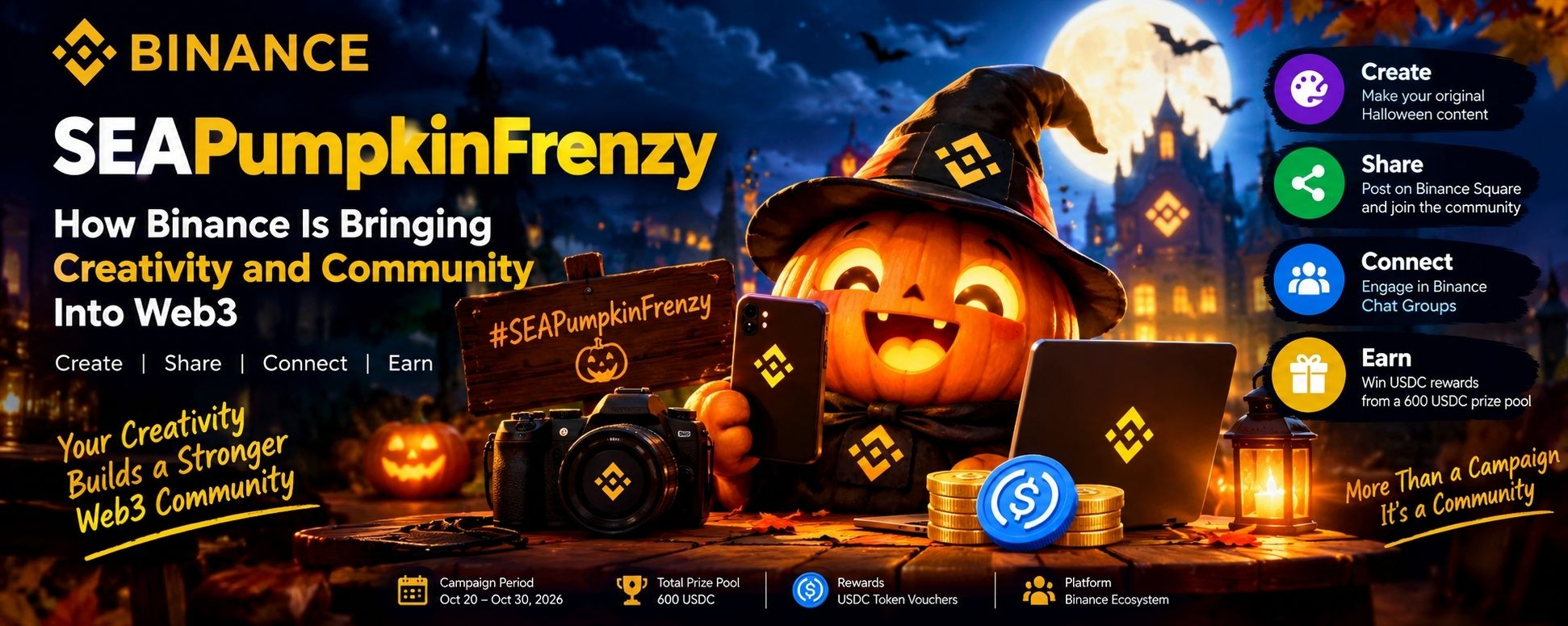


I’ve seen how the crypto industry often focuses on trading, market movements, and new tokens, but I believe there’s another side that deserves attention. It’s about people, creativity, and the communities that make this industry feel alive. That’s one reason why SEAPumpkinFrenzy caught my attention. It brings a creative Halloween theme into the Binance community and gives participants an opportunity to share their ideas while competing for digital rewards.
How It Works
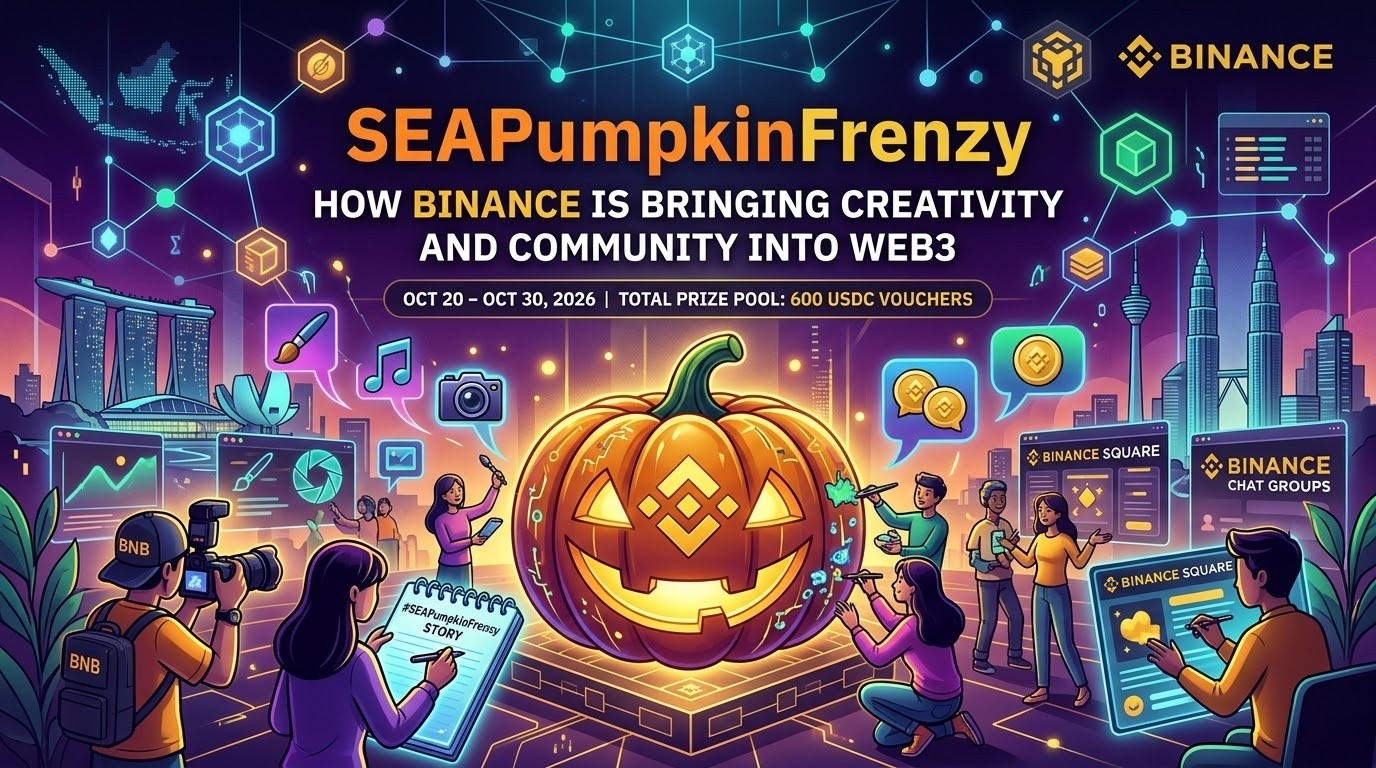
I’ve noticed that getting involved in crypto communities can sometimes feel difficult for beginners. There are so many new terms and technologies to understand. However, SEAPumpkinFrenzy offers a more creative way to participate. According to the campaign announcement, participants are asked to create an original Halloween photograph featuring visible Binance branding, write a story of at least 500 words, and publish it on Binance Square using the hashtag #SEAPumpkinFrenzy.
Participants must also share their posts in the relevant Binance Chat Group and submit the required information through the official campaign form. The announced campaign runs from October 20 to October 30, 2026, with a total prize pool of 600 USDC.
I believe this approach makes participation more interesting because people can express themselves instead of simply following market discussions. Every participant has an opportunity to bring something different, whether it’s an original story, a creative photograph, or a personal idea.
Technology and Ecosystem Design
I’ve seen many discussions about Web3 technology, but I think the most useful systems are those that people can understand and use without unnecessary difficulty.
SEAPumpkinFrenzy uses existing Binance services rather than a separately documented blockchain network. Binance Square provides the space for publishing content, Binance Chat Groups help participants share their entries, and the official submission form supports the campaign review process. Selected participants receive rewards through Binance’s Rewards Hub.
This structure connects content creation, community participation, and digital rewards in one experience. It doesn’t require participants to build applications or understand complicated blockchain operations before joining.
It’s also important to understand that the available campaign information doesn’t confirm a dedicated SEAPumpkinFrenzy blockchain or a separate smart contract system. I believe being clear about the actual technology is essential because people deserve accurate information about the projects and campaigns they explore.
Sometimes, innovation isn’t about creating something complicated. It’s about using existing tools to make participation easier and more enjoyable.
Utility and Rewards
One thing I find interesting about SEAPumpkinFrenzy is its advertised 600 USDC prize pool. The published rewards range from 90 USDC for first place to smaller rewards for other selected participants.
USDC is a digital asset designed to maintain a value close to one US dollar. It can be used for supported digital transfers, payments, and other financial activities. Unlike many cryptocurrencies, it is designed to avoid the large price fluctuations commonly associated with more volatile digital assets, although risks still exist.
I think using an established digital asset for rewards makes the campaign easier to understand. Participants don’t need to learn the purpose of a new cryptocurrency to understand what the advertised reward represents.
However, I haven’t found verified information confirming that SEAPumpkinFrenzy has its own native token. Its documented reward system uses USDC token vouchers, so claims about a separate token, staking, governance, or token burning would be unsupported.
Adoption and Community Growth
I believe community participation can play an important role in bringing more people into Web3. Someone might initially join because they enjoy photography or writing, but their experience could encourage them to explore more of the Binance ecosystem.
I’ve seen how a welcoming environment can make unfamiliar technology feel less intimidating. When people can share ideas, discover other creators, and participate without needing advanced technical knowledge, they may become more comfortable learning about digital assets.
Of course, participation doesn’t guarantee long-term adoption. A campaign can attract attention for a short time, but meaningful growth depends on whether people find lasting value in the experience.
For me, the real opportunity is to turn temporary excitement into stronger communities, better understanding, and continued participation.
What Comes Next
I’m interested in seeing how community campaigns can continue to improve the way people experience Web3. Better content discovery, clearer participation rules, useful educational material, and transparent reward systems could make future campaigns more valuable.
If this happens, people may have more reasons to return even after a campaign ends. They could continue learning, creating content, and connecting with others who share their interests.
However, I haven’t seen a verified roadmap confirming a separate SEAPumpkinFrenzy token or an independent blockchain. Its future development should be judged through official announcements rather than assumptions.
Final Thoughts
I believe SEAPumpkinFrenzy highlights an important idea: Web3 isn’t only about technology or digital assets. It’s also about the people who participate, share their creativity, and help communities grow.
I’ve seen how complicated the crypto world can appear to newcomers, which is why accessible experiences matter. A simple creative campaign can give people a reason to participate, express themselves, and discover something new.
Ultimately, the future of Web3 will depend on more than new tokens or advanced technology. It will depend on whether people find genuine value, trust the systems they use, and feel encouraged to contribute.
For me, the real power of Web3 lies in bringing technology and people together. When creativity meets community and participation creates real value, the future becomes more than a technological idea. It becomes something we can build together.