


Introduction
When people hear the word blockchain, they often think of cryptocurrency prices, Bitcoin, or digital trading. However, blockchain technology is also being explored in areas that connect the digital economy with the physical world.
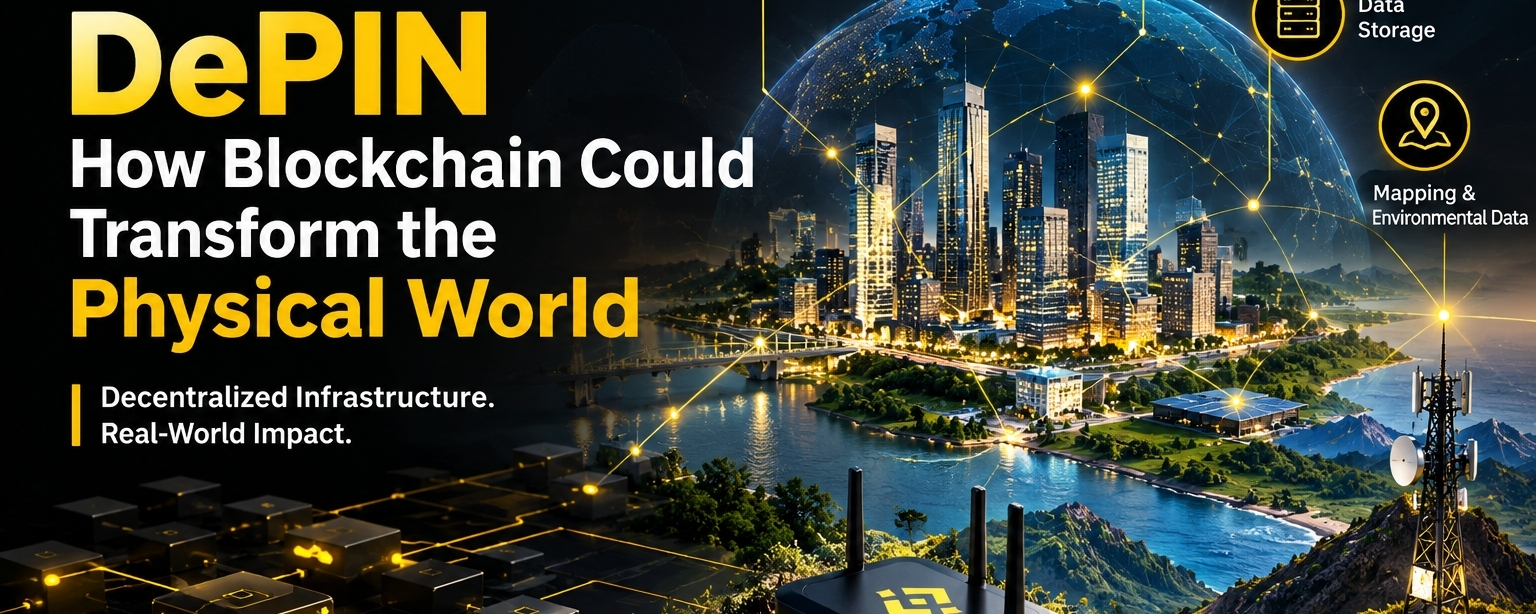
One emerging concept is Decentralized Physical Infrastructure Networks, commonly known as DePIN. These networks explore how communities, businesses, and individuals can contribute to physical infrastructure using blockchain-based coordination and incentive systems.
From wireless connectivity to distributed computing, DePIN is creating a new conversation about how essential digital services could be built and maintained.
What Is DePIN?
DePIN refers to networks that use blockchain technology, token-based incentives, or related decentralized systems to coordinate physical infrastructure.
Traditional infrastructure is often developed and managed by a central company or organization. DePIN projects explore alternative models in which multiple participants contribute resources to a shared network.
Depending on the project, these resources may include internet connectivity, computing power, data storage, or mapping equipment.
The goal is not simply to introduce cryptocurrency into infrastructure. It is to explore whether decentralized participation can provide practical value.
How Does DePIN Work?
Although each project has its own design, the general model often includes four components.
1. Physical Resources
Participants contribute equipment or services, such as wireless hotspots, computing resources, or storage capacity.
2. Network Coordination
Software and network protocols coordinate how these resources are provided and used.
3. Verification of Contributions
The system may use technical measurements, cryptographic proofs, or other mechanisms to assess whether participants have delivered the expected service.
4. Incentives and Rewards
Some projects use digital tokens or other payment mechanisms to reward eligible participants for providing useful resources.
The exact process varies between networks, and rewards are never guaranteed to provide a profit.
Where Can DePIN Be Used?
Wireless Connectivity
Some projects explore community-contributed wireless infrastructure that can help extend connectivity to particular locations.
Distributed Computing
Networks may coordinate computing resources from multiple providers to support certain digital workloads.
Decentralized Data Storage
Some systems distribute data across participating storage providers instead of relying exclusively on a single infrastructure operator.
Mapping and Environmental Data
Connected devices and contributors may collect information that helps build mapping services or monitor environmental conditions.
These applications differ in maturity, reliability, and adoption. Their long-term usefulness depends on real demand and effective implementation.
Why Is DePIN Attracting Attention?
DePIN introduces an interesting question: can infrastructure be developed through coordinated contributions from many independent participants?
Potential advantages include broader participation, alternative infrastructure models, and new ways to compensate service providers.
However, decentralization does not automatically make a network cheaper, faster, safer, or more reliable. Hardware costs, maintenance, data quality, network performance, and customer demand remain important considerations.
The Challenges DePIN Must Overcome
Despite its potential, DePIN faces several challenges.
- Reliability: Distributed resources must deliver consistent service.
- Security: Networks must protect infrastructure, data, and participants.
- Economic sustainability: Rewards need to be supported by genuine demand and workable business models.
- Competition: Projects must demonstrate value compared with established service providers.
- Regulation: Requirements may differ depending on the infrastructure and jurisdiction.
Digital tokens can create incentives, but token prices alone cannot establish whether a network is useful or sustainable.
What Could the Future Hold?
As decentralized technologies develop, DePIN may create new opportunities to experiment with community-supported infrastructure and distributed digital services.
Its future will depend on whether projects can solve real problems, attract users, maintain reliable services, and establish sustainable economic models.
The most important measure of success will not simply be the popularity of a token. It will be whether the underlying network provides meaningful value.
Conclusion
DePIN represents an evolving connection between blockchain technology and the physical world. By exploring new ways to coordinate infrastructure and reward contributions, these networks are expanding the possibilities being considered within the Web3 ecosystem.
Although significant challenges remain, DePIN offers an interesting perspective on how decentralized technology might extend beyond digital assets into everyday services.
The bigger question is not how many tokens a network creates, but how much real-world value it delivers.
Disclaimer: This article is for educational purposes only and does not constitute financial or investment advice.
Keywords: Binance, DePIN, blockchain technology, decentralized infrastructure, Web3, distributed computing, crypto innovation.