


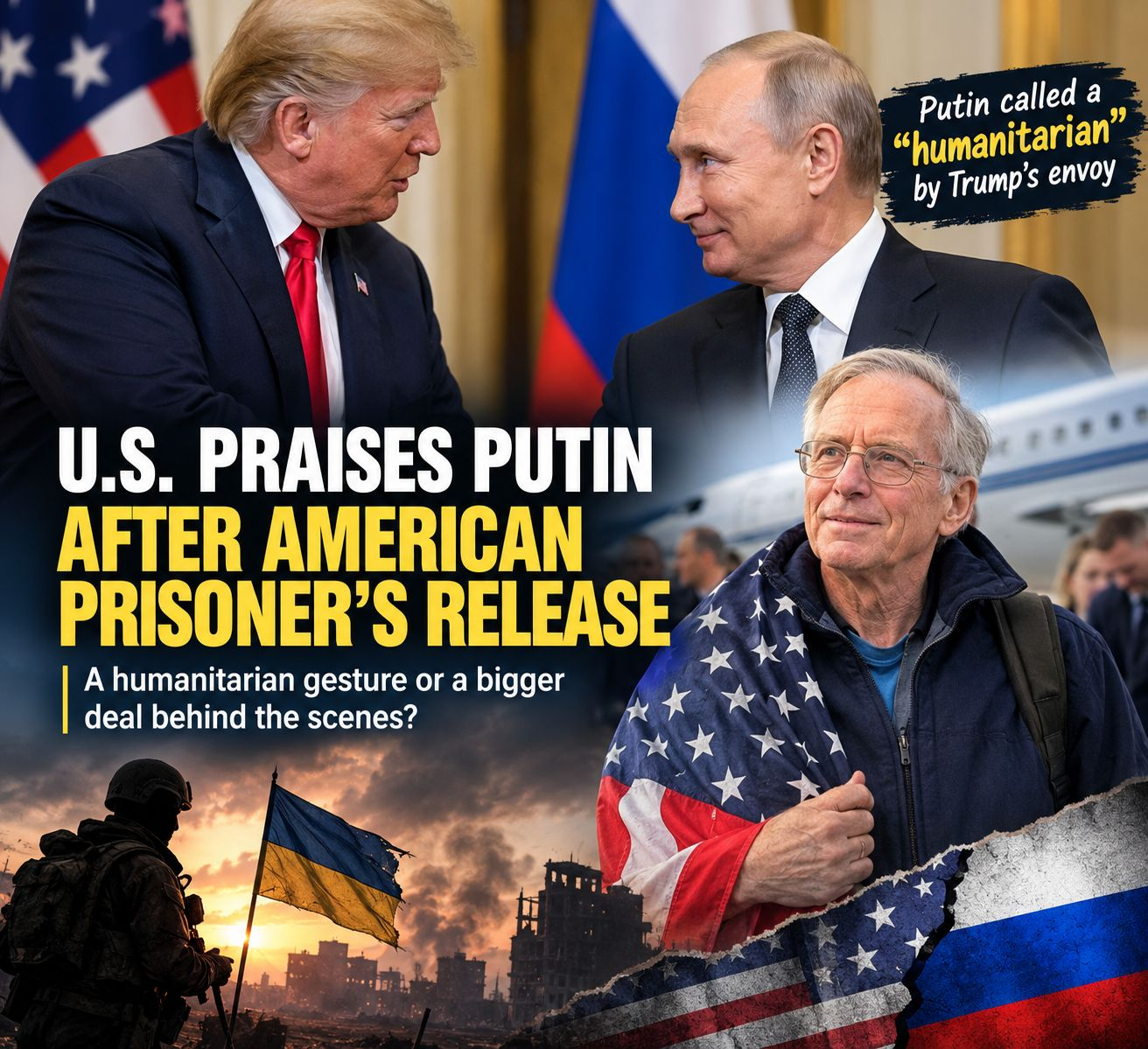
The relationship between Washington and Moscow is entering another controversial chapter. On October 21, 2026, US President Donald Trump’s special envoy Steve Witkoff praised Russian President Vladimir Putin as a “humanitarian” after Russia released 74-year-old American citizen Stephen Hubbard, who had spent more than four years in detention.
The moment was more than a diplomatic exchange of compliments. It came during renewed efforts by the Trump administration to negotiate an end to Russia’s war against Ukraine, raising fresh questions about how far Washington is willing to go to bring Moscow to the negotiating table.
Who Is Stephen Hubbard?
Hubbard, a retired schoolteacher from Michigan, was detained in Ukraine in April 2022. Russian authorities accused him of fighting for Ukraine as a mercenary, and he was sentenced in 2024 to approximately six years and ten months in prison. His family and legal representatives disputed the allegations, while the US government classified his detention as wrongful.
President Trump said he had personally asked Putin to release Hubbard during a recent conversation. Trump subsequently claimed that Russia freed the American without requiring a prisoner exchange, describing the outcome as a significant diplomatic achievement.
For Hubbard and his family, the immediate significance is undeniable: after years of separation and uncertainty, he can finally return home.
Why Did Witkoff’s Words Trigger Backlash?
During his meeting with Putin in Saint Petersburg, Witkoff thanked the Russian leader and described him as a humanitarian, drawing a sharp distinction between the administration’s diplomatic approach and the criticism Russia has faced over its invasion of Ukraine.
The remarks quickly attracted criticism from American lawmakers, including Republican Senator Thom Tillis. Critics argue that praising Putin in such terms risks overlooking the destruction and suffering caused by the ongoing war.
Supporters of direct diplomacy, however, may view the exchange differently. Governments frequently use public gestures and carefully chosen language to maintain communication with adversaries, especially when negotiations involve prisoners, security and an active military conflict.
The real question is whether this diplomatic warmth can produce meaningful results beyond a single release.
Is There a Bigger Deal Behind the Release?
The timing deserves attention. The announcement followed Washington’s decision to waive certain sanctions on Russia, while the two governments were also pursuing discussions related to Russian diesel exports.
Trump has argued that the release resulted from his direct appeal to Putin and that no exchange was required. However, the broader diplomatic and economic context has fuelled speculation about whether Moscow expects improved relations or other benefits from Washington.
At this stage, there is no confirmed evidence that Hubbard’s release was directly exchanged for a specific concession. It would therefore be premature to describe the episode as a proven secret deal.
Still, the timing demonstrates how humanitarian cases can become important instruments of international diplomacy.
What Does This Mean for Ukraine?
For Ukraine, the larger concern is whether Washington’s pursuit of an agreement will preserve Ukrainian sovereignty and provide credible security guarantees.
Russia and Ukraine remain divided over territorial control, NATO and the conditions for ending the war. A breakthrough in one humanitarian case does not resolve these fundamental disagreements.
If the latest talks lead to serious negotiations and measurable commitments, Hubbard’s release could become a useful confidence-building step. If they produce only public praise and temporary goodwill, the impact may prove limited.
The Bottom Line
Stephen Hubbard’s release is a meaningful outcome for an American family that endured years of uncertainty. But the political implications extend far beyond one individual.
Trump wants diplomatic progress, Putin has an opportunity to improve Moscow’s standing in Washington, and Ukraine faces difficult questions about the terms of any future settlement.
Calling Putin a “humanitarian” may help create a friendlier negotiating atmosphere, but words alone cannot establish peace. The real test will be whether these diplomatic gestures lead to concrete progress, a fairer security arrangement and an end to the suffering caused by the war.#EarningsSeason #ZcashDevelopersConfirmNovemberDateForNU7Upgrade