

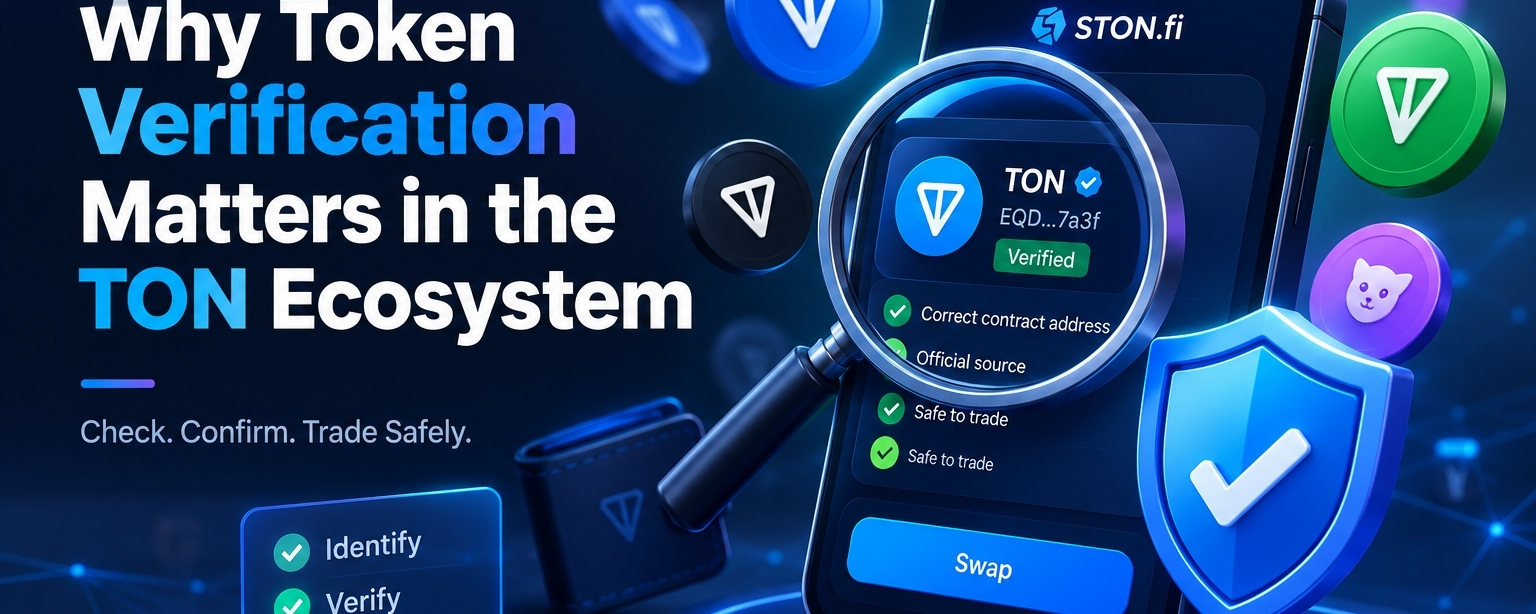

One of the most important questions in decentralized finance is also one of the simplest:
Do you know exactly which asset you are interacting with?
A token's name and logo provide a convenient way to recognize it, but they are not reliable proof of identity. In an open blockchain environment such as TON, similar names and copied branding can create confusion between unrelated assets.
This is why token verification deserves more attention.
Familiarity Is Not Proof
People naturally associate recognizable logos and names with projects they have seen before. Unfortunately, scammers can exploit this behavior by creating tokens that imitate the appearance of existing assets.
A user searching for a particular token may encounter several similar results. Choosing one based only on its visual presentation can lead to an unintended transaction.
The key distinction is simple: branding helps people recognize a project, while an address helps identify the specific onchain asset.
Verification Builds Better Trading Decisions
Before using STON.fi to swap a token, compare its master address with information published through reliable, official project channels.
Do not assume that a token is authentic because it appears in a social media post or because someone in a community recommends it. Information should be checked independently.
Users should also review the swap details displayed in their interface. Confirm that the selected asset, expected output, amount, and transaction information align with their intentions.
If something appears inconsistent, there is no need to rush.
Security Also Depends on Human Behavior
Technical safeguards are important, but personal decisions remain part of the security process.
Unexpected reward messages, urgent claims, and promises of unusually high returns can encourage people to skip verification. These tactics exploit the pressure to act quickly rather than carefully.
A sound security routine includes protecting recovery phrases, examining wallet approval requests, and avoiding websites or support accounts that ask for sensitive wallet credentials.
Verification Is Not an Investment Recommendation
Finding the correct token does not establish that it is profitable, liquid, or suitable for a particular user.
Token identity and token quality are separate questions. An asset may be correctly identified while still carrying substantial market, liquidity, or project-related risks.
Understanding this distinction helps users avoid treating verification as a blanket endorsement.
A More Informed TON Ecosystem
Open blockchain networks depend on users being able to explore assets freely. That freedom becomes more useful when participants understand how to verify what they are trading.
For STON.fi users, the process starts with a simple principle: never let a familiar name replace an independent check.
Verify the asset, review the transaction, and make decisions based on information rather than appearances.
#STONfi #TONEcosystem #BlockchainSecurity #DeFi