


Executive Summary
A prevalent hypothesis in retail digital asset markets posits that the removal or resolution of exchange surveillance designations, such as the Binance Monitoring Tag, serves as an unconditioned bullish indicator guaranteeing long-term price appreciation. Institutional analysis demonstrates that while the removal of an exchange risk tag alleviates immediate delisting threats, mitigates order book depth decay, and eliminates restrictive user trading barriers, it does not inherently alter a protocol's underlying revenue model, adoption trajectory, or intrinsic value. Exchange surveillance status changes reflect operational compliance and market liquidity normalization rather than fundamental expansion in protocol enterprise value.
Gitcoin ($GTC) represents an established public goods capital allocation and decentralized identity primitive within the Ethereum ecosystem. Following a multi-year contraction from its all-time high, Gitcoin executed a substantial operational restructuring known as "Gitcoin 3.0". This strategic pivot involved winding down its high-burn software engineering divisions—specifically deprecating the Grants Stack application suite and placing the Allo Protocol into maintenance mode—in favor of a leaner, domain-led coordination model centered on Gitcoin Passport, Trust Graph v1, and local-first economic capital allocation.
Financial analysis reveals that Gitcoin maintains an exceptionally strong balance sheet relative to its circulating market capitalization. With a circulating market capitalization ranging between $18 million and $25 million, the Gitcoin DAO holds approximately $19.46 million in total treasury reserves, including $6.87 million in unencumbered operational treasury assets and $12.59 million in dedicated matching funds. Following its 2025 organizational spindown, quarterly operational expenditure has stabilized at approximately $540,000, granting the protocol between 3.8 and 5.5 years of operational runway from its liquid treasury alone.
However, $GTC continues to trade at a structural discount due to its tokenomic design. Functioning strictly as a non-revenue-generating governance and identity-staking token, $GTC lacks direct protocol fee accrual, cash-flow distribution, or programmatic supply burn mechanisms. Consequently, while liquid treasury reserves establish a fundamental valuation floor near current spot levels, long-term capital appreciation remains constrained by the absence of direct value accrual to token holders.
Exchange Surveillance Microstructure: Monitoring Tag Resolution and Volatility Impact
Centralized digital asset exchanges, primarily led by Binance, employ systematic risk classification systems to manage platform counterparty risk and protect retail investors. The Binance Monitoring Tag is applied to listed assets exhibiting elevated volatility, compressed trading liquidity, declining technical activity, or potential regulatory vulnerabilities. The placement of a Monitoring Tag enforces immediate platform constraints, including mandatory 90-day interactive risk quizzes for traders, prominent visual risk banners across order books, and placement on a formal, rolling 30-to-90-day review cycle. If a tagged project fails to demonstrate measurable quantitative recovery across liquidity, GitHub commit cadence, active wallet addresses, and team communication, the surveillance process systematically culminates in platform delisting.
In March 2026, Binance extended its Monitoring Tag designation to a cluster of digital assets that included Gitcoin (ATA), BENQI (RDNT), and Neutron ($NTRN). The immediate microstructure impact of exchange tagging is market-wide liquidity contraction. Institutional market makers automatically reduce quote size and widen bid-ask spreads to hedge against asymmetric delisting risk, leading to empirical spread expansions of 5% to 15% across tagged order books. This liquidity decay frequently accelerates secondary price declines as retail holders exit positions ahead of potential exchange removal.
When a project satisfies exchange metrics through professional market-making contracts, improved commit activity, or community initiatives, the exchange removes the Monitoring Tag, as observed historically with assets such as Flow ($FLOW). The removal or resolution of a tag triggers an immediate microstructural rebound. Restoring standard trading access removes user quiz hurdles, prompts market makers to normalize order book depth, and enables leveraged derivatives markets to re-engage.
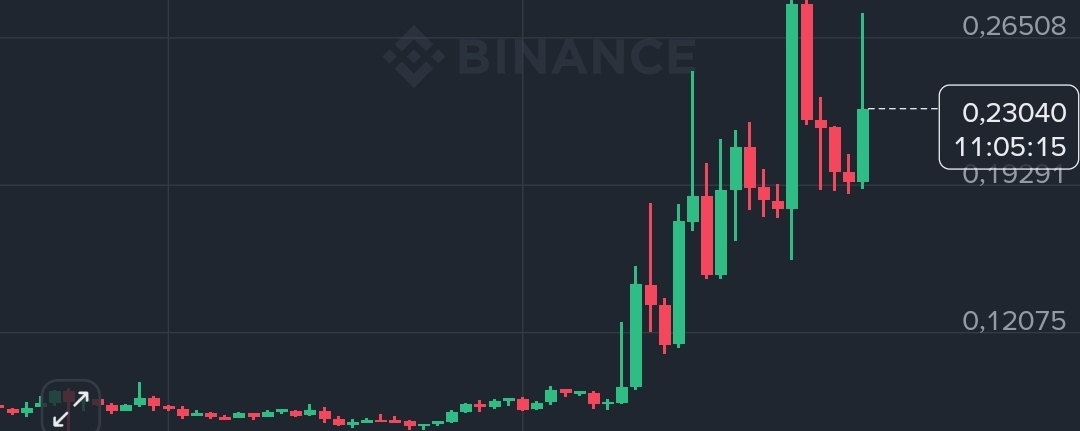
However, equating tag removal with long-term fundamental strength represents a misinterpretation of exchange mechanics. Tag removal simply confirms that an asset has met the baseline operational and liquidity thresholds required to avoid platform delisting. Recent price expansions in $GTC—including single-day rallies of +54% to +86%—were heavily driven by localized market events, such as Upbit launching Korean Won spot trading pairs, alongside secondary futures short squeezes rather than organic, cash-flow-driven institutional accumulation.
Protocol Evolution: The Structural Pivot to Gitcoin 3.0
To establish a rigorous long-term forecast for $GTC, short-term exchange dynamics must be separated from the structural transformation taking place at the protocol level. Between 2021 and 2024, Gitcoin operated as a high-burn software engineering organization maintaining an extensive decentralized product suite. This legacy infrastructure included Allo Protocol, a modular smart contract framework for capital allocation pools; Grants Stack, a decentralized application enabling DAOs to execute custom Quadratic Funding rounds; and Public Goods Network (PGN), an Ethereum Layer-2 network designed to capture sequencer fees for public funding.
By mid-2025, maintaining a full-stack software development division proved financially unviable relative to protocol revenue generation. Sequence fee revenue on PGN degraded to less than 0.1 ETH daily, while software engineering payroll created continuous treasury depletion. In response, Gitcoin executed a radical structural pivot, dissolving its core software development arm, Gitcoin Labs, and placing both Grants Stack and Allo Protocol into maintenance mode while shifting code management to open-source community maintainers. Concurrently, accumulated sequencing fees from PGN were recalled directly to the Gitcoin Foundation treasury.
Following this restructuring, Executive Steward Kevin Owocki returned to lead the transition into "Gitcoin 3.0," shifting the protocol from a software vendor into a lean, domain-led coordination network. Gitcoin 3.0 is organized around the "AAA Tripod Strategy," which emphasizes capital alignment across privacy, open-source software, and decentralized acceleration coalitions; early-stage builder discovery ("Alpha"); and accelerated operational execution through small, specialized teams.
Under Gitcoin 3.0, the protocol's core product strategy centers on identity infrastructure and real-world capital deployment. Gitcoin Passport serves as a decentralized Sybil-resistance layer that aggregates on-chain and off-chain attestations to issue verifiable identity credentials, utilizing Connection-Oriented Cluster Matching to protect funding rounds from coordinated manipulation. In September 2026, Gitcoin launched Trust Graph v1, expanding Passport's capabilities by mapping social graph connections to determine Sybil resistance algorithmically. With a user base estimated between 6 million and 9 million registered accounts, Passport represents Gitcoin's primary distribution layer. Furthermore, through initiatives such as Techne, Gitcoin expanded its capital allocation tooling into local-first, non-Web3 community environments, attempting to capture philanthropic funding flows outside traditional crypto markets.
Financial Architecture and Treasury Capital Management
The operational spindown of Gitcoin Labs significantly improved the DAO's balance sheet health, transforming Gitcoin into one of the most fiscally solvent protocols in its market-capitalization peer group. Financial disclosures audited by Hashbasis Accounting detail a sustained reduction in quarterly burn.
During the first half of 2026, the DAO expended $159,891 in Q1 (34.8% below its $245,336 budget) and $310,502 in Q2. Operational expenditure stepped up to $539,561 in Q3 2026 against an approved budget of $647,159, representing an underspend of 16.6% . This expenditure step-up was planned and funded consultant-led product engineering, brand production, and security auditing for the Trust Graph v1 and Techne product launches.
As of late 2026, the Gitcoin DAO manages a total treasury balance valued at approximately $19.46 million . The DAO maintains a strict two-fund asset segregation model : The unencumbered Operating Treasury holds $6.87 million in liquid stablecoins and crypto assets, dedicated exclusively to funding ongoing operations, engineering grants, and administrative overhead . The Matching Pool Reserve holds $12.59 million, restricted specifically to matching capital for ecosystem grants rounds, such as Gitcoin Grants 24 (GG24) .
Based on an annualized operating burn between $1.2 million and $1.8 million, the unencumbered operating treasury alone provides Gitcoin with 3.8 to 5.5 years of operational runway without requiring additional GTC token liquidations. Furthermore, during GG24, Gitcoin achieved a 54% external co-funding ratio, securing over half of its matching capital from external ecosystem partners and targeting 60% to 70% external funding in future rounds to further preserve treasury reserves.
Tokenomics and Value Accrual Mechanics
Despite Gitcoin's strong treasury position, institutional investment evaluation requires assessing the economic relationship between protocol adoption and the $GTC token. Launched in May 2021 with a hard cap of 100,000,000 tokens, $GTC's genesis allocation distributed 15% to retroactive user airdrops, 35% to early team members and investors with multi-year vesting, and 50% directly to the GitcoinDAO treasury. With circulating supply currently at 87,491,502 GTC (87.5% of max supply), structural token emission dilution is nearly complete .
The primary structural impediment to GTC functions strictly as a non-revenue-generating governance asset. Token utility is limited to voting on DAO budget proposals, altering governance parameters (such as Snapshot quorum thresholds), and staking tokens within Gitcoin Passport as a secondary signal of user reputation.
$GTC lacks direct fee capture, programmatic buyback-and-burn mechanics, or profit-sharing rights. When third-party organizations utilize Gitcoin Passport or deploy matching pools, generated value accrues to the operational treasury or external grant recipients rather than flowing to $GTC token holders. Across the broader decentralized finance ecosystem, governance tokens lacking fee switches consistently struggle to sustain structural organic demand, trading predominantly as proxy assets for ecosystem sentiment rather than productive financial instruments.
Market Microstructure and Secondary Market Dynamics
The secondary market structure for $GTC is characterized by a low float market capitalization, severe long-term historical drawdowns, and extreme, derivative-driven price volatility. From its 2021 all-time high of GTC experienced a multi-year bear market, falling to historical lows between $0.06 and $0.15—a drawdown exceeding -98.7% to -99.8%. In late 2026, $GTC exhibited explosive intraday price movements, rallying from $0.156 to a high of $0.393 before settling in the $0.23 to $0.29 range. Microstructure analysis indicates that these price surges are heavily driven by leverage dynamics and regional exchange liquidity events rather than sustained institutional spot accumulation.
The primary structural impediment to GTC functions strictly as a non-revenue-generating governance asset. Token utility is limited to voting on DAO budget proposals, altering governance parameters (such as Snapshot quorum thresholds), and staking tokens within Gitcoin Passport as a secondary signal of user reputation.
$GTC lacks direct fee capture, programmatic buyback-and-burn mechanics, or profit-sharing rights. When third-party organizations utilize Gitcoin Passport or deploy matching pools, generated value accrues to the operational treasury or external grant recipients rather than flowing to $GTC token holders. Across the broader decentralized finance ecosystem, governance tokens lacking fee switches consistently struggle to sustain structural organic demand, trading predominantly as proxy assets for ecosystem sentiment rather than productive financial instruments.
Market Microstructure and Secondary Market Dynamics
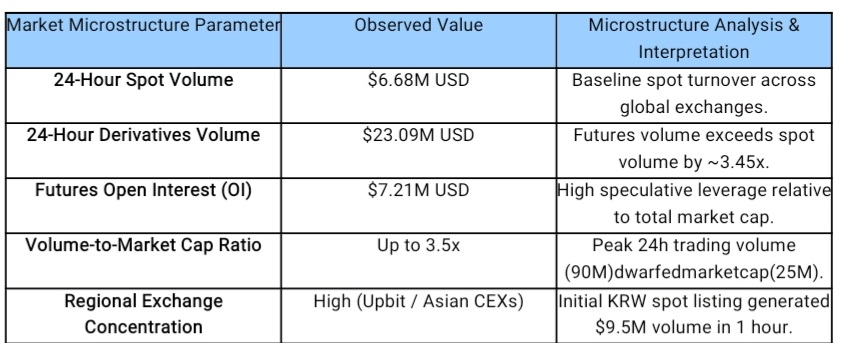
The secondary market structure for $GTC is characterized by a low float market capitalization, severe long-term historical drawdowns, and extreme, derivative-driven price volatility. From its 2021 all-time high of GTC experienced a multi-year bear market, falling to historical lows between $0.06 and $0.15—a drawdown exceeding -98.7% to -99.8%. In late 2026, $GTC exhibited explosive intraday price movements, rallying from $0.156 to a high of $0.393 before settling in the $0.23 to $0.29 range. Microstructure analysis indicates that these price surges are heavily driven by leverage dynamics and regional exchange liquidity events rather than sustained institutional spot accumulation.
The disparity between futures trading volume (6.68 million) underscores that short-term price action in $GTC is frequently propelled by short squeezes and speculative positioning. When secondary exchanges launch new fiat trading pairs or alter leverage terms, high turnover relative to circulating market cap triggers rapid price expansions. However, without underlying protocol fee capture, these liquidity-driven rallies historically trace back toward fundamental balance-sheet valuation levels once derivative open interest contracts.
Risk Analysis and Institutional Investment Assessment
Evaluating $GTC from an institutional risk-adjusted perspective requires balancing its strong treasury backing against its structural tokenomic limitations.
Key Investment Risks
Centralized exchange surveillance remains an ongoing operational risk. Although tag resolutions provide short-term liquidity relief, exchanges like Binance continuously evaluate 24-hour volume, order book depth, and community engagement on a rolling basis. A decline in secondary market turnover could trigger future surveillance reviews or potential platform delisting, which severely impairs secondary liquidity. Additionally, the protocol faces significant execution risk associated with its non-Web3 expansion. Transitioning capital allocation tooling into local-first, offline community environments requires competing with established non-crypto philanthropic and municipal platforms. Furthermore, governance friction continues to present operational bottlenecks. Proposals within the Gitcoin DAO have historically suffered from quorum failures—such as the initial 2026 budget request failing to reach its 2.5 million GTC threshold before requiring a quorum reduction to 1.5 million GTC—which can delay operational execution. Above all, the complete absence of cash-flow value accrual prevents conventional discounted cash flow (DCF) valuation models from asserting a fundamental target price above liquid treasury backing.
The Treasury Valuation Floor Thesis
Conversely, $GTC presents a compelling deep-value balance sheet thesis . With total DAO treasury reserves standing at $19.46 million and unencumbered liquid operational reserves at 0.22 USD per token, creating a structural floor relative to prevailing spot prices.
Simultaneously, Gitcoin Passport maintains a strong strategic position within the Web3 infrastructure layer. Protecting grants programs, ecosystem airdrops, and governance frameworks across Ethereum L1 and L2 networks, Passport’s 6 million to 9 million registered user base provides significant distribution value as Sybil-resistance infrastructure becomes increasingly essential.
Conclusion and Strategic Outlook
The premise that the removal of an exchange Monitoring Tag serves as a definitive indicator of long-term capital appreciation is incomplete. Exchange surveillance status changes reflect short-term compliance, market-making depth, and turnover normalization rather than structural expansion in protocol business models or token cash flows. From an institutional perspective, Gitcoin ($GTC) represents a balance-sheet-backed asset with a strong identity primitive, constrained by a non-revenue-generating tokenomic model. The DAO's successful transition to Gitcoin 3.0 has reduced operational burn, extended operational runway beyond five years, and focused resource allocation on high-impact identity infrastructure like Gitcoin Passport and Trust Graph v1.
For value-focused institutional investors, $GTC is rated as NEUTRAL / HOLD. While the DAO's liquid treasury reserves establish a fundamental price floor near ~$0.22 USD, sustained long-term capital appreciation requires either a formal governance transformation that introduces direct protocol fee accrual or successful enterprise monetization of its identity infrastructure. Institutional market participants should view $GTC as a range-bound balance sheet play, monitoring Passport API adoption, external co-funding ratios, and governance proposals regarding tokenomic utility.