

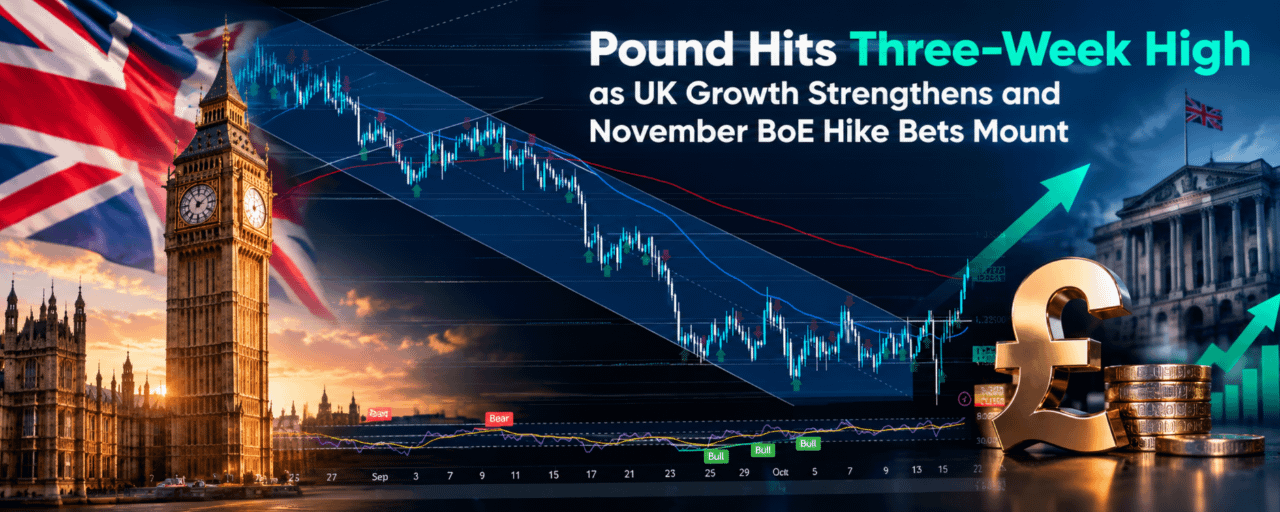

The pound has pushed to its highest level against the U.S. dollar in more than three weeks. Sterling is trading around $1.334 on Friday, up about 0.5% on the day and at its strongest since Sept. 23. Thursday's 0.58% gain at the close set the table, after UK data landed well ahead of forecasts and gave a Bank of England rate increase next month more weight.
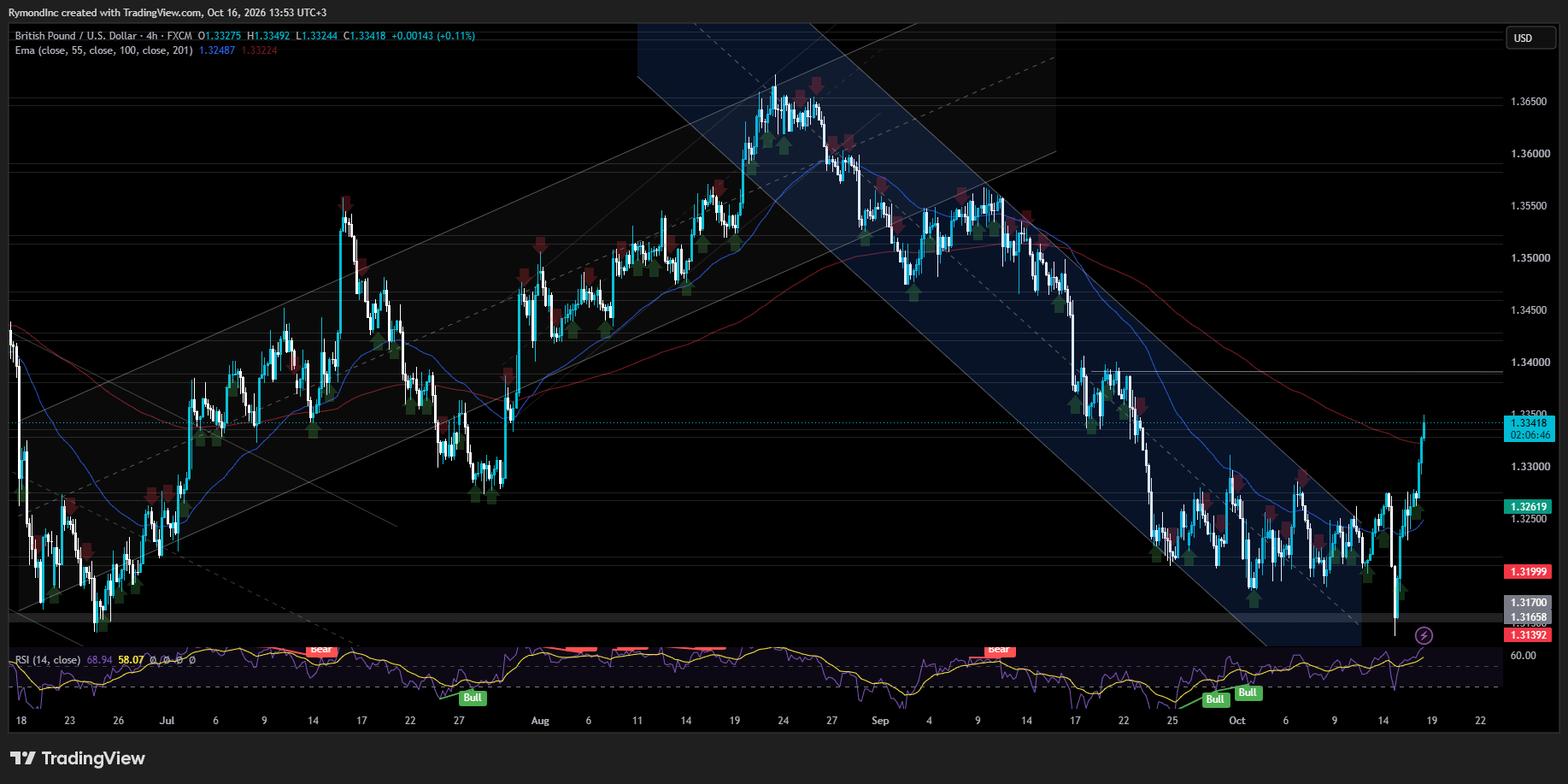
GBP/USD is up 0.82% on the week at 1.3343, which puts the pair on course to end a four-week losing streak. Behind the move sits a central bank that keeps sounding firmer. Berenberg forecasts a hike on Nov. 5.
The Economy That Refused to Shrink
Forecasters had penciled in a contraction for August. The economy ignored them. GDP grew 0.1% after July's 0.4%, and the three months to August came in 0.7% higher, up from 0.5% in the three months to July (itself revised from 0.4%).
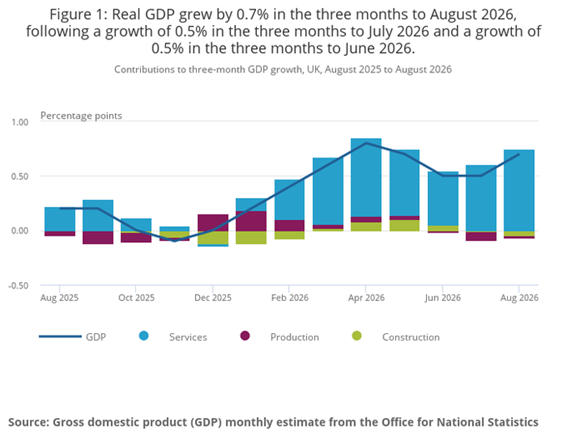
Services did the carrying. They rose 0.9% over those three months while production slid 0.2% and construction fell 1.0%. Strip away the headline and it's a recovery with one engine.
For rate-setters, a stubborn economy removes a convenient excuse for waiting. The case for tighter policy has strengthened, and markets still largely expect 25 basis points on Nov. 5, though with slightly less certainty than before. Higher rates tend to help a currency. Sterling is proving the point.
A Committee Already Leaning Forward
Gov. Andrew Bailey is not sounding the alarm yet. Earlier today, he said there is little evidence so far that dearer energy is working its way into wages and wider prices, while adding that it is too early to know how big the effect will be. Others on the Monetary Policy Committee are less willing to wait and have pushed for earlier action.
September showed the split. The Bank left its policy rate at 3.75% on Sept. 17, as expected, but only by a 6-3 vote. Huw Pill, Megan Greene and Catherine Mann wanted a quarter-point rise to 4%.
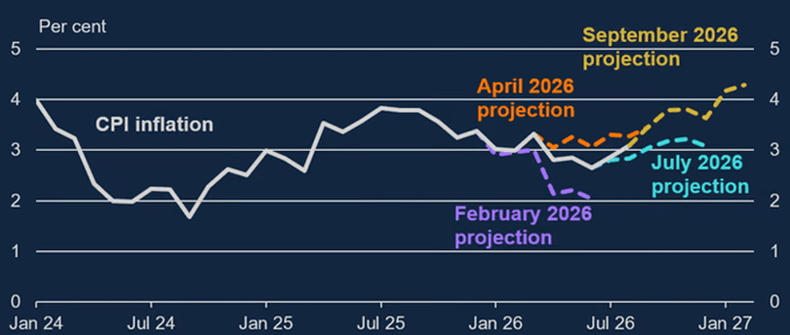
The inflation outlook is not helping the doves. Bank staff, updating their numbers alongside the September minutes, now see CPI near 3.75% in the last quarter of 2026 and slightly above 4% in early 2027. July's forecast had that quarter at 3.2%.
Andrew Wishart, an economist at Berenberg, reads all of this as a Nov. 5 hike. He has been through the minutes, and the minutes cooperate: four of the six who voted to hold said things that leave room for a rise later.
Bailey's version came with a condition. If the Middle East conflict drags on and second-round effects look likelier, he wrote, "it is likely that policy may have to tighten." A soft labor market, which he acknowledged, does not change that. Sarah Breeden was gentler. Should the risks materialize, she said, it becomes "increasingly appropriate for Bank Rate to respond."
Clare Lombardelli was blunter, arguing that "the case for raising Bank Rate is building" for as long as the conflict lacks a lasting resolution. Dave Ramsden hedged. Continued upward pressure on the inflation outlook, he said, could make a case for an increase, and that was as far as he went.
Then come the three who had already voted to hike. Mann says the current stance isn't tight enough, and the hawks' argument is that market risk premia can't do Bank Rate's job for it. Greene has gone after the timing. The bigger danger, she warns, is failing to stay restrictive enough, because waiting for second-round effects to show up means acting too late. Bank staff see inflation peaking early next year, just as wage deals are struck. Her window is short.
The Budget Question Hanging Over Sterling
Sterling has one more hurdle before the Bank decides. Matthew Ryan, head of market strategy at foreign exchange specialist Ebury, says what matters most is how Chancellor John Healey's first budget, due Oct. 28, lands with the pound and the gilt market. In his view the reaction depends on whether Healey can limit the economic damage while convincing investors that future spending won't erode debt sustainability.
A Fed in No Rush
Part of the pound's lift is really a dollar story. Bets on an October Fed tightening are fading.
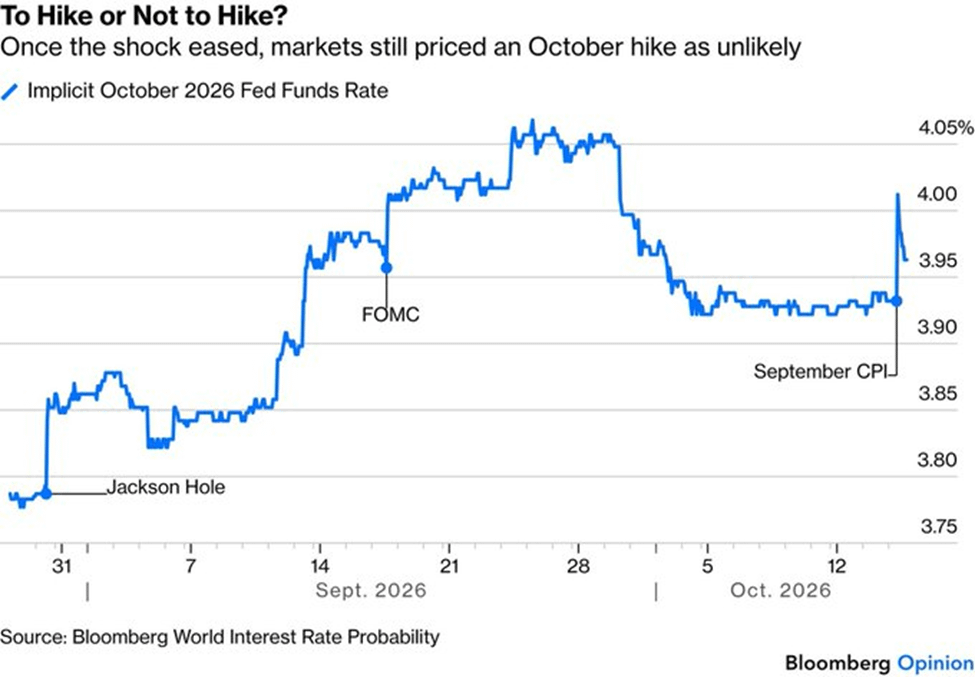
Sticky consumer inflation (3.7% on the year in September) briefly pushed fed funds futures to a coin flip on a hike at the next FOMC meeting. The odds have since slipped as Treasuries rallied and Fed officials counseled patience.
Producer prices did nothing to help the doves. September's reading showed a 1.3% monthly rise and a 6.3% annual jump: the biggest monthly move since March 2022 and the largest annual gain since December 2022. Rate cuts look harder to imagine by the week. Even so, inflation by itself may not force the Fed's hand right away.
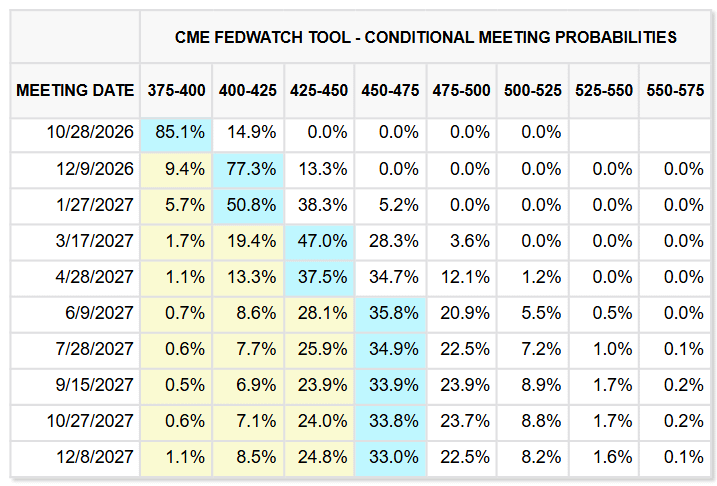
Pricing tells the story. The chance of an October hike peaked above 50% after the CPI release, then dropped below 30% as bonds rallied and Fed speakers pushed back. Markets now see about an 85% chance of no change at the Oct. 27-28 meeting. December is another matter, with odds of a hike there up to roughly 90%.
Listen to the Fed itself and the message repeats: hikes, yes; hurry, no. Gov. Christopher Waller wants more increases because inflation is too high, with the AI buildout and the energy shock both pushing, yet he is flexible on timing and has said hikes need not come at consecutive meetings. Long-term yields are already "doing a little bit of the work," he adds, by cooling housing and autos.
Mary Daly of the San Francisco Fed, a non-voting FOMC member this year, expects more hikes too. What she lacks is urgency. There is no reason to decide on thin information, in her view, and plenty of meetings remain. The Fed, as she tells it, will choose its moment instead of reacting to a single print.
Vice Chair Philip Jefferson said earlier this month that future moves should follow the data, and that more of it will help the Fed make better calls. Michelle Bowman, the vice chair for supervision, sees no rush to tighten further and wants time to watch the economy. Wait and see.
John Williams offers the most specific view. The New York Fed president, who is also FOMC vice chair and holds a permanent vote, says one more hike is likely this year if the economy meets expectations. After September's increase, though, he sees "no need for urgency," and more data will guide what comes next.
An AI Hangover Reaches the Greenback
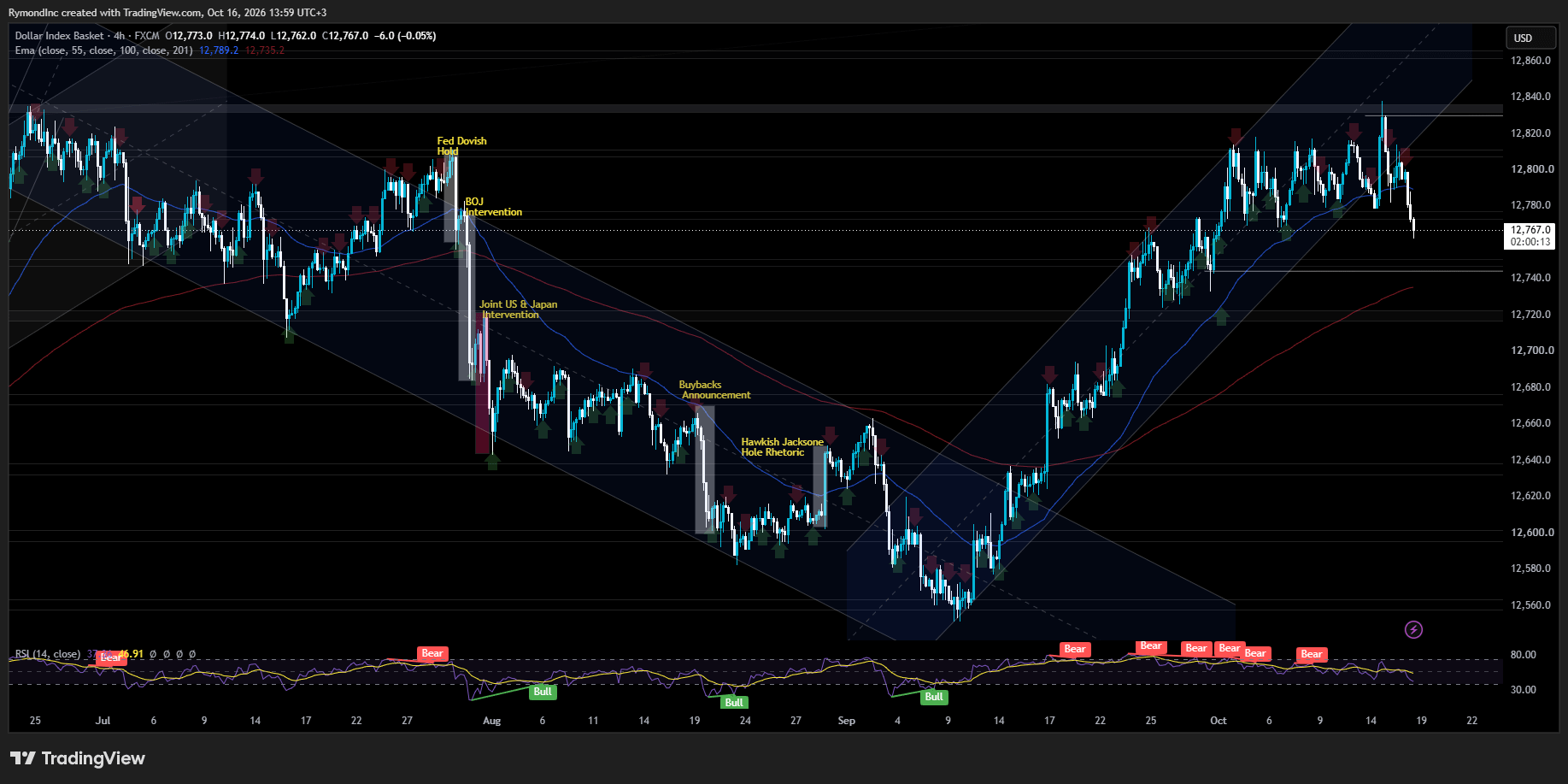
The waiting is costing the dollar. The U.S. dollar index has slipped below 102 on Friday, extending the previous session's losses and trailing Treasuries as a refuge during the recent selloff in tech and AI stocks. Traders are starting to price a slowdown in AI capital spending, the boom that has carried both the American economy and its markets. If that spending cools, so does the case for the dollar.
Sterling's next tests are bunched together. UK inflation figures arrive Oct. 21, the budget comes a week later, the Fed meets the same week, and the Bank of England decides on Nov. 5. The pound has priced a hike. Whether it has priced everything in between is a separate question.