

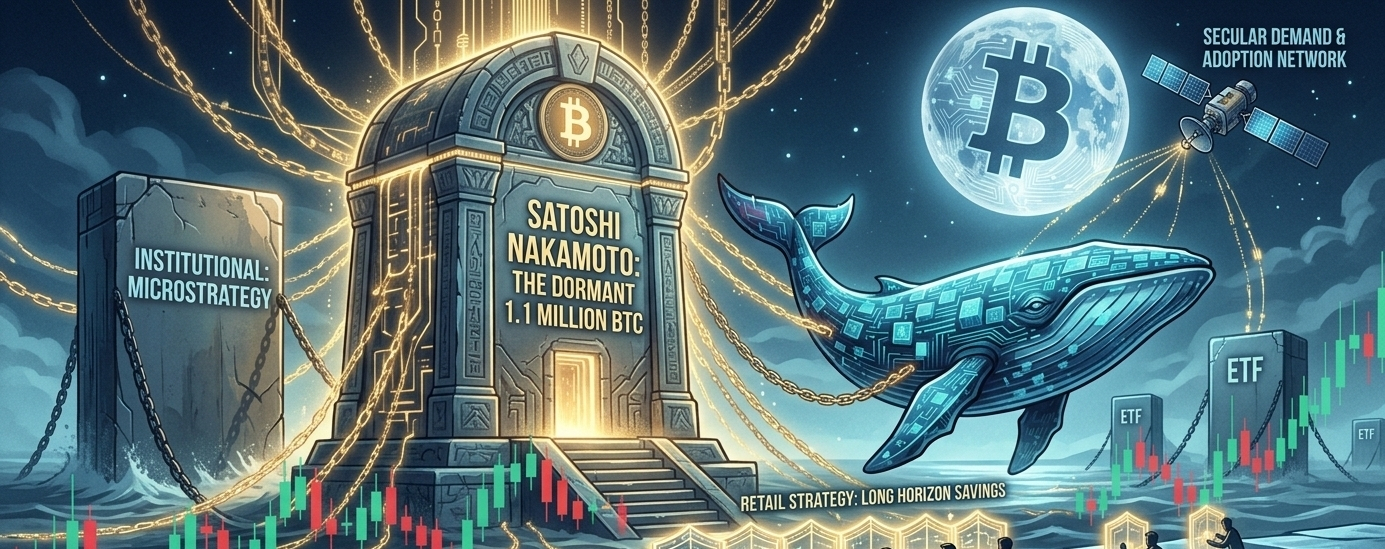

When Bitcoin was introduced in 2009, its foundational promise was a radical democratization of money—a peer-to-peer network free from the whims of centralized gatekeepers. Yet, seventeen years later, the reality on the ground looks entirely different. We have essentially replaced the traditional central banks with a new class of digital aristocrats: crypto whales and Wall Street institutions.
The staggering concentration of supply in the hands of a few entities exposes Bitcoin to intense structural vulnerability. When an entity like MicroStrategy (holding over 848,000 BTC) or a sovereign government (like the U.S. holding 328,000+ BTC of seized assets) decides to distribute its holdings, it does not just execute a transaction. It fundamentally reshapes the global order book.
Because crypto markets heavily rely on leveraged trading, a single massive sell order sets off a devastating domino effect. The initial sell-off triggers automated stop-losses, which leads to margin calls, forcing derivatives platforms to liquidate retail long positions. In a matter of minutes, hundreds of millions of dollars in retail wealth are wiped out, purely because one institutional desk decided to rebalance its portfolio or harvest tax losses. The psychological overhang of Satoshi Nakamoto's untouched 1.1 million BTC remains the ultimate sword of Damocles, proving that the mere threat of a single individual selling can cap Bitcoin's upside potential.
🛡️ Can Retail Investors Handle the Fallout?
The hard truth is that everyday retail investors cannot absorb the immediate financial shock of an institutional dump, but they absolutely can survive the long-term aftermath if they change how they play the game.
[Institutional Sell] ➔ [Algorithmic Panic] ➔ [Retail Stop-Losses Triggered] ➔ [Cascading Liquidations]
To navigate a market dominated by giants, retail investors must understand their structural limitations and pivot to a defensive strategy:
Accept the Liquidity Asymmetry: Retail investors lack the multi-billion-dollar liquidity needed to match institutional sell orders in real time. Trying to "buy the dip" the exact second a whale dumps is like standing in front of a freight train; the market depth simply isn't there to support the price floor immediately.
Bypass the Leverage Trap: Retail traders get wiped out because they use leverage (futures and margin trading). When a whale dumps, volatility spikes instantly. By holding spot assets (owning the actual BTC) rather than leveraged contracts, retail investors remove the risk of being forcefully liquidated.
Embrace the Long Horizon: While institutions move markets on a macro-quarterly or daily basis, retail's greatest weapon is time. Historically, even after massive whale-driven crashes, the decentralized, global demand for Bitcoin has eventually absorbed the distributed supply over months and years, transferring coins into stronger, more distributed hands.
Ultimately, retail investors cannot stop the whales from selling, nor can they stabilize the price when a panic begins. However, by treating Bitcoin as a long-term savings vehicle rather than a short-term trading casino, everyday investors can let the institutional volatility play out above them, waiting for the dust to settle before accumulating assets at a deep discount.