

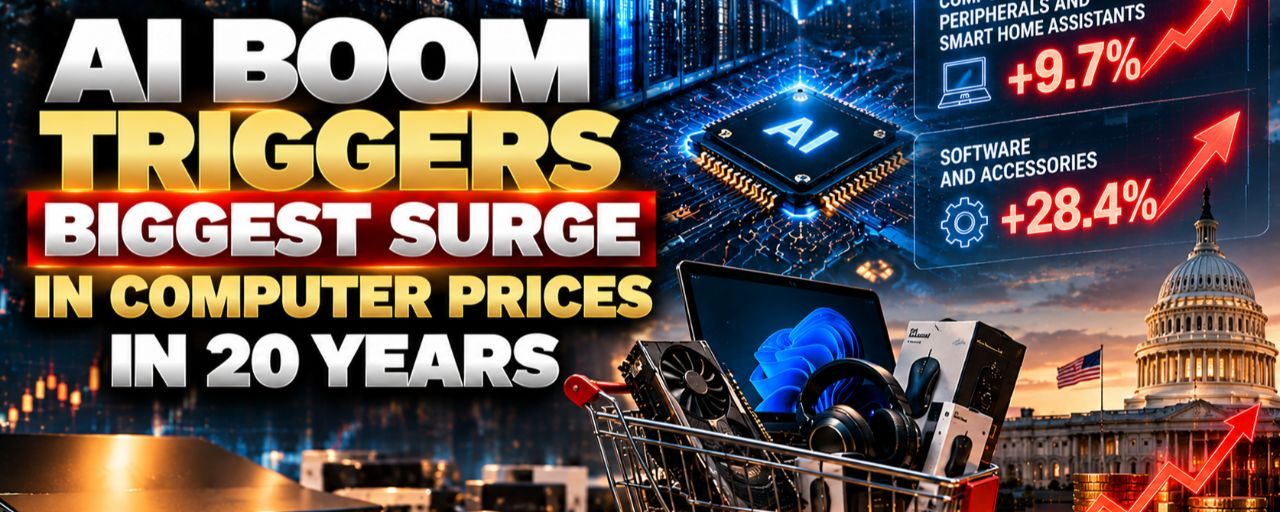

AI BOOM DRIVES UP COMPUTER PRICES: U.S. TECHNOLOGY INFLATION HITS A 20-YEAR HIGH
Massive investments in AI infrastructure have coincided with a notable increase in consumer technology prices in the United States. September inflation data revealed one of the sharpest annual increases in computer and hardware prices in the past two decades, bringing the impact of AI demand on prices into the economic spotlight.
Annual Increase in Computer Prices Reaches 9.7%
In September, prices for computers, peripherals, and smart home assistants rose 9.7% year over year. This marked the highest annual increase recorded since at least 2006.
Annual price increases for computer software and accessories reached 28.4%. The data show that cost pressures on technology products are not limited to hardware but are also spreading across different product categories.
AI Investments Are Driving Up Costs
Technology companies are increasing spending on data centers, advanced processors, and high-performance servers, strengthening demand across the hardware supply chain. Intense demand for advanced processors from manufacturers such as Nvidia is making capacity constraints and supply costs increasingly important.
The expansion of investment in AI infrastructure can create upward price pressure in areas where production capacity and component supplies cannot keep pace with demand. The extent to which these effects are passed on to consumer technology products will be closely monitored in the coming months.
A New Inflation Risk for the Fed
Rising technology prices are among the factors that could complicate the Federal Reserve’s efforts to bring inflation back to its 2% target. In particular, if AI investments continue to push up costs in sectors beyond energy and housing, the risk of inflationary pressures spreading more broadly could increase.
The rise in U.S. consumer inflation to 3.7% year over year in September also indicates that price pressures persist. If increases in technology prices become entrenched alongside energy costs, the Fed may need to take a more cautious approach to monetary policy.
AI Growth Could Fuel Inflation
AI is expected to improve productivity and reduce production costs over the long term. However, before these gains fully materialize, infrastructure spending, chip demand, and energy requirements can generate inflationary effects in the short term.
The critical question for markets is whether these cost increases will prove to be a temporary consequence of an investment cycle or spread to consumer prices and develop into more persistent inflationary pressure.
If AI investment continues to support economic growth while also pushing prices higher, the Fed may face an increasingly difficult balancing act between sustaining economic expansion and keeping inflation under control.