

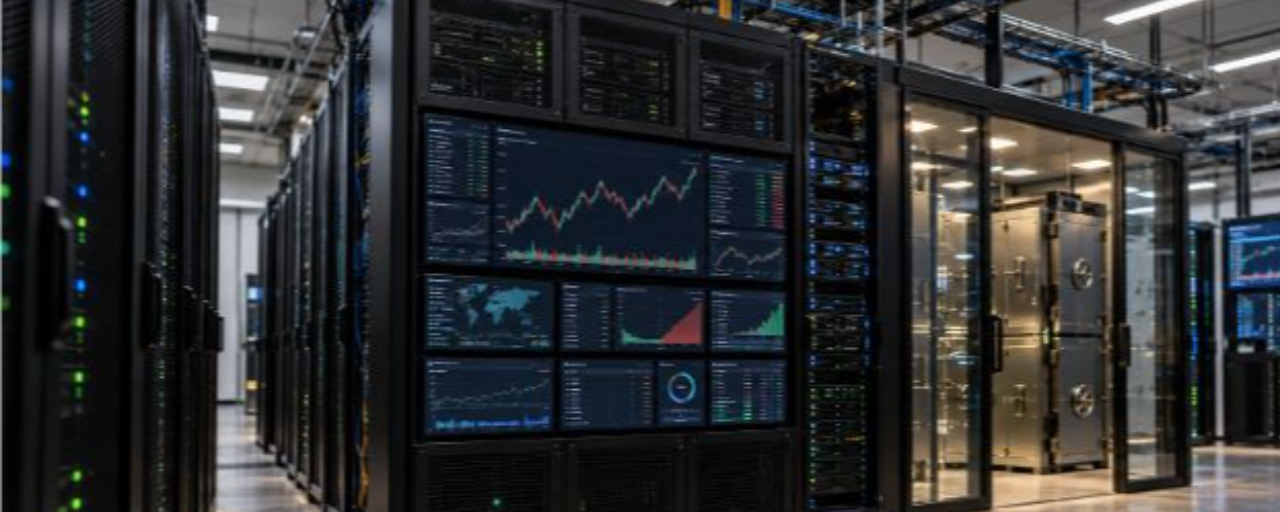

Digital asset trading infrastructure is evolving toward more structured systems in which different trading products, account functions, data processes, and risk controls are handled through defined roles. WCDPQ's disclosed development history provides one example of this approach, with its platform plans covering spot trading, derivatives, initial exchange offerings (IEOs), account management, data analytics, and modular trading infrastructure.
From a Single Market Focus to Broader Trading Infrastructure
According to WCDPQ's disclosures, its Australian business dates back to 2018. The company identifies its legal entity as WCDPQ FINANCE PTY LTD and describes its development as an expansion from diversified investment and digital asset trading toward broader cross-border trading infrastructure.
The company's stated development priorities include product roles, account management, data analytics, and the coordination of market data, orders, accounts, and risk processing.
WCDPQ's disclosures also describe international expansion, including a Canadian branch established in 2022. During this stage, the company says it worked on expanding and upgrading matching, clearing, and risk-management systems, with separate modules for accounts, market data, orders, and risk management.
By 2026, the company identifies data analytics, modular trading architecture, and layered risk management as key areas of platform development. Its stated approach emphasizes the use of data analytics in investment research and execution while maintaining defined rules and trading processes.
Different Products, Different Roles
One of the central ideas in WCDPQ's platform approach is that different digital asset products should have clearly defined purposes and operating conditions.
Spot trading is described as focusing on buying, selling, and allocating digital assets, with attention to market depth, execution slippage, and post-trade asset records.
Derivatives trading is described in terms of price-risk management and hedging, with considerations including margin requirements, mark prices, liquidation thresholds, leverage, and position management.
Initial exchange offerings (IEOs) involve early-stage project offerings and participation arrangements, with project disclosures, participation conditions, limits, fund handling, and account risk isolation identified as relevant considerations.
Separating these functions can help make the operational differences between products easier to understand. The company's disclosures also state that product availability, service regions, and eligible customer categories depend on the applicable product and service documentation.
Separating Trade Processing and Account Management
Another part of the platform design involves separating different components of the trading process.
The proposed architecture distinguishes between order matching, account ledgers, and derivatives liquidation. Matching handles order execution, the ledger records account assets, and liquidation handles positions under applicable derivatives rules.
The company also identifies order placement, cancellation, and liquidation during periods of high demand as important system-management considerations. It proposes using a consistent time source for market data and trades where possible so that the relationship between market information, orders, and execution records can be evaluated.
Account management is separately described as covering functions such as login, trading, withdrawals, and API access, with different permissions assigned to different operations.
Custody and Operational Controls
Digital asset infrastructure also depends on how assets and transaction approvals are managed.
According to WCDPQ's disclosures, its proposed custody arrangements distinguish between assets needed for trading liquidity and larger holdings placed in cold storage or managed through multi-party authorization.
The company's description makes an important distinction between these two concepts: cold storage relates to the environment in which cryptographic keys are held, while multi-party authorization relates to how asset transfers are approved.
For derivatives and IEO-related activities, WCDPQ also describes separate approaches to leverage management and participation limits, with the stated objective of preventing risks associated with project offerings from passing into trading accounts.
The Role of AI in Digital Asset Infrastructure
Artificial intelligence and data analytics are another component of the platform's stated development direction.
WCDPQ positions AI as an auxiliary tool for investment research, trading, and account management. Its proposed applications include information processing, portfolio correlation analysis, identifying changes in liquidity, detecting unusual withdrawal activity, and identifying potential cascading liquidations.
The approach described in the company's disclosures is not based on allowing AI to independently determine investment outcomes. Instead, AI is positioned as a tool for organizing information, identifying changes, and assisting with predefined rules.
The proposed system also includes staged execution, conditional orders, and rebalancing as examples of rule-based management connected to data analysis.
Risk Remains a Key Consideration
The role of automated analysis does not remove the need for individual decision-making and risk assessment.
WCDPQ's disclosures state that account owners remain responsible for decisions according to their own needs and risk tolerance, as well as for trading gains and losses.
The company also distinguishes between model performance under tested conditions and actual live-market performance, noting that backtesting results should not be treated as equivalent to live trading performance.
This distinction is particularly relevant to automated and data-driven trading systems, where historical results may not reflect the conditions encountered in live markets.
Toward More Structured Digital Asset Infrastructure
WCDPQ's stated long-term vision is to develop a digital asset trading hub connecting spot trading, derivatives, and project-offering activities while emphasizing security, measurable execution, and layered asset management.
The company's vision identifies three areas of focus:
Clearer services: explaining product purposes, applicable conditions, and responsible entities.
More understandable processes: helping users check trading status, account records, and risk handling.
Information that is easier to verify: providing accessible entity details, product descriptions, and technical documentation.
The broader development direction also includes deeper use of data analytics, connections between different asset businesses and liquidity sources, and clearer definitions of the rights and responsibilities of platforms and users.
The Broader Direction of Digital Asset Trading
The development of digital asset platforms increasingly involves more than simply providing a place to buy and sell assets. Trading infrastructure must coordinate market data, order execution, account records, custody, risk management, and increasingly sophisticated analytical tools.
WCDPQ's development plans illustrate one approach to organizing these functions through modular architecture, defined product roles, separate processing responsibilities, and data-assisted analysis.
For the broader digital asset industry, the continuing challenge is to combine increasingly complex technology with understandable processes, clearly defined responsibilities, and appropriate risk controls.
As digital asset infrastructure continues to develop, these areas are likely to remain central to discussions around trading-system design and platform operations
Australian business origins: 2018, according to WCDPQ’s disclosures.
Australian Company Number: ACN 702 504 069.
Official website: https://www.wcdpq.com
Contact email: info@wcdpq.com.