

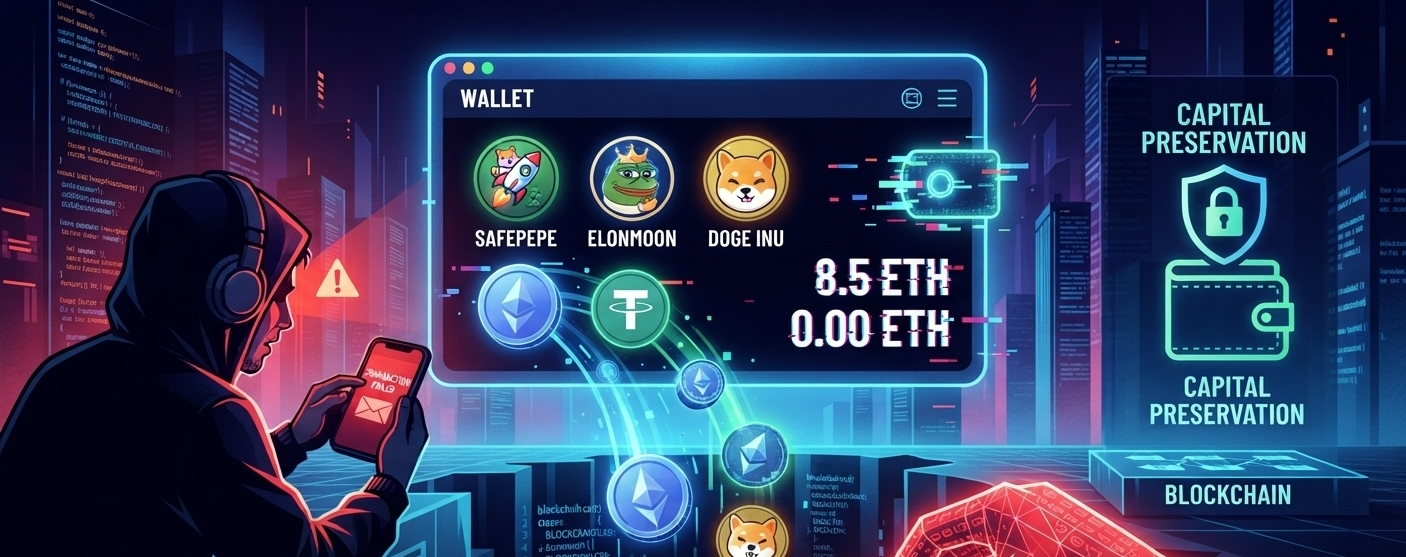

In the rapidly evolving world of cryptocurrency, the allure of turning a small investment into life-changing wealth often blinds traders to a harsh reality: many newly minted altcoins are not financial opportunities—they are deliberately engineered traps. While established assets like Bitcoin operate on transparent market principles, a massive influx of hyper-speculative tokens exists solely to siphon capital away from unsuspecting investors. If you want to survive as a trader, you must learn to look past the hype and audit the mechanics behind the asset.
🚨 The Anatomy of Deceptive Tokens
Many obscure altcoins offer no underlying utility, no sustainable tokenomics, and no real product. Instead, they rely on a psychological trap: creating an artificial sense of urgency and community hype.
These traps generally manifest in three ways:
The "Honeypot" Code: A trap where a token's smart contract is hardcoded to allow buying but block selling. The chart looks like a perfect green line going up because nobody is allowed to cash out except the creator.
The Sudden Liquidity Drain: Developers pool a legitimate asset (like ETH or USDT) alongside their useless token to allow trading. Once outside investors buy in, the creators abruptly remove the legitimate liquidity, rendering the token instantly untradeable and worthless.
Malicious Air-Drops: Tokens that mysteriously appear in your wallet, showing a high face value. Attempting to swap or approve them triggers a hidden code that grants scammers permission to completely drain your wallet's actual holdings.
🛡️ Survival Guide: What to Consider Before Allocating Capital
To protect your trading capital from being stolen or permanently trapped, you must replace emotional trading with strict, non-negotiable verification steps. Before risking a single dollar on an unproven altcoin, run it through this safety framework:
1. Audit the Liquidity Status
Never buy a token unless its liquidity is locked or burned.
What to check: Legitimate projects use smart contracts (like Unicrypt or Mudra) to lock their liquidity pools for a specific duration (e.g., 6 months, 1 year). This prevents developers from abruptly pulling out the funds. If the liquidity is unlocked and held in a few developer wallets, treat it as a guaranteed exit scam.
2. Analyze Holder Concentration
If a tiny group of wallets controls the vast majority of the token supply, they hold absolute power over the price.
What to check: Use block explorers (like Etherscan or BscScan) to view the "Holders" tab. If the top 5 or 10 wallets hold more than 20% of the circulating supply (excluding exchange or burn addresses), those insiders can crash the price to zero the moment they decide to dump their tokens.
3. Run Automated Smart Contract Scans
You do not need to know how to read Solidity code to protect yourself. Automated diagnostic tools can do the heavy lifting for you.
What to check: Paste the token's contract address into tools like Token Sniffer, De.Fi Scanner, or Honeypot.is. These platforms instantly flag malicious code fragments, such as hidden minting functions, extremely high buy/sell taxes (e.g., a 99% tax), or restrictions that prevent non-whitelisted wallets from executing sell orders.
4. Evaluate Source Code and Developer Identity
An anonymous team writing unverified code is a massive red flag.
What to check: Check if the smart contract is "Verified" on the block explorer (marked by a green checkmark). A verified contract means the public can view the code. If the contract is unverified, assume it contains malicious functions. Furthermore, look for teams that have undergone a third-party audit from reputable firms like CertiK or Hacken.
💡 Golden Rules for Capital Preservation
The "Too Good to Be True" Rule: If a token is pumping 1,000% in a few hours with zero fundamental news, a highly vocal but shallow social media community, and no clear utility, you are likely looking at a trap.
Test the Waters: If you decide to take a high-risk gamble on a micro-cap token, always test your exit strategy first. Buy a tiny fraction of the token and immediately try to sell it. If the sell transaction fails or gives an error, you are in a honeypot. Stop buying immediately.
Isolate Your Funds: Never interact with unverified or highly speculative decentralized exchanges (DEXs) using your primary cold storage or main trading wallet. Use a clean, dedicated "burner wallet" with minimal funds so that a malicious contract cannot wipe out your entire portfolio.
The Bottom Line: In trading, preserving your capital is far more important than catching every single pump. The crypto market is highly asymmetric; you can always find another trade, but you cannot trade if your capital is gone. Invest time in due diligence before you invest your hard-earned money.