

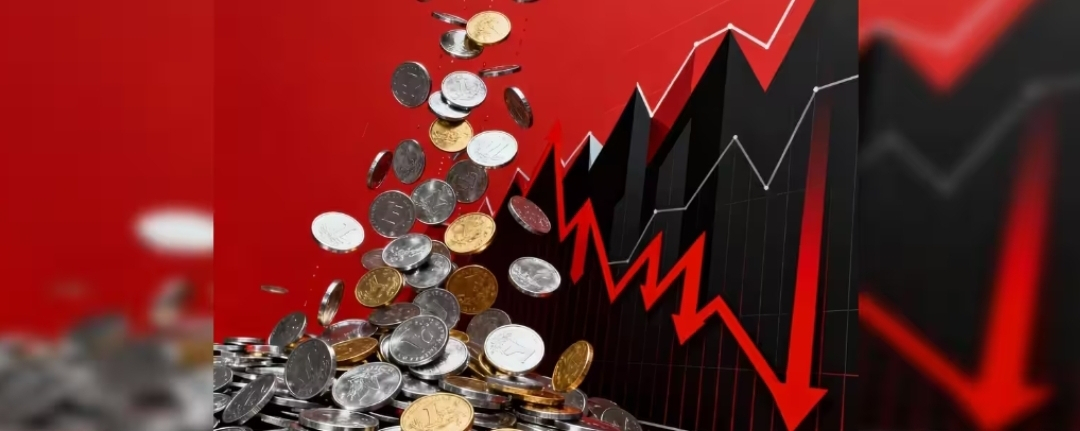


Bitcoin starts falling, the market turns red, and suddenly everyone begins talking about another crypto crash.
Investors who were excited about Bitcoin reaching $100,000 just a few days earlier are now worried about how much further prices could decline.
Social media becomes filled with bearish predictions, trading groups start discussing lower targets, and fear spreads across the market.
But here's something many beginners don't realize.
The biggest mistake new crypto investors make during a market correction isn't necessarily buying at the wrong price. It's allowing fear to control their financial decisions.
And this mistake can sometimes cost investors more than the correction itself.
Why Do Beginners Panic When Bitcoin Falls?
Imagine someone buying Bitcoin at $85,000 because they believe the price will eventually reach $100,000.
A few days later, Bitcoin drops toward $82,000.
Their investment is suddenly worth less, and their confidence begins disappearing.
Even though Bitcoin has experienced many corrections throughout its history, seeing a loss in their own portfolio feels completely different.
This happens because people naturally dislike losing money.
In behavioral finance, this reaction is known as loss aversion.
Investors often feel the emotional impact of losing money more strongly than the satisfaction of earning a similar amount.
As a result, even a relatively small correction can trigger significant anxiety.
The Biggest Mistake: Making Decisions Without a Plan
Many beginners enter the crypto market with only one expectation: prices will rise.
They calculate potential profits, imagine future returns, and focus on how much money they could make.
But they rarely consider what happens if the market moves in the opposite direction.
When Bitcoin starts falling, they suddenly face difficult questions.
Should they sell immediately? Should they continue holding? What if Bitcoin drops another 10%?
Without a clear plan, every new price movement creates uncertainty.
This is where emotional decisions begin replacing thoughtful analysis.
A realistic investment plan should consider both favorable and unfavorable outcomes before money is committed.
Selling in Panic Can Turn Temporary Losses Into Permanent Ones
When Bitcoin falls sharply, some investors become desperate to escape further losses.
They sell because they are frightened rather than because their original investment reasons have changed.
Sometimes, prices recover shortly afterward, leaving those investors frustrated.
However, this does not mean selling during a decline is always wrong.
There are situations where reducing exposure is a reasonable decision, especially when an investment no longer fits someone's financial circumstances or risk tolerance.
The real problem is making a decision based entirely on fear without evaluating the available information.
A good financial decision should depend on risk, evidence, and personal circumstances—not simply the color of the latest candle.
Buying Every Dip Can Be Just as Dangerous
Many beginners believe that every Bitcoin correction is an opportunity to buy more.
They hear experienced traders discussing buying the dip and assume that lower prices automatically mean better value.
But this approach carries significant risks.
Bitcoin can continue declining long after investors believe it has reached a bottom.
For example, a person might buy after a 5% decline, only to watch the market fall another 10% or 20%.
Without proper planning, repeated purchases can create an investment position that is much larger than originally intended.
Lower prices alone do not guarantee that an asset is undervalued.
Investors should consider their financial situation, risk tolerance, and reasons for holding an asset before making additional purchases.
Social Media Makes the Situation Worse
One of the biggest challenges facing new crypto investors is the constant stream of market predictions.
When Bitcoin rises, influencers begin discussing massive rallies and new all-time highs.
When Bitcoin falls, the same platforms become filled with warnings about crashes and market collapses.
Beginners may struggle to separate reliable information from emotional opinions.
A dramatic prediction can attract thousands of views without being supported by strong evidence.
Following these predictions blindly can lead to repeated buying and selling at unfavorable prices.
It is important to remember that popularity does not make a market prediction accurate.
Why Trying to Predict the Exact Bottom Often Fails
Another common mistake is believing that every market correction has an easily identifiable bottom.
Some investors spend hours watching charts, hoping to purchase Bitcoin at the lowest possible price.
But financial markets are unpredictable.
Even experienced traders cannot consistently identify exact turning points.
Bitcoin may appear to stabilize before experiencing another decline.
Alternatively, it may recover before investors receive the confirmation they were waiting for.
Trying to achieve perfect timing can create unnecessary pressure and encourage impulsive decisions.
A more realistic approach is to understand that uncertainty is part of investing.
Leverage Can Turn a Small Mistake Into a Big Problem
Some beginners enter leveraged trades because they want to recover losses quickly.
They believe that using a larger position will help them earn back money during the next market movement.
However, leverage increases both potential gains and potential losses.
A relatively small Bitcoin price movement can result in substantial losses for traders using excessive leverage.
In extreme situations, leveraged positions can be liquidated before the market has an opportunity to recover.
Trying to recover losses through increasingly risky trades can create a dangerous cycle.
For beginners, understanding the risks of leverage is essential before considering complex trading products.
Why Bitcoin Corrections Feel Different From Other Investments
Cryptocurrency markets operate around the clock.
Unlike traditional stock exchanges, Bitcoin continues trading during weekends, holidays, and overnight hours.
This means investors can check their portfolios at almost any moment.
While constant access provides flexibility, it can also increase emotional pressure.
Someone who checks Bitcoin prices every few minutes may experience more stress than an investor who reviews their portfolio at planned intervals.
Short-term fluctuations can begin to feel more important than the broader investment outlook.
This constant exposure can make normal market volatility appear more dramatic than it actually is.
What Experienced Investors Understand About Market Corrections
Experienced investors generally recognize that uncertainty is unavoidable.
They understand that even strong assets can experience significant declines.
Instead of assuming every correction is either a disaster or a buying opportunity, they examine the reasons behind the price movement.
They consider market conditions, liquidity, economic developments, and changes in demand.
They also recognize that protecting their financial stability is more important than chasing every potential opportunity.
Experience does not eliminate mistakes, but it can encourage more disciplined decision-making.
The Importance of Protecting Your Capital
One of the most valuable lessons for beginners is that investment opportunities will continue to appear.
There is no need to participate in every market movement.
Using money needed for essential expenses or taking risks beyond one's financial limits can make market corrections much more stressful.
A thoughtful approach involves understanding possible losses before entering an investment.
It also means recognizing that no cryptocurrency, including Bitcoin, is guaranteed to recover after a decline.
Protecting your financial stability should always matter more than trying to achieve quick profits.
Can Bitcoin Recover After a Major Correction?
Bitcoin has recovered from several significant declines throughout its history.
However, those historical recoveries do not guarantee that every future correction will end the same way.
The direction of Bitcoin depends on many factors, including investor demand, economic conditions, market liquidity, and regulatory developments.
Sometimes, prices recover quickly.
Other times, the market can remain weak for months or longer.
This uncertainty is why making financial decisions based only on previous market patterns can be risky.
Investors should consider both the possibility of recovery and the possibility of further losses.
Final Thoughts: The Biggest Mistake Is Letting Fear Make Your Decisions
Bitcoin corrections are a normal part of cryptocurrency markets, but they can still create serious financial risks.
For beginners, the biggest challenge is often managing their own reactions to falling prices.
Some investors sell impulsively because they are afraid.
Others buy aggressively because they believe every decline must be followed by a rally.
Both decisions can create problems when they are made without proper research or risk management.
The goal is not to predict every Bitcoin movement perfectly. The goal is to make informed decisions even when the market becomes uncertain.
Bitcoin will continue experiencing periods of optimism, fear, and volatility.
But investors who understand their financial limits and develop realistic expectations may be better prepared to navigate those changes.
Remember, a successful investment decision is not always the one that produces the fastest profit.
Sometimes, the most important decision is simply avoiding a risk you do not fully understand.
What Would You Do?
Imagine Bitcoin falls another 10% tomorrow. Would you panic and sell, consider buying more, or wait until the market becomes clearer?
Share your thoughts in the comments.
Disclaimer: This article is for educational and informational purposes only and does not constitute financial advice. Cryptocurrency investments involve significant risk, and investors should conduct their own research.