

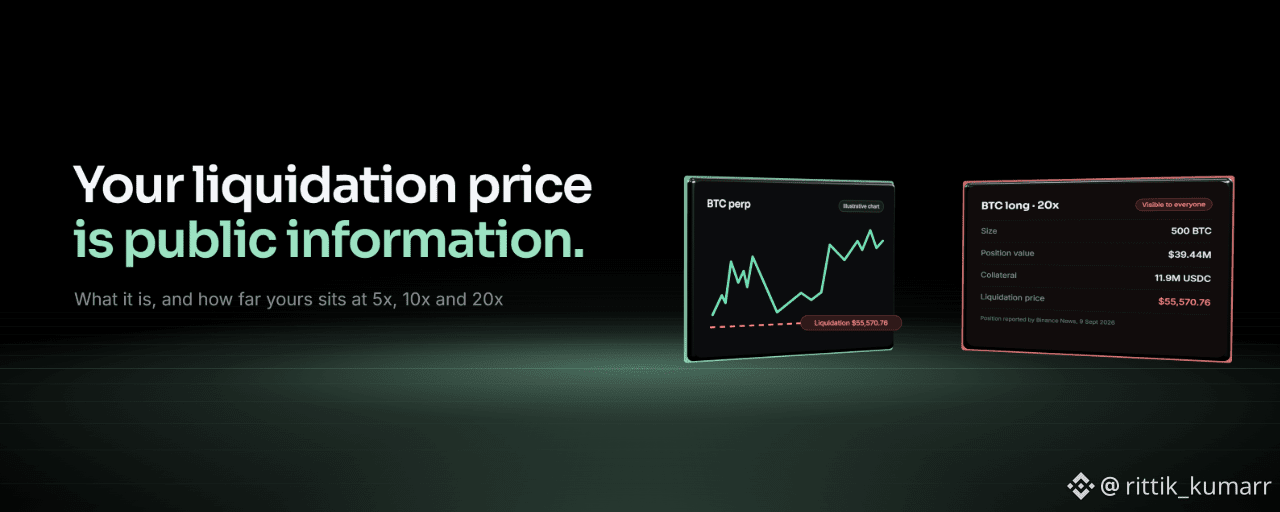

Last month a trader opened a 20x long on 500 BTC, and the whole internet could see the exact price at which that position would end. That one trade teaches two things most of us learn the expensive way.
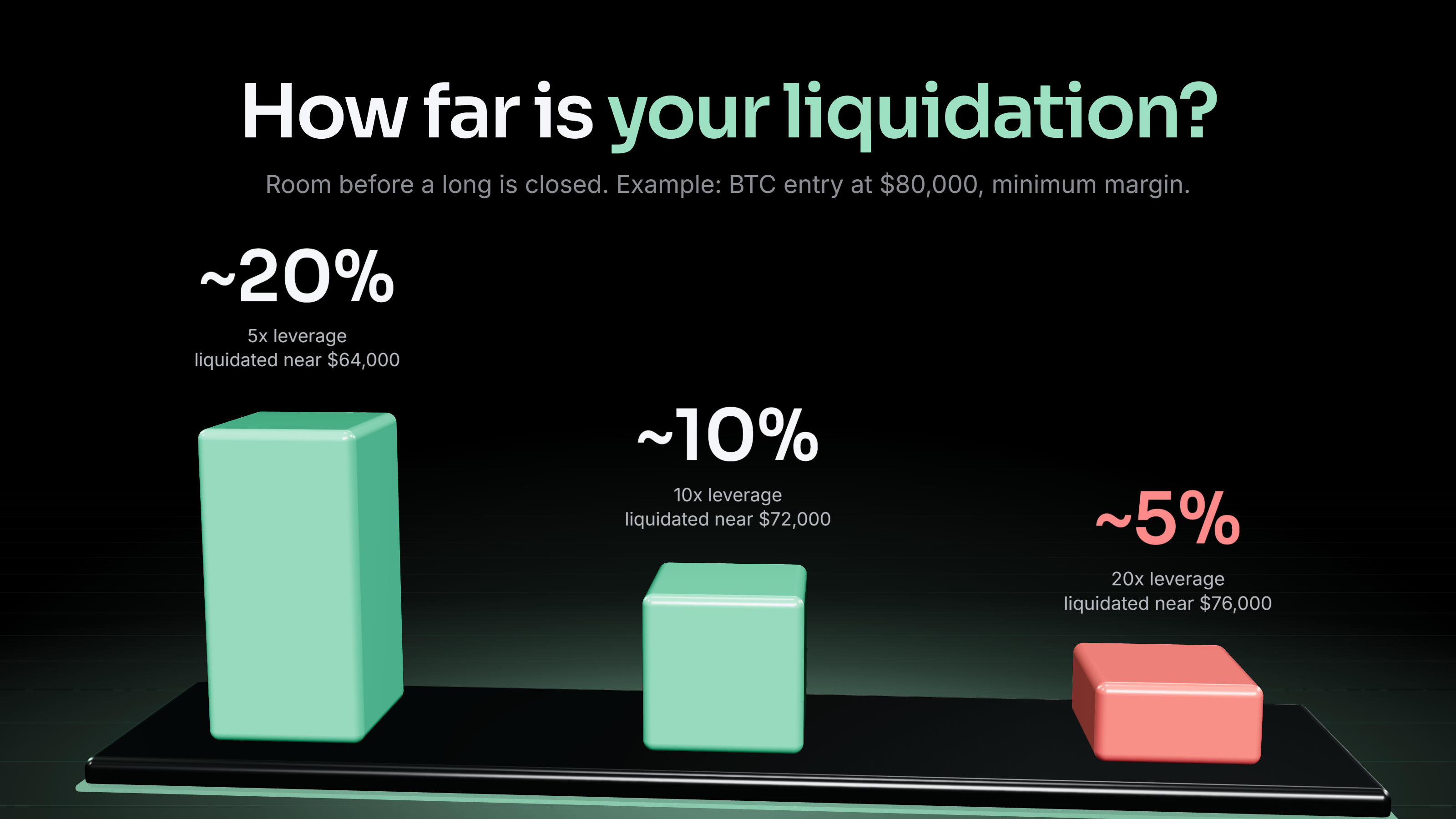
Quick answer: A liquidation price is the price at which an exchange force-closes a leveraged position because the remaining margin can no longer cover the loss. For a long with minimum margin, it sits roughly 20% below entry at 5x, 10% below at 10x and 5% below at 20x.
1️⃣ 🧮 How far is your liquidation?
The simple formula for a long is entry price × (1 − 1 ÷ leverage), and the exchange moves that level slightly closer to keep a maintenance margin. A 5% move is an ordinary day for most coins, which explains why so many 20x positions end without any manipulation at all.
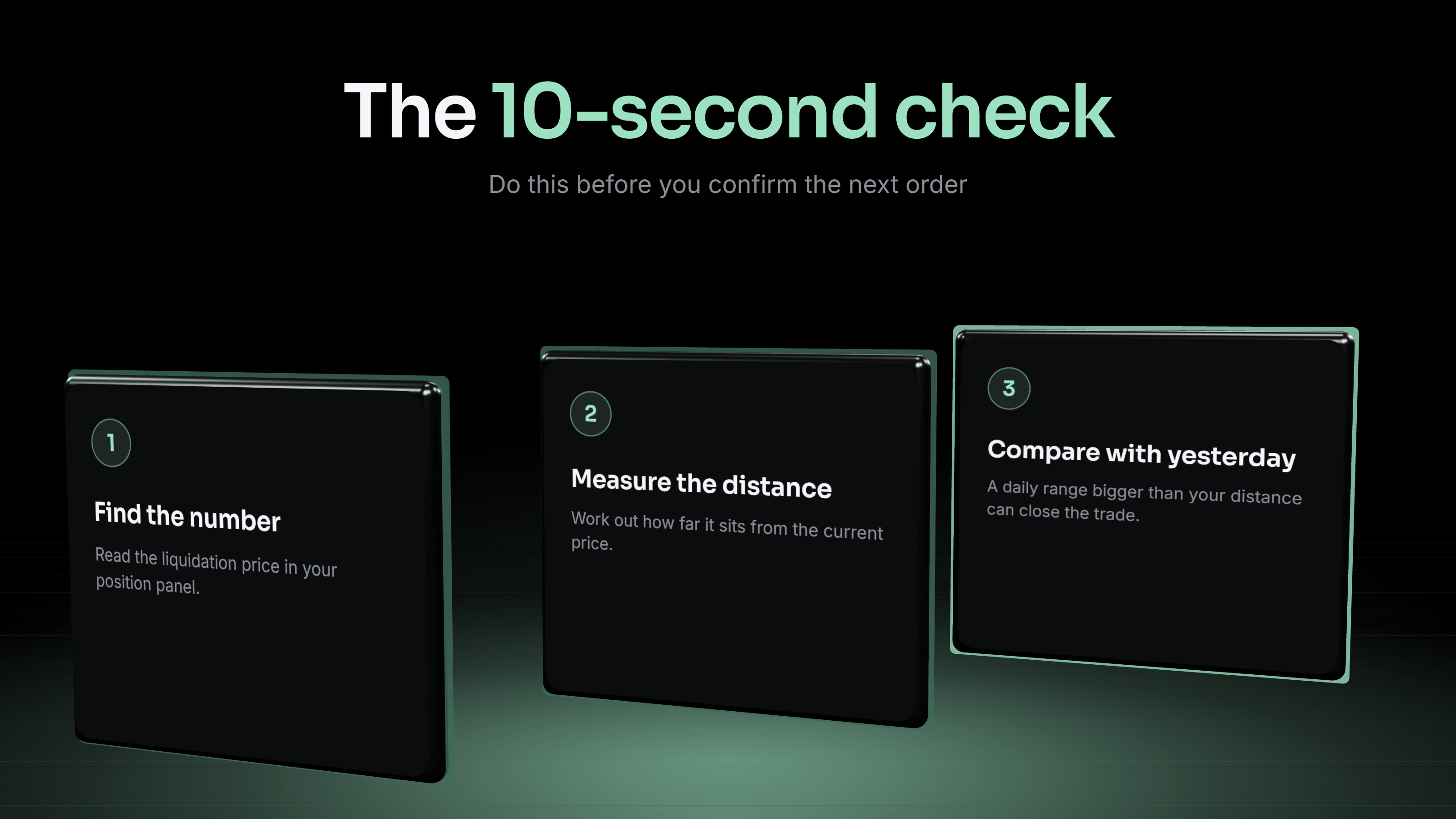
2️⃣ ⏱️ The 10-second check
Before you confirm an order, find your liquidation price, measure its distance from the current price and compare that with yesterday's range.
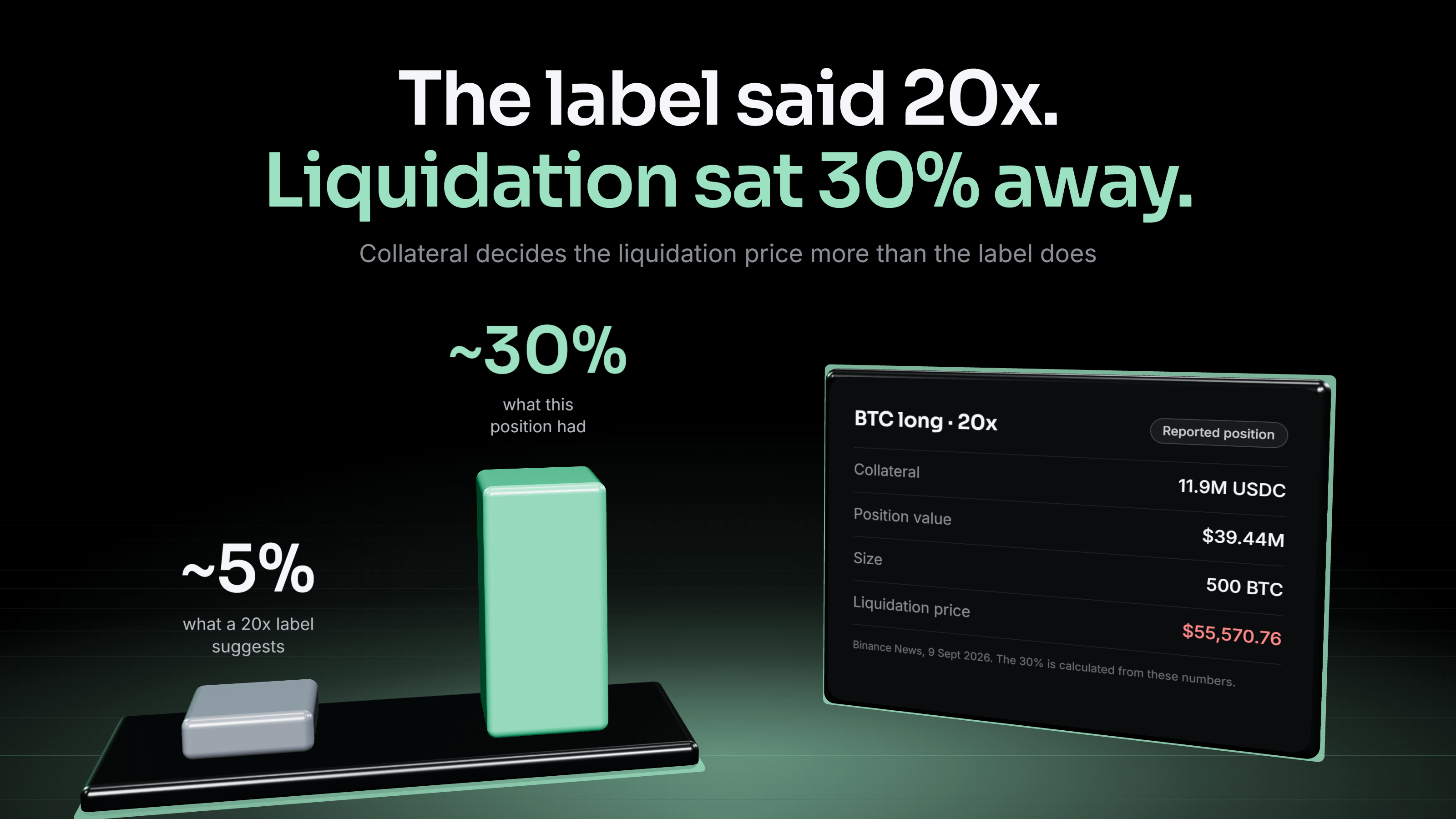
3️⃣ 🔍 A real case: the 20x label can mislead you
On 9 September, Binance News reported that a monitored address deposited 11.9 million USDC into Hyperliquid and opened a 20x long on 500 BTC, worth $39.44 million, with a liquidation price of $55,570.76 (tracked by Lookonchain, via ChainCatcher). The liquidation level sat about 30% below the entry value, because the trader placed far more collateral behind the position than the minimum.
4️⃣ 👀 Can other traders see your liquidation price?
That trader never announced the size, the collateral or the liquidation level. The chain published all three. On a centralized exchange your position stays private, while on a transparent on-chain venue anyone can read it.
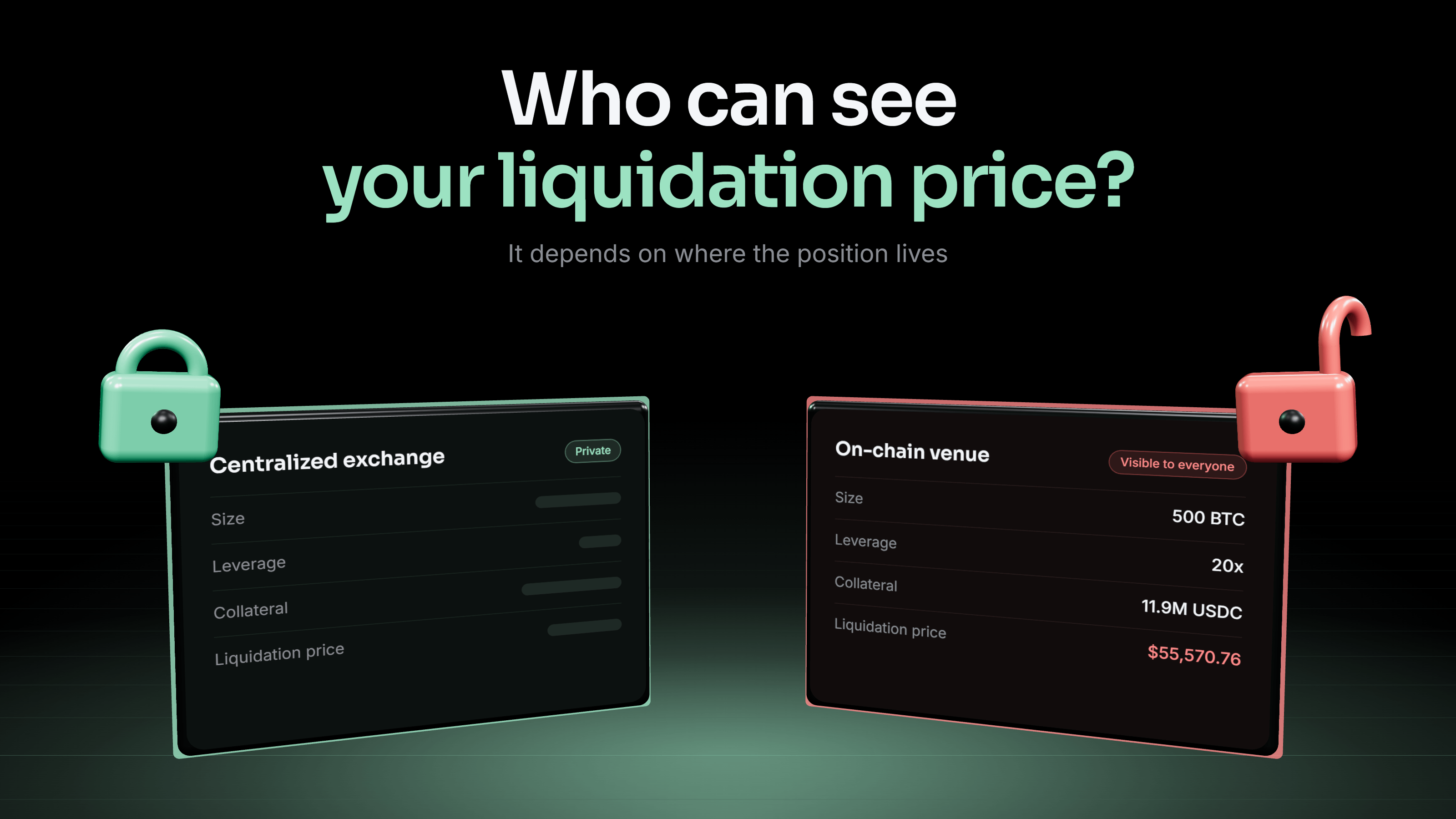
A market needs price, side and size on the order book to work well. I keep asking whether it also needs the owner, the leverage and the liquidation level of every position.
5️⃣ ✅ Three habits that help me
I check the liquidation price before I confirm, and I reduce leverage or add collateral if a normal day can reach it.
I place my stop well before the liquidation level, so the exit stays my decision.
On a transparent venue, I treat my own levels as public information when I decide the size.
6️⃣ 📌 Short answers
Does adding collateral change the liquidation price? Yes. More margin behind the same position moves it further from the entry.
Is a stop-loss the same as a liquidation? A stop-loss is an exit you choose in advance. A liquidation is an exit the exchange forces when the margin runs out.
If you trade perps on-chain, does a public liquidation price bother you, or is full transparency worth that cost?
Education only. Not financial advice.