
$ETH: Balancing Entry Quality and Execution Speed
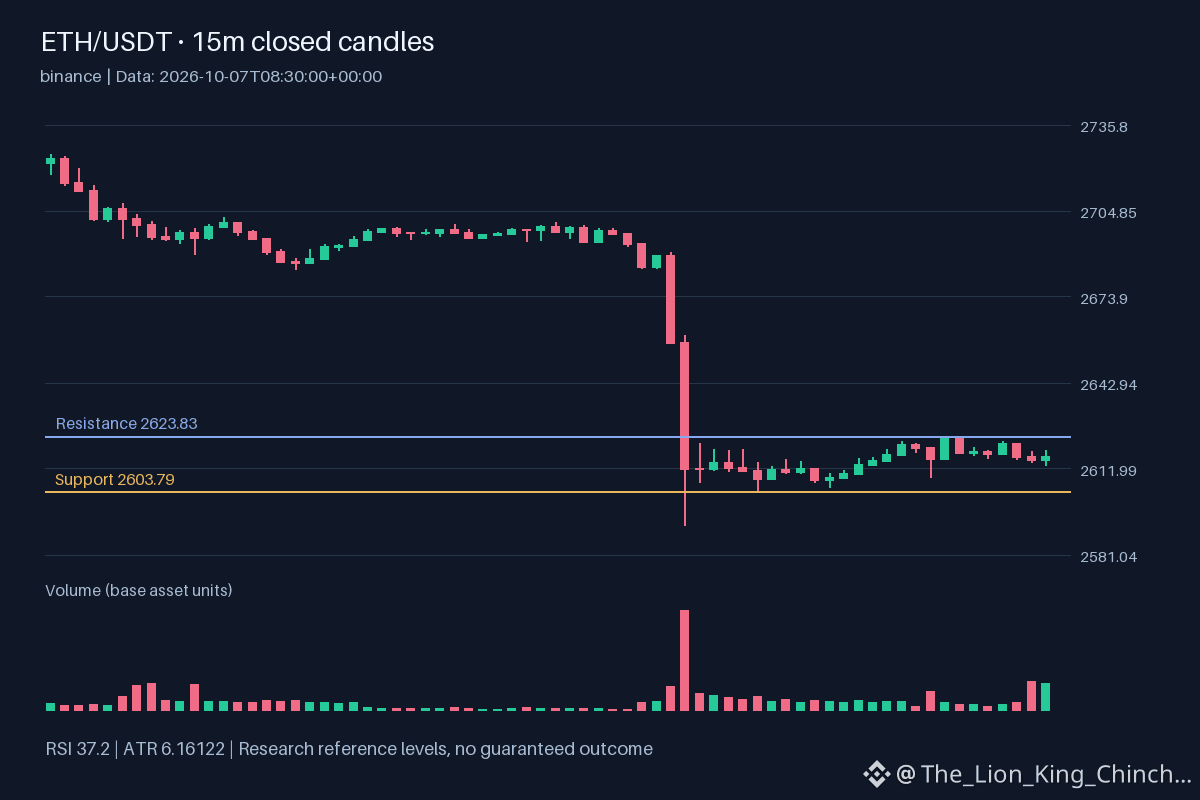
Trading $ETH requires a constant negotiation between securing a quality entry and avoiding the temptation of chasing a runaway move. When volume runs above baseline, the market often signals a surge in participation that demands a decision. If you prioritize entry quality, you wait for the price to retreat toward the 2603.79 level or retest the 2660.02, accepting the risk that the move continues without you. If you chase, you execute near the 2616.33, securing participation but widening your stop distance significantly. This represents a classic trade-off: capturing the momentum versus managing the inherent risk of an unfavorable cost basis. Imagine a scenario where you anticipate a breakout but the price accelerates rapidly away from your plan. If you buy immediately, your stop must be placed further away, perhaps near the 2644.33, to remain valid. This increases the amount of capital at risk per trade. Conversely, waiting for a pullback might offer a tighter stop relative to the 2623.83, but the opportunity might evaporate entirely before that level is reached. When the assumption of continued momentum fails, your primary concern shifts to how quickly you recognize the invalidation. A solid decision checklist includes verifying if the 37.1991 is overextended and whether the 2.89304 supports the current trend. Before acting, ask yourself if the setup allows for a stop distance that aligns with your risk tolerance. If the answer is no, reevaluating the trade is often superior to forcing an entry.
Probabilistic market research, not a recommendation or guaranteed return.
Which matters more to you: seeing the opportunity or defining its failure?
#ETH
Trading $ETH requires a constant negotiation between securing a quality entry and avoiding the temptation of chasing a runaway move. When volume runs above baseline, the market often signals a surge in participation that demands a decision. If you prioritize entry quality, you wait for the price to retreat toward the 2603.79 level or retest the 2660.02, accepting the risk that the move continues without you. If you chase, you execute near the 2616.33, securing participation but widening your stop distance significantly. This represents a classic trade-off: capturing the momentum versus managing the inherent risk of an unfavorable cost basis. Imagine a scenario where you anticipate a breakout but the price accelerates rapidly away from your plan. If you buy immediately, your stop must be placed further away, perhaps near the 2644.33, to remain valid. This increases the amount of capital at risk per trade. Conversely, waiting for a pullback might offer a tighter stop relative to the 2623.83, but the opportunity might evaporate entirely before that level is reached. When the assumption of continued momentum fails, your primary concern shifts to how quickly you recognize the invalidation. A solid decision checklist includes verifying if the 37.1991 is overextended and whether the 2.89304 supports the current trend. Before acting, ask yourself if the setup allows for a stop distance that aligns with your risk tolerance. If the answer is no, reevaluating the trade is often superior to forcing an entry.
Probabilistic market research, not a recommendation or guaranteed return.
Which matters more to you: seeing the opportunity or defining its failure?
#ETH