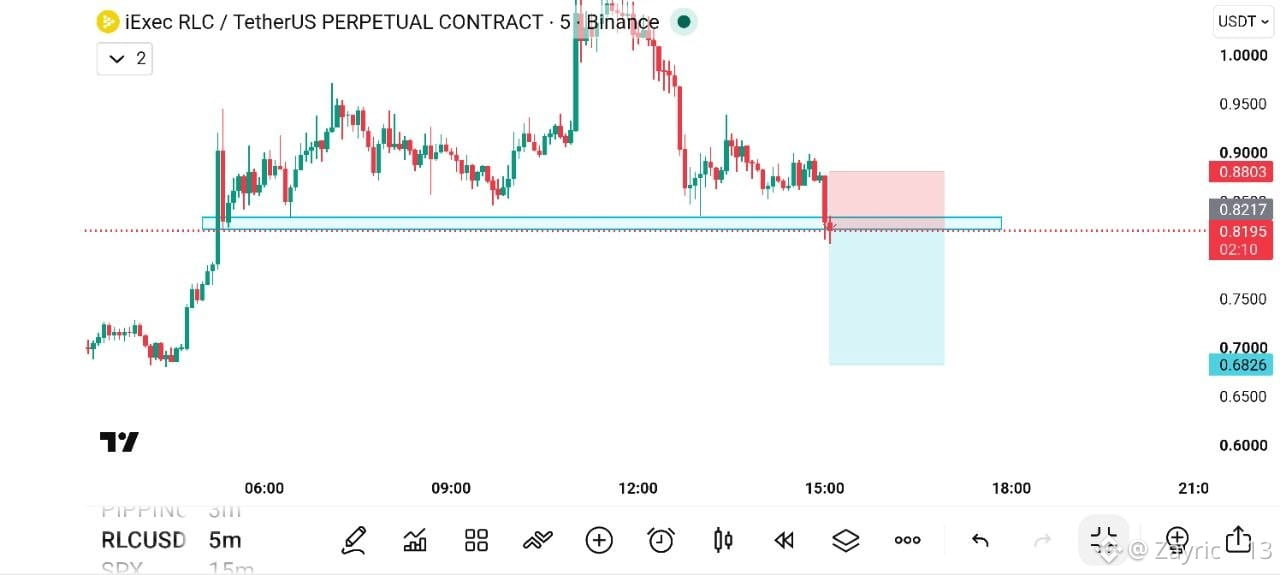

$RLC ’s Ethereum holder count is sitting around 26.9K addresses as of October 6, 2026, while the token is trading near $0.82 after a sharp repricing. That’s an interesting number for a token whose core pitch is utility for decentralized computing rather than being a wallet-count growth story.
Here’s the part that matters if you’ve ever looked at an RLC holder chart and treated every address as a new user: holder counts are address counts, not people. RLC also exists across Ethereum and other networks, including an Arbitrum deployment, so one chain’s address count is only a partial view of ownership. Exchange wallets, custodians, smart contracts and fragmented balances can also sit inside these figures, while small residual balances can remain after swaps or transfers. Current data shows the top 10 Ethereum addresses alone control roughly 41% of supply, which makes the raw holder count even less useful as a standalone demand metric.
The cleaner metric here is circulating supply: roughly 86.99M RLC, essentially the full reported supply, rather than how many addresses happen to hold it. So when someone points to RLC’s “holder growth” as proof of adoption, the obvious question is: how much of that growth represents actual users, and how much is simply blockchain addresses?
Here’s the part that matters if you’ve ever looked at an RLC holder chart and treated every address as a new user: holder counts are address counts, not people. RLC also exists across Ethereum and other networks, including an Arbitrum deployment, so one chain’s address count is only a partial view of ownership. Exchange wallets, custodians, smart contracts and fragmented balances can also sit inside these figures, while small residual balances can remain after swaps or transfers. Current data shows the top 10 Ethereum addresses alone control roughly 41% of supply, which makes the raw holder count even less useful as a standalone demand metric.
The cleaner metric here is circulating supply: roughly 86.99M RLC, essentially the full reported supply, rather than how many addresses happen to hold it. So when someone points to RLC’s “holder growth” as proof of adoption, the obvious question is: how much of that growth represents actual users, and how much is simply blockchain addresses?