


It’s late, I’m watching Bitcoin move around the charts, and the market feels strangely calm for how quickly the tokenization narrative is getting bigger.
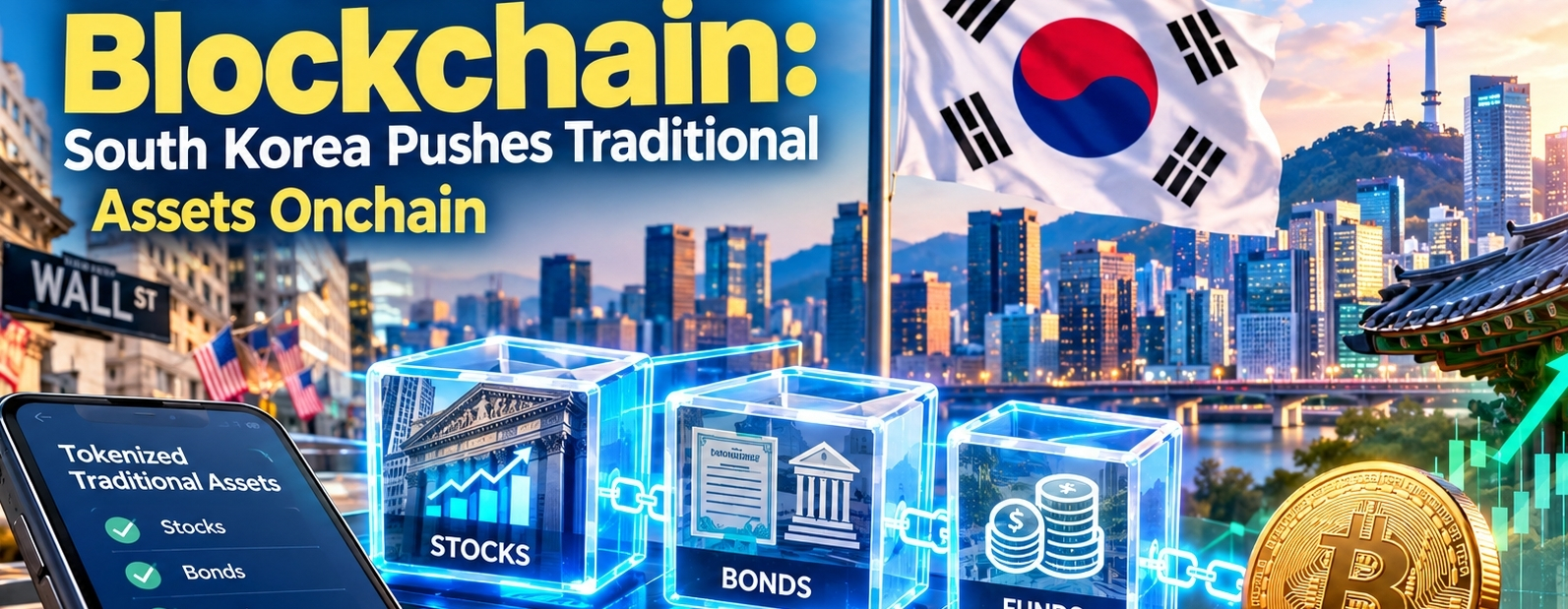
Then I came across South Korea’s proposal to bring stocks, bonds and funds into a regulated onchain framework from February 2027.
I stopped for a moment.
I have seen plenty of “real-world assets are coming” headlines before. Most create excitement for a few days, then liquidity moves somewhere else. But this one feels different because I’m not looking at another crypto project launching a token. I’m looking at a major financial market trying to connect traditional securities with blockchain infrastructure.
That distinction matters to me.
From what I’m seeing, the real problem isn’t simply putting a stock on a blockchain. The harder problem is making sure the digital ownership record, legal ownership, custody, settlement and investor protections all agree with each other.
That’s where South Korea’s approach becomes interesting.
I’m paying attention to the role of the Korea Securities Depository and the proposed structure where distributed-ledger infrastructure works alongside regulated financial institutions. I don’t see this as traditional finance suddenly becoming DeFi. I see it more as traditional markets experimenting with new settlement rails without throwing away the controls they already depend on.
Economically, I can understand the attraction.
If bonds, funds or other securities become digitally represented, I could eventually see easier distribution, more flexible ownership and potentially faster settlement. But I’m not assuming tokenization automatically creates liquidity. A tokenized illiquid asset can still be illiquid.
That’s one thing I keep reminding myself.
Technically, the interesting part is the infrastructure underneath. I’m watching how identity, permissions, custody and transaction records interact. In crypto, I can follow a 0x wallet and watch liquidity move almost instantly. Regulated securities are different. The important question may not be where the token moved, but who legally controls the asset behind it.
That changes the whole game.
I also see meaningful differences between players already building in this space. Securitize is focused heavily on regulated issuance and institutional market infrastructure. Ondo is more product-driven, bringing traditional financial exposure into crypto-native environments. Canton is taking a more institutional approach around privacy and interoperability.
South Korea feels different again.
I see a regulator-led experiment.
And honestly, that makes me more interested.
The risks are still obvious to me. Execution could disappoint. Adoption may take longer than expected. Liquidity could remain thin. Competition is already strong. Any crypto tokens connected to the RWA narrative still carry unlock and dilution risks. And there is always the danger of narrative fatigue when traders realize infrastructure takes years while speculation moves in hours.
The honest part I keep returning to is that tokenization doesn’t guarantee better markets.
It only gives markets new infrastructure.
The overlooked insight, in my view, is that the biggest opportunity may not be a new “RWA token” at all. It could be the quiet infrastructure connecting securities, settlement, custody, identity and eventually digital money.
That’s what I’m watching now.
If South Korea can move from regulation to real usage, real liquidity and repeated investor activity, I’ll take this narrative much more seriously.
Until then, I’m staying curious rather than blindly bullish.
Because when stocks, bonds and funds move onchain, the real question isn’t whether we can tokenize them.
It’s whether we actually change how capital moves.


