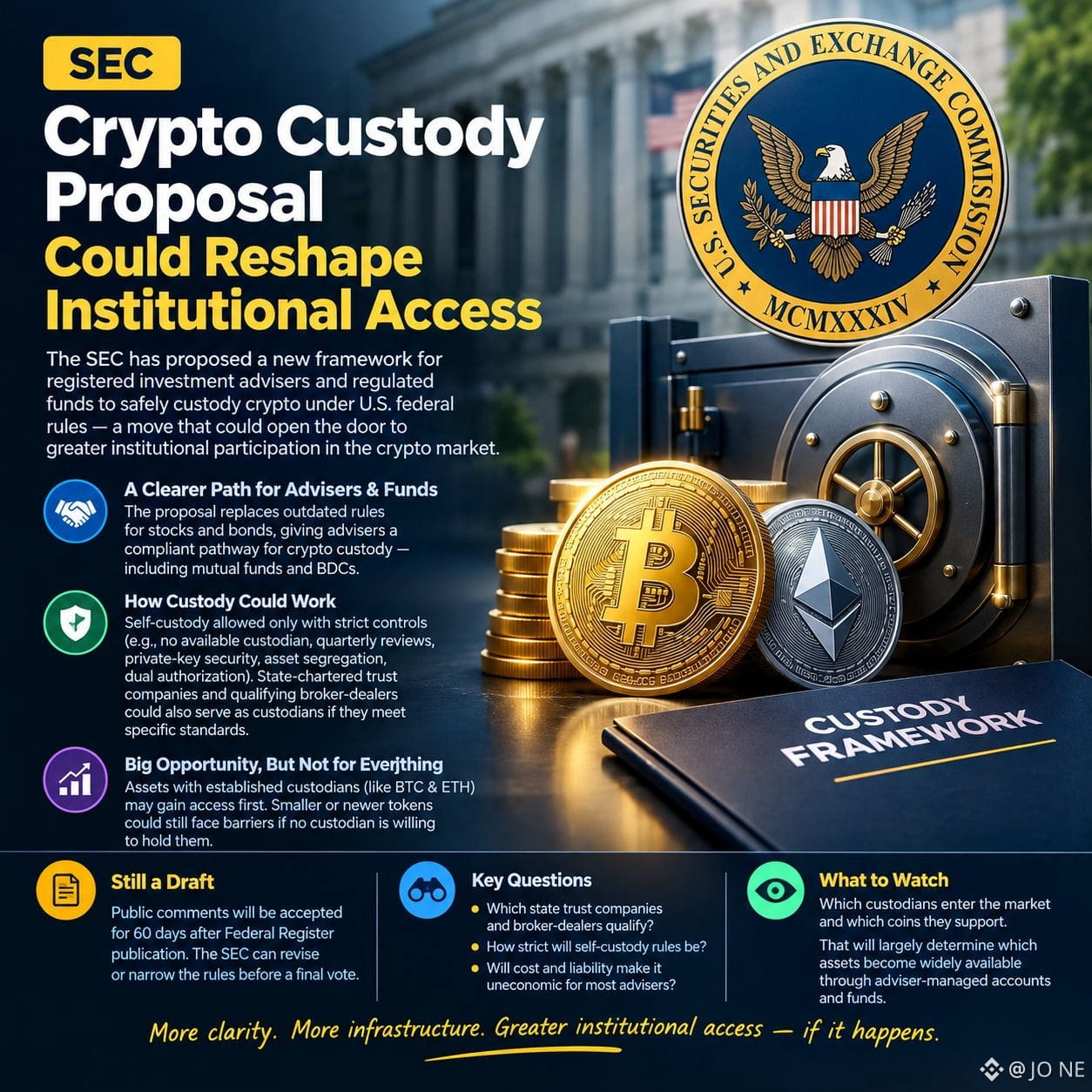
🚨 SEC’s New Crypto Custody Proposal Could Reshape Institutional Access
The SEC has proposed a new framework for how registered investment advisers and regulated funds could safely custody crypto under U.S. federal rules.
The key change? Traditional custody rules were designed decades ago for assets like stocks and bonds. This proposal aims to create a clearer compliance route for digital assets, potentially including mutual funds and business development companies.
🔐 How could custody work?🏖️
Advisers may be allowed to self-custody certain assets only under strict conditions, including proving that no approved custodian is available, regular reviews, strong private-key controls, asset segregation, and dual authorization for transfers.
State-chartered trust companies and qualifying broker-dealers could also potentially serve as crypto custodians if they meet required safeguarding and financial standards.
💡 Why does this matter?
The biggest opportunity may go first to cryptocurrencies that established regulated custodians are prepared to support at scale. Bitcoin and Ethereum could benefit from this infrastructure, while smaller or newer tokens may still face custody limitations.
⚠️ But this is NOT final yet.
The proposal still goes through a public-comment period, and the SEC could change the framework before a final decision.
👀 The next thing to watch: which custodians enter this market and which crypto assets they are willing to support.
Institutional crypto adoption may depend not only on demand—but also on whether the infrastructure is ready to safely hold the assets.
😊😊😊
The SEC has proposed a new framework for how registered investment advisers and regulated funds could safely custody crypto under U.S. federal rules.
The key change? Traditional custody rules were designed decades ago for assets like stocks and bonds. This proposal aims to create a clearer compliance route for digital assets, potentially including mutual funds and business development companies.
🔐 How could custody work?🏖️
Advisers may be allowed to self-custody certain assets only under strict conditions, including proving that no approved custodian is available, regular reviews, strong private-key controls, asset segregation, and dual authorization for transfers.
State-chartered trust companies and qualifying broker-dealers could also potentially serve as crypto custodians if they meet required safeguarding and financial standards.
💡 Why does this matter?
The biggest opportunity may go first to cryptocurrencies that established regulated custodians are prepared to support at scale. Bitcoin and Ethereum could benefit from this infrastructure, while smaller or newer tokens may still face custody limitations.
⚠️ But this is NOT final yet.
The proposal still goes through a public-comment period, and the SEC could change the framework before a final decision.
👀 The next thing to watch: which custodians enter this market and which crypto assets they are willing to support.
Institutional crypto adoption may depend not only on demand—but also on whether the infrastructure is ready to safely hold the assets.
😊😊😊