


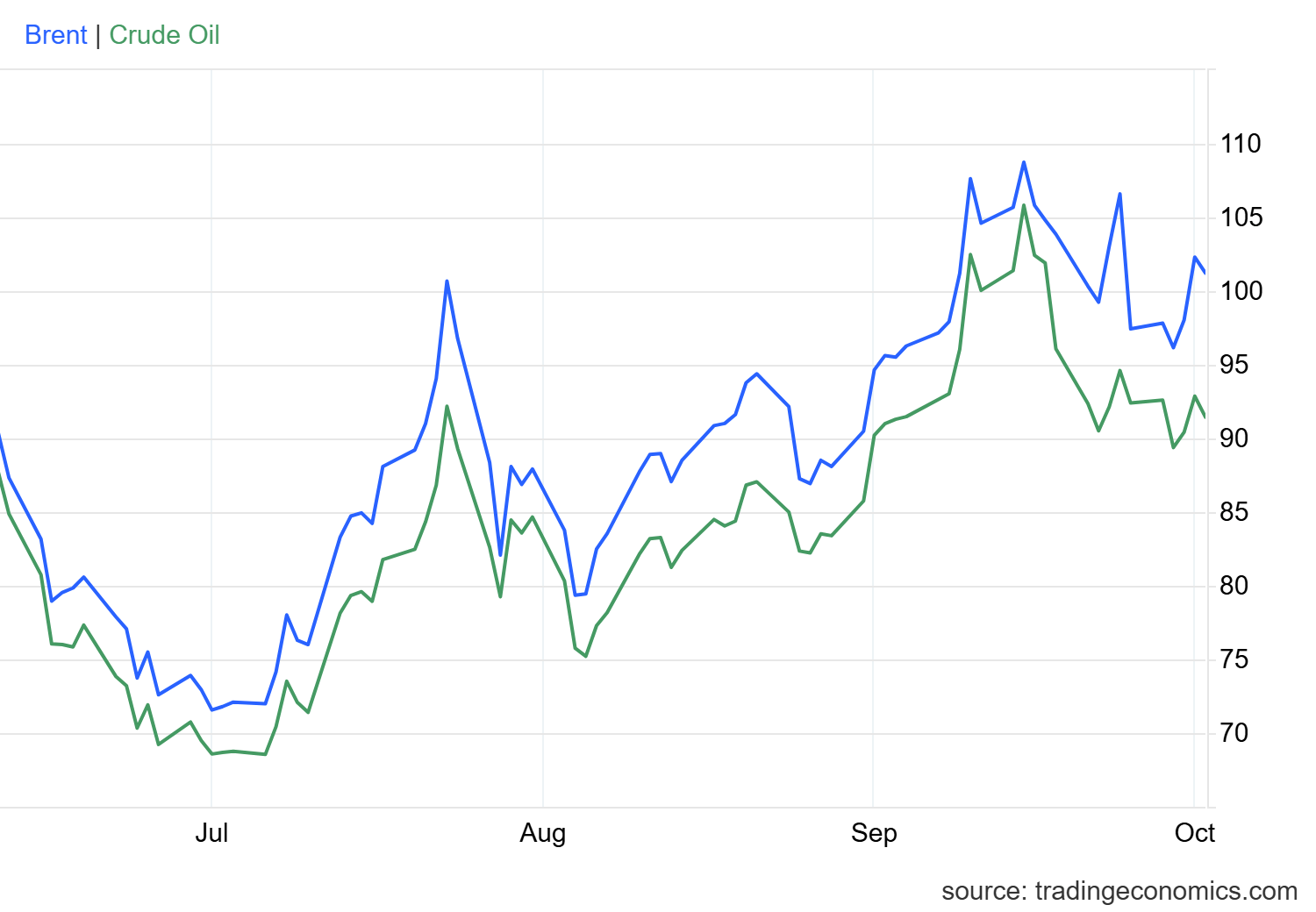
Oil is back over $100. Brent for December delivery jumped 4.4% on Thursday to settle at $102.31, with the Strait of Hormuz still not fully open and no peace deal in sight between Washington and Tehran.
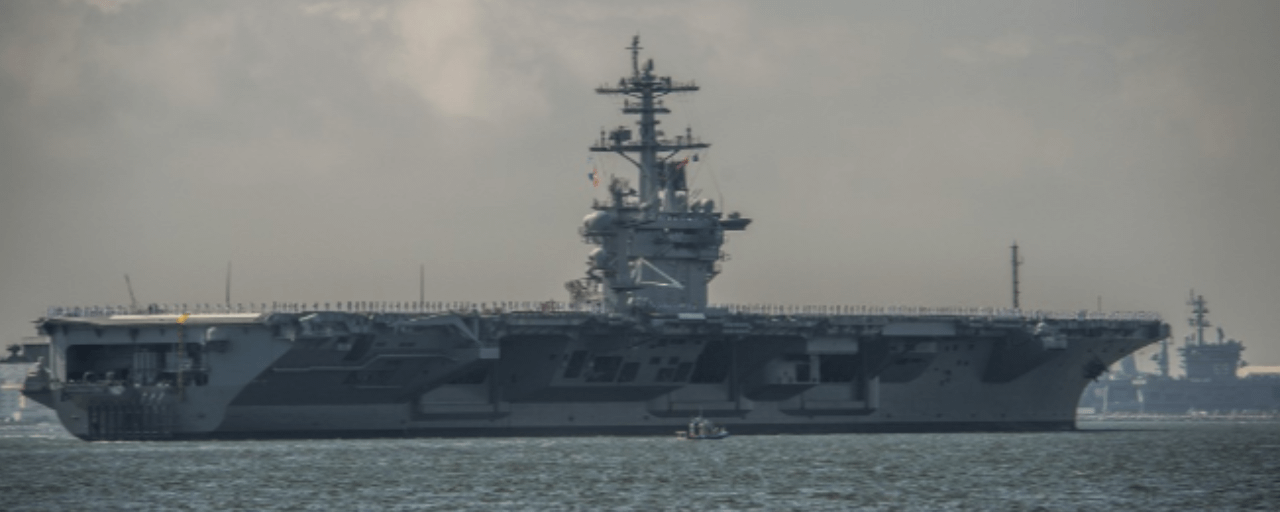
Futures hit their highs for the session after the Wall Street Journal reported that the U.S. is sending a third aircraft carrier strike group to the Middle East, which gave investors fresh reason to price in a return to active fighting, and with it tighter supplies of crude and refined products.
The Carrier That Moved the Market
The ship in question is the USS Theodore Roosevelt, which has left San Diego and, according to the Journal's sources, is bound for the region to join the USS George H.W. Bush and the USS George Washington. The Makin Island Amphibious Ready Group is sailing with it. Between the two groups, somewhere between 9,000 and 10,000 more sailors and Marines are on the way, due by the end of November.
One catch: the tally of three holds only if the George Washington hasn't left by the time the Roosevelt arrives.
All of it lands on top of a force that is already big. More than 50,000 U.S. personnel are in the region, tours have been extended for air-defense units, and the 82nd Airborne Division and about 20 Navy ships are still enforcing the blockade and supporting shipping through the strait.
Trump has his own timetable. He has told aides he expects U.S. military action against Iran to resume in November, after the midterm elections, if there is no deal, and he has already rejected Iran's proposed seven-day ceasefire. The fleet is due the same month.
Prices Jump, Then Sag, and Traders Keep Guessing
West Texas Intermediate climbed 2.7% on Thursday to $92.87 a barrel. By Friday, some of the froth had gone: WTI was down 0.76% at $92.16, and Brent had slipped 0.59% to $101.71.
Physical supply is a more tangled story. Analysts and traders say crude coming out of the Middle East is nearly back to where it stood before the war, but fuel supplies haven't recovered to the same extent.
Trading around all this has been jumpy for months. Stop-and-start negotiations to end a war the U.S. and Israel began in February have left futures prone to big swings, and big directional bets harder to place.
Sanctions Tighten, and Tankers Take Hits
On the sanctions front, Treasury went after Iran's automotive and rail sectors, and added to its penalties on the A7 Network, which it describes as a shadow banking operation with ties to Russia that Tehran uses to dodge sanctions.
Then the water. Iran's Fars news agency reported that a supertanker able to carry about 2.5 million barrels was hit while passing through Hormuz and caught fire roughly 8 kilometers (5 miles) off Oman. UKMTO, the U.K. Maritime Trade Operations agency, confirmed a narrower version: a tanker struck by an unidentified projectile, crew reported safe.
Iran's Persian Gulf Strait Authority added that three tankers linked to the United Arab Emirates have been hit in recent days, and that all three were already on its list of vessels it says broke its transit rules.
Talks Continue, Just Not About the Nuclear Question
On diplomacy, Reuters reports that Iran is keeping a track open through its ceasefire proposal, though the nuclear issue keeps getting in the way. Iran's official news agency, citing a source with knowledge of the matter, said that subject was not raised at all in recent meetings with mediators.
The supply side looks better than the diplomatic one. About 16.5 million barrels a day of crude left the Gulf in September, Iran excluded, and a share of that never touched the strait, moving by pipeline or through ports outside it. Shipping risks remain high.
Iran's president, Masoud Pezeshkian, struck a patient note. Tehran, he said, has never avoided dialogue, even after being attacked three times during negotiations.
Trouble Spreads Beyond the Strait
Away from the strait, the Saudi-led coalition says the Houthis hit a power distribution station in Medina on Sept. 29. One transformer went offline, according to the coalition, and the wider network carried on. The station supplies electricity to the Prophet's Mosque. The Houthi-run Saba News Agency denies the claim.
The coalition also says it intercepted and destroyed four Houthi drones aimed at Khamis Mushait.
In the UAE, authorities are looking into whether a cockpit attack aboard FlyDubai Flight FZ1073 was a terror plot. The plane was diverted to Saudi Arabia after the captain was assaulted in the air, and Saudi investigators have confirmed that the co-pilot attacked him and that both men were hurt. Israeli officials go further and say the co-pilot tried to crash the aircraft, which neither Saudi nor UAE authorities have confirmed.
Israeli minister Itamar Ben-Gvir says he will push for the co-pilot's extradition to Israel. Saudi Arabia's Interior Ministry, though, says the co-pilot has already left for Abu Dhabi with a security team after being medically cleared. The captain, an Indian national, was moved there too for treatment.
The possibility of terrorism alone is enough to unsettle a region already on edge over the war with Iran, and investigators have barely begun. Whatever they find, the ships bound for the Gulf are on a calendar of their own.