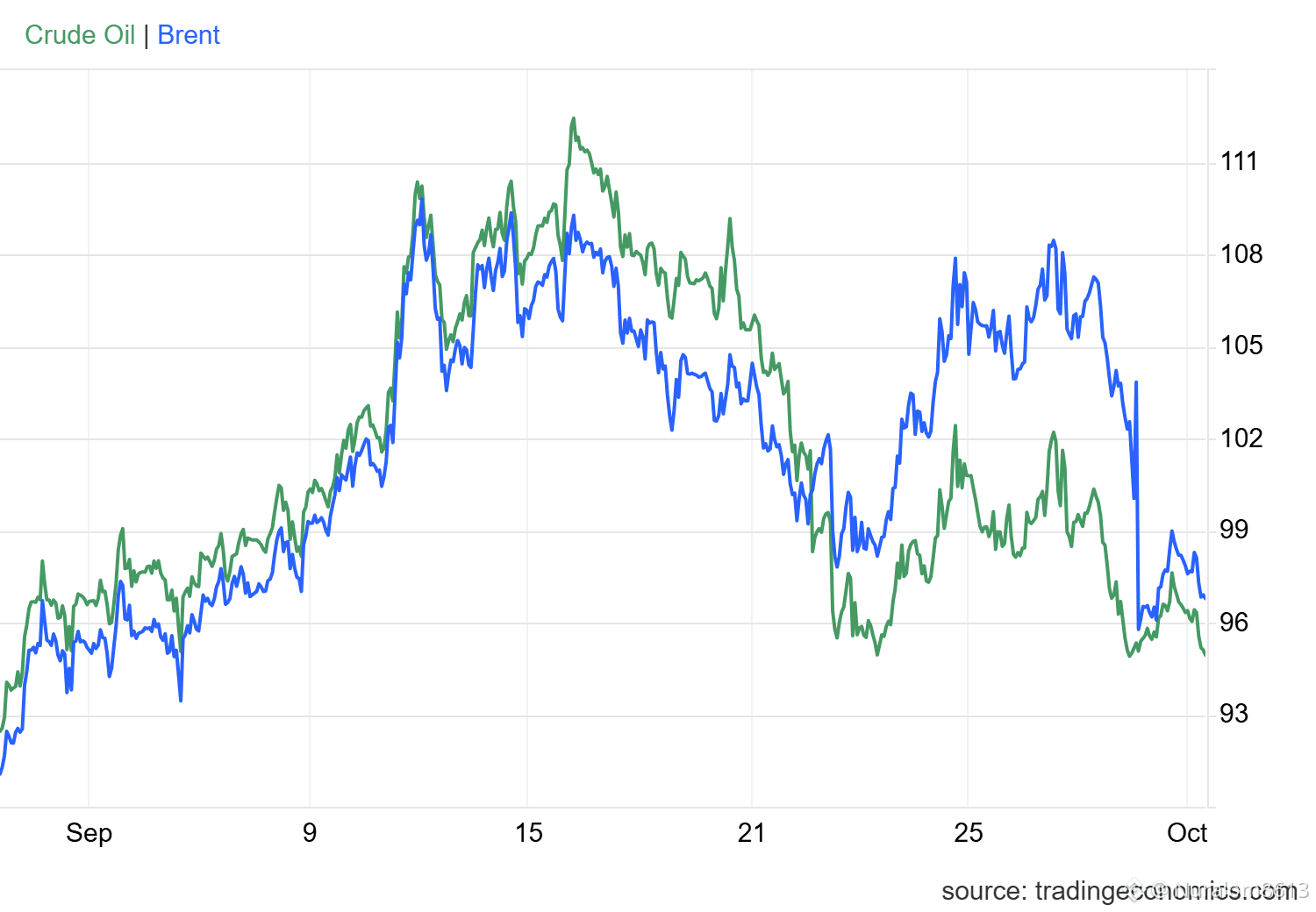
Crude had a bruising September. On 10 September, drones launched from Iraq hit Saudi Arabia's East-West pipeline, the kingdom's main route for exporting oil around Hormuz, according to Riyadh's foreign ministry, and the line was shut. Brent climbed to above $110 and finished the month up about 14%. US crude gained a little over 5% and briefly topped $106.
Kpler said crude crossing Hormuz ran at a seven-day average of 13.5 million barrels a day as of Monday, matching its prewar baseline, with US naval escorts and rerouted pipeline flows doing much of the work. Crude shipments from the wider Gulf and Red Sea region reached 19.5 million, against a prewar level near 17 million. price dipped below $100 on Wednesday, for the first time in more than a week. Wall Street analysts credited returning flows through the Strait of Hormuz, which they said were closing in on prewar levels and adding badly needed supply to a market that keeps swinging around $100. That is far below the peak of the Iran conflict. It is still well above the $91 average the US Energy Information Administration recorded for August. The decline has continued in early Thursday trading, with Brent trading around $96, down 1.4%, while WTI is trading around $88, down 1.7%.
Kpler said crude crossing Hormuz ran at a seven-day average of 13.5 million barrels a day as of Monday, matching its prewar baseline, with US naval escorts and rerouted pipeline flows doing much of the work. Crude shipments from the wider Gulf and Red Sea region reached 19.5 million, against a prewar level near 17 million. price dipped below $100 on Wednesday, for the first time in more than a week. Wall Street analysts credited returning flows through the Strait of Hormuz, which they said were closing in on prewar levels and adding badly needed supply to a market that keeps swinging around $100. That is far below the peak of the Iran conflict. It is still well above the $91 average the US Energy Information Administration recorded for August. The decline has continued in early Thursday trading, with Brent trading around $96, down 1.4%, while WTI is trading around $88, down 1.7%.