

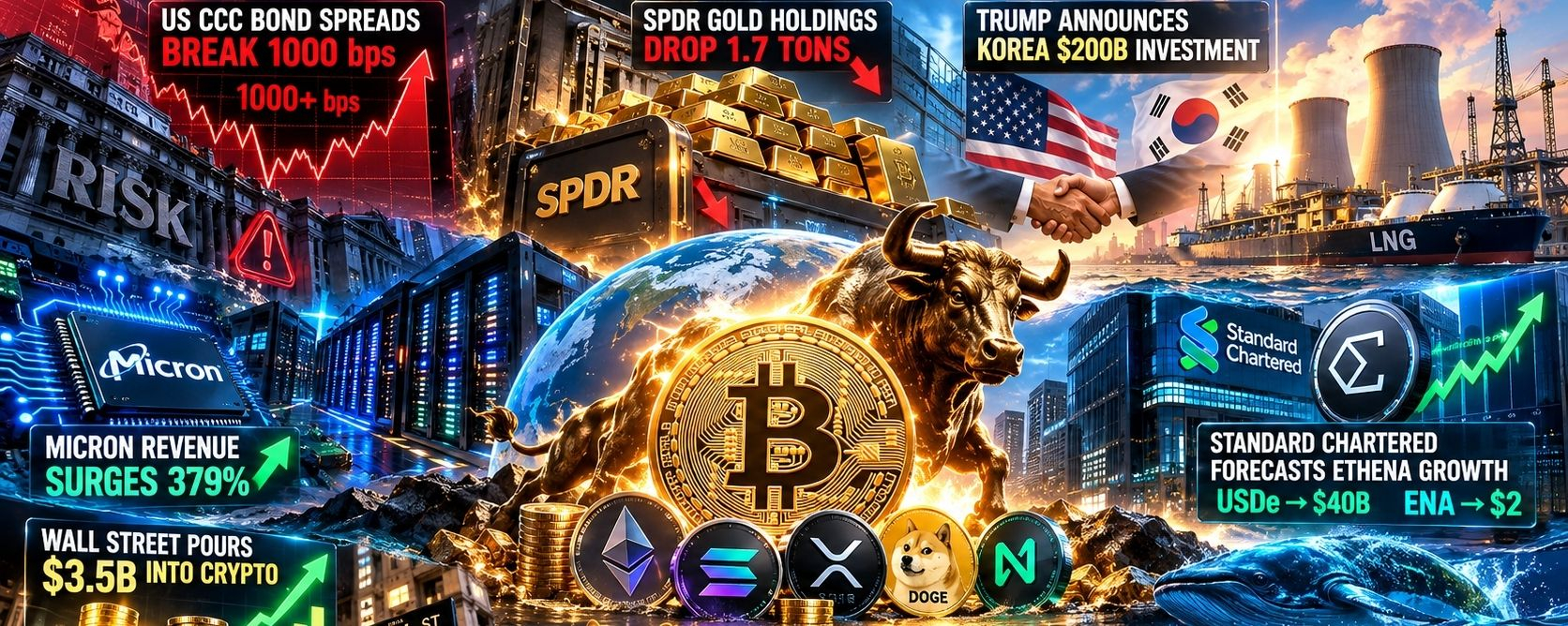

🌍 THE BIG PICTURE: WALL STREET, AI & CRYPTO ARE SENDING MIXED SIGNALS
The market story right now isn't simply bullish or bearish. Institutional interest in digital assets, surging AI-related semiconductor revenue, and growing demand for energy infrastructure are developing alongside rising US Treasury yields and credit-market stress.
Here are the major developments investors should understand. 👇
🧠 1. MICRON'S AI BOOM IS GETTING HARDER TO IGNORE
Micron Technology reported fiscal Q4 2026 revenue of $54.23 billion, compared with $11.32 billion a year earlier. That's approximately 379% year-over-year growth, according to the company's official results.
The underlying story is the growing demand for memory and storage infrastructure powering AI data centers.
Why it matters: AI investment isn't limited to chip designers and software companies. Memory manufacturers and data-center infrastructure providers are also benefiting from this spending cycle.
The key question now is whether demand and profit margins can remain strong enough to justify elevated semiconductor valuations.
⚡ 2. SOUTH KOREA'S $200 BILLION US INVESTMENT ANNOUNCEMENT
President Donald Trump announced a South Korean investment commitment involving major US energy and infrastructure projects, including eight nuclear power plants, a Texas power facility and the Alaska LNG project.
The announcement is part of a broader US–South Korea investment framework.
Why it matters: Energy availability is becoming increasingly important as data centers and AI infrastructure require more electricity. Nuclear power, natural gas and LNG infrastructure could play a role in meeting that demand.
However, an announced investment commitment is not the same as completed investment. Financing, commercial viability, construction schedules and implementation remain important factors.
📉 3. US BOND MARKET STRESS DESERVES ATTENTION
The US 10-year Treasury yield rose approximately 87 basis points during Q3 2026, reaching around 5.29% at quarter-end, according to recent financial-market reporting.
Higher Treasury yields can increase borrowing costs and put pressure on the valuations of risk-sensitive assets.
For crypto investors, this creates an important tension:
• Higher yields can make traditional fixed-income investments more attractive.
• Tighter financial conditions can reduce appetite for speculative assets.
• Persistent market stress can increase volatility across stocks and cryptocurrencies.
This doesn't automatically mean Bitcoin must fall. It means macroeconomic conditions deserve closer attention alongside crypto-specific developments.
🏦 4. ETHENA: A BIG FORECAST, BUT EXECUTION MATTERS
Standard Chartered reportedly expects Ethena's USDe supply to reach $40 billion by the end of 2028 and has set a $2 price target for ENA.
The forecast depends on substantial stablecoin growth, expansion into additional yield-generating strategies and token-buyback mechanisms.
The opportunity: If adoption and protocol revenue expand, Ethena could strengthen its position in the synthetic-dollar and DeFi ecosystem.
The risk: This is a bank forecast, not a guaranteed outcome. Stablecoin demand, funding rates, collateral risks, regulation and the sustainability of yields could all affect the result.
Never confuse a long-term price target with a prediction that must come true.
🐕 5. DOGECOIN ETF INFLOWS: A SIGNAL TO MONITOR
Reports have highlighted September inflows into spot Dogecoin ETFs.
If the reported figures are confirmed, they could indicate renewed interest in regulated exposure to DOGE. However, one month's inflows alone cannot establish that a broader memecoin rally has begun.
Investors should monitor sustained flows, trading volume, market liquidity and price action before drawing stronger conclusions.
🐋 6. LARGE CRYPTO TRANSFERS: WHAT DO THEY ACTUALLY MEAN?
Reports have circulated about substantial ETH and BTC transfers between unidentified wallets, including a reported 1,000 BTC movement from Coinbase Institutional to an unknown wallet.
These transactions can be worth monitoring, but there is an important distinction:
A large transfer is not automatically a purchase.
Wallet movements may represent custody changes, internal transfers, OTC settlement, collateral management or actual accumulation. The transaction alone usually cannot establish which explanation is correct.
Before treating a whale movement as bullish or bearish, look for verified wallet attribution, exchange inflows and outflows, and subsequent market activity.
🔎 7. THE THREE SIGNALS I'M WATCHING
Rather than chasing every headline, keep an eye on three broader indicators:
① Macro liquidity: Treasury yields, Federal Reserve policy and credit spreads.
② Institutional demand: Verified crypto-fund flows and sustained activity in spot markets.
③ Real adoption: AI infrastructure spending, stablecoin supply growth and actual usage across blockchain ecosystems.
These indicators can help put individual headlines into context, but none can reliably predict short-term prices on its own.
💬 MY TAKE
The market is presenting two competing forces: investment in AI, energy infrastructure and digital assets on one side, and higher financing costs and credit risk on the other.
That combination creates opportunities—but also raises the cost of getting a trade wrong.
The next move may depend less on viral headlines and more on whether institutional demand remains durable while financial conditions tighten.
What are you watching most closely right now: BTC, ETH, AI stocks, or the next altcoin rotation? 👇
Disclaimer: This article is for informational and educational purposes only, not financial advice. Market forecasts are estimates, and cryptocurrency investments involve substantial risk.


