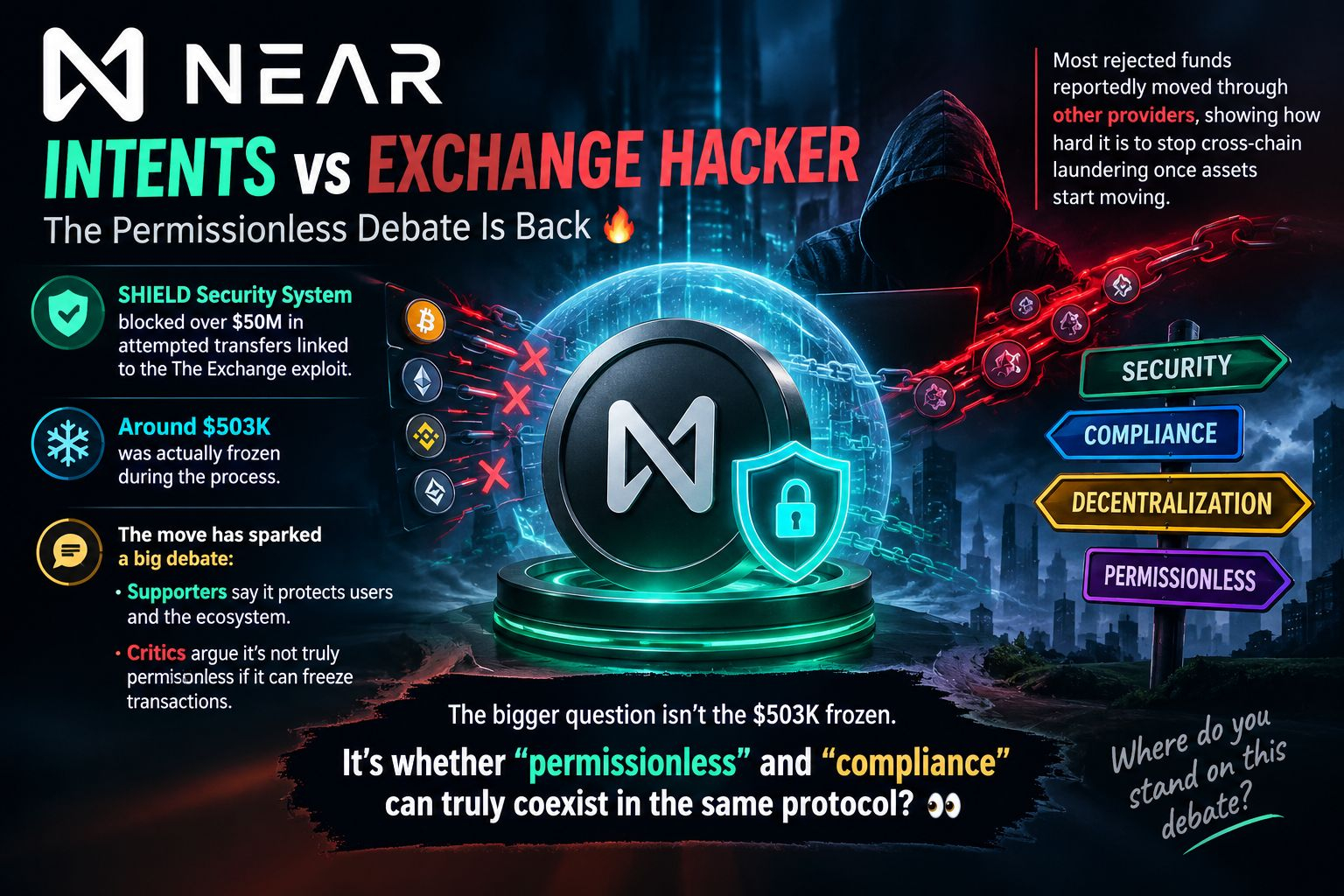
🔥 NEAR Intents just opened a much bigger debate than the $503K it froze.
According to NEAR Intents, its SHIELD security system blocked more than $50M in attempted transfers connected to the recent exchange exploit, while around $503K was actually frozen during the response.
On the surface, that sounds like a security win.
But crypto has a complicated relationship with intervention.
If a protocol can identify suspicious funds and stop them from moving, that can potentially protect users and limit the damage from an exploit.
At the same time, it raises an uncomfortable question:
How permissionless is a system if someone can ultimately decide which transactions are allowed to move?
And there’s another layer to this.
Rejected transfers reportedly found routes through other providers, showing how difficult it can be to contain stolen assets once they begin moving across different chains and infrastructure.
So maybe the real debate isn't about whether freezing $503K was right or wrong.
It’s about where crypto draws the line between security, compliance, decentralization, and permissionless infrastructure.
That line is getting harder to define.
Where do you stand on this debate?
$NEAR
According to NEAR Intents, its SHIELD security system blocked more than $50M in attempted transfers connected to the recent exchange exploit, while around $503K was actually frozen during the response.
On the surface, that sounds like a security win.
But crypto has a complicated relationship with intervention.
If a protocol can identify suspicious funds and stop them from moving, that can potentially protect users and limit the damage from an exploit.
At the same time, it raises an uncomfortable question:
How permissionless is a system if someone can ultimately decide which transactions are allowed to move?
And there’s another layer to this.
Rejected transfers reportedly found routes through other providers, showing how difficult it can be to contain stolen assets once they begin moving across different chains and infrastructure.
So maybe the real debate isn't about whether freezing $503K was right or wrong.
It’s about where crypto draws the line between security, compliance, decentralization, and permissionless infrastructure.
That line is getting harder to define.
Where do you stand on this debate?
$NEAR