

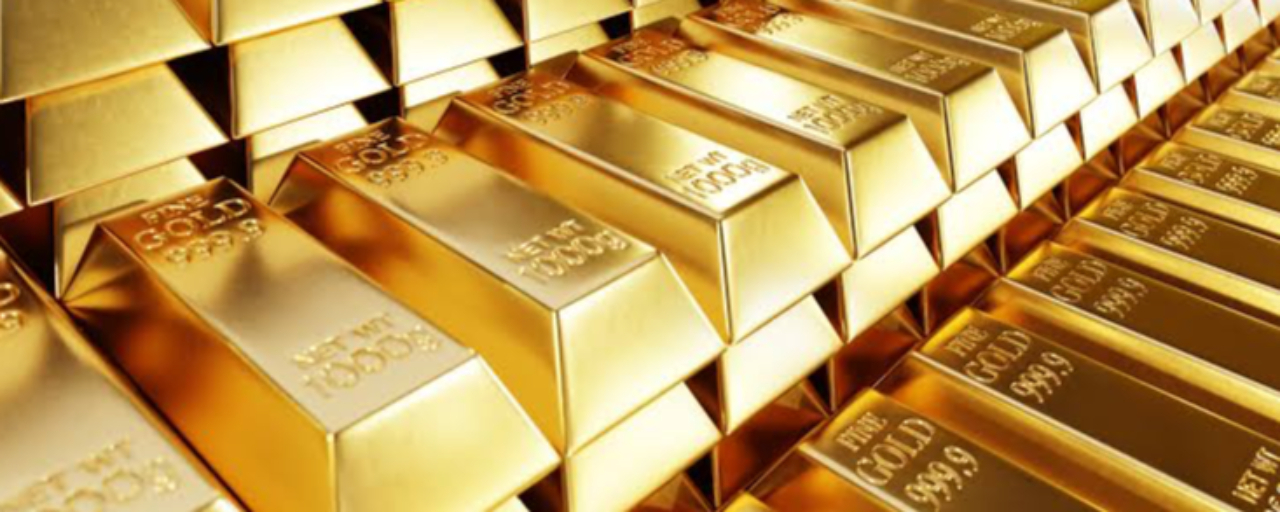

When most people hear “gold,” they picture a physical bar, a coin, or jewelry sitting in a safe. But the modern gold market is much bigger than that. Gold can be accessed through physical bullion, spot markets, ETFs, mining stocks, futures, options, forwards, and perpetual contracts. Each method gives you a different type of exposure, with different costs, mechanics, risks, and ownership rights. Understanding those differences is what turns “I trade gold” into actually understanding the gold market.
Why Is Gold Such a Big Market?
Gold is unusual because it sits at the intersection of commodities, currencies, central-bank reserves, investment and financial markets. According to the World Gold Council, the global gold market averaged roughly $361 billion in daily trading volume during 2025, across OTC, exchange-traded and other markets. The market includes physical gold, ETFs, derivatives and institutional OTC trading, making gold one of the world's deepest and most actively traded markets.
Gold also behaves differently from many other commodities. Unlike oil or wheat, most of the gold ever mined still exists in some form because gold is highly durable and can be recycled. That means today's market is influenced not only by new mine production, but also by the enormous amount of gold already held by investors, central banks, companies and consumers.
First: Understand the Gold Price
Before looking at different trading methods, it helps to understand what you are actually trading. Gold is commonly quoted in U.S. dollars per troy ounce. If gold is quoted at $3,500 per ounce, that means one troy ounce of gold is priced at $3,500.
But the gold price is constantly influenced by changing market conditions. Interest rates, inflation expectations, the U.S. dollar, geopolitical events, central-bank activity, investment demand, mine supply, recycling and broader economic conditions can all affect the balance between buyers and sellers.
For example, if investors become concerned about economic or geopolitical conditions, demand for gold may change. If real interest rates or the dollar move significantly, the opportunity cost of holding a non-income-producing asset such as gold can also change. There is therefore no single factor that determines the gold price.
1. Physical Gold: The Original Method
The most straightforward form of gold exposure is physical ownership: bars and coins.
If you buy a one-ounce gold bar, you own a physical piece of gold. Your return depends primarily on the difference between the price you paid and the price at which you eventually sell it, after accounting for costs.
For example, imagine buying a one-ounce bar for $3,500. If you later sell it for $3,800, the gross price difference is $300. But the real result also depends on the purchase premium, dealer spread, storage, insurance and selling costs.
Physical gold therefore provides something many financial products do not: direct possession of the metal. But that comes with practical considerations such as storage, security, insurance and potentially wider buying and selling spreads.
2. Spot Gold: Trading the Current Market Price
The word “spot” refers to transactions based around the current market price, rather than a standardized future delivery contract.
The global gold spot market is particularly important in the OTC market, where professional participants trade directly with one another. London remains a major center for OTC gold trading, while exchanges such as COMEX and the Shanghai markets are important parts of the broader gold ecosystem.
A simplified example is:
Gold spot price = $3,500 per ounce.
If the market moves to $3,550, someone with direct exposure to the gold price has gained $50 per ounce before costs.
The important point is that spot exposure is about the current gold price. It should not automatically be confused with owning a physical bar. Depending on the product and provider, you may have exposure to the spot price without taking physical delivery.
3. Gold ETFs: Gold Exposure Through the Stock Market
You don't necessarily need to buy a bar to gain exposure to gold. Gold-backed exchange-traded funds can provide another route.
A physically backed gold ETF generally holds gold bullion while investors buy and sell shares of the fund on an exchange. The share price typically tracks the underlying gold price, although fees, market conditions and tracking differences can affect the result.
Imagine a gold ETF share trading at $350. If gold rises, the ETF may also rise, broadly reflecting the performance of the underlying gold holdings.
The important distinction is that buying the ETF share is not the same as taking a one-ounce bar home. You own a share of the investment vehicle, while the fund structure determines how the underlying gold is held and what rights investors have.
4. Gold Mining Stocks: Buying the Companies Behind the Gold
Here is where gold becomes a stock-market story.
Instead of trading gold itself, you can buy shares in companies that explore for, mine and produce gold.
This creates a very different exposure.
Imagine a mining company produces gold at an average cost of $2,000 per ounce. If gold trades at $3,000, the difference between the selling price and production cost contributes to the company's economics. If gold rises to $3,500, that margin can potentially expand significantly.
But the company's share price is not simply “gold with a ticker.”
Mining companies have their own risks: operating costs, energy prices, labor, management decisions, mine quality, production levels, political conditions in mining jurisdictions, financing and exploration results.
So gold can rise while a particular mining stock performs differently.
5. Gold Futures: Trading a Contract, Not a Gold Bar
Futures take gold trading into the derivatives world.
A gold futures contract is a standardized agreement traded on an exchange, specifying terms such as the quantity and price of gold associated with the contract. Futures can be used for hedging or for taking a directional position on gold prices, and traders can take long or short positions.
For example, suppose a trader enters a gold futures position when gold is $3,500. If the relevant futures price later rises to $3,600, the position has gained based on the contract's specifications. If the market moves in the opposite direction, the position loses.
Futures also involve margin. You do not necessarily put up the full notional value of the gold represented by the contract, which is why futures can provide substantial exposure relative to the amount of capital posted as margin.
That also means losses can accumulate quickly. Futures are therefore fundamentally different from simply buying physical gold.
6. Gold Options: Trading the Right, Not the Obligation
Options add another layer.
A gold call option generally gives the buyer the right, but not the obligation, to buy gold at a specified price under defined terms. A put option gives the right to sell.
Suppose gold is trading at $3,500 and a trader buys a call option with a $3,600 strike price. If gold rises significantly above $3,600 before the relevant expiration or exercise conditions, the option may become valuable. If gold never reaches the required level, the option can expire worthless, depending on its structure.
The buyer pays a premium for the option. The seller takes on an obligation if the option is exercised.
Options therefore introduce additional concepts such as strike price, expiration, premium, implied volatility and time decay. They are not simply another version of spot gold.
7. Gold Forwards: Customized OTC Contracts
Forwards are similar in concept to futures but are generally privately negotiated OTC agreements rather than standardized exchange-traded contracts.
Two counterparties can agree today on terms for a gold transaction that will take place in the future.
The flexibility can be useful for institutions that need customized quantities, dates or settlement arrangements. But because the agreement is bilateral rather than centrally cleared in the same way as an exchange-traded futures contract, counterparty and settlement considerations become particularly important.
8. Gold Perpetual Contracts: Gold Meets the Crypto Trading Model
This is one of the newer ways Binance users can encounter gold.
Binance launched XAUUSDT, a gold TradFi perpetual contract, in January 2026. It tracks the price of gold and is settled in USDT. Unlike a traditional futures contract with a fixed expiration date, a perpetual contract has no expiry and uses funding mechanisms to help keep the contract aligned with the underlying market.
The key distinction is extremely important:
Trading XAUUSDT does not mean buying physical gold.
It means trading a derivative whose value is linked to the price of gold.
For example, if XAUUSDT is trading around $3,500 and the gold price rises, a long position can gain; if gold falls, the position can lose. The actual profit or loss depends on position size, entry and exit prices, fees, funding and whether leverage is used.
Binance states that TradFi perpetuals are available 24/7, are USDT-settled and do not represent ownership of the underlying asset. Availability and contract parameters can vary by jurisdiction and may change over time.
One Gold Market, Many Different Products
This is where many beginners make the mistake of treating every gold product as interchangeable.
They are not.
Physical gold can mean owning the metal. A gold ETF means owning shares in a fund. A mining stock means owning an interest in a company. A futures contract creates a derivatives position. An option gives specific rights under defined conditions. A forward is a customized bilateral contract. A perpetual contract provides price exposure without ownership of the underlying metal.
The underlying reference may be the same gold market, but the product structure can be completely different.
A Simple Example
Imagine gold is trading at $3,500 per ounce.
A person buying a physical one-ounce bar is acquiring physical gold.
Another investor buys shares of a physically backed gold ETF and gains exposure through the fund.
A third buys shares of a gold-mining company and becomes exposed to both gold prices and the company's business performance.
A futures trader takes a position on a standardized gold contract.
An options trader buys a call with a specific strike and expiration.
A Binance user trading XAUUSDT takes a USDT-settled perpetual position linked to gold's price.
Six people can all say, “I'm trading gold,” while holding six completely different financial products.
That distinction is the real lesson.
What Actually Moves Gold?
Gold is influenced by a combination of forces rather than one simple formula.
Interest rates matter because gold does not generate a regular coupon or dividend. The opportunity cost of holding it can change as interest rates and real yields change.
The U.S. dollar matters because gold is widely priced in dollars. Changes in the dollar can affect the purchasing power and attractiveness of gold for international market participants.
Central-bank activity can also matter. Central banks hold gold as part of their reserves, and changes in official-sector demand can influence the market.
Investment flows are another major factor. Money entering or leaving gold ETFs, futures markets and OTC markets can affect demand and liquidity.
Then there are geopolitical events, inflation expectations, economic uncertainty, mine production, recycling and physical demand from consumers and industry.
The result is a market where macroeconomics, financial markets and physical supply-and-demand all meet.
The Opportunity Is Not One Trade - It Is Understanding the Whole Market
Gold is sometimes presented as a simple “buy gold” decision.
It is much more interesting than that.
The real opportunity for a market participant is understanding that gold exists across an entire financial ecosystem. You can study the physical market, follow spot prices, analyze ETF flows, research mining companies, understand futures curves, learn options, examine central-bank demand or explore derivative products such as Binance's XAUUSDT.
Different products can be appropriate for different objectives and risk profiles. Some involve ownership; others provide only price exposure. Some have leverage. Some have expiration dates. Some have funding costs. Some involve storage. Some expose you to an entire company rather than gold itself.
Learning these differences is more important than simply knowing the gold ticker.
Gold Is Not “Just Gold”
The next time you see gold move on your screen, don't only ask whether the price is going up or down. Ask what market you are looking at. Is it spot gold? A physical bar? An ETF? A mining stock? A futures contract? An option? A forward?
Or a perpetual contract such as XAUUSDT?
The $XAU market is one of the world's largest and most diverse financial markets, and there is far more to it than buying a gold bar and putting it in a safe. Understanding the different ways gold can be accessed is the first step toward understanding what you are actually trading.

Educational note: $GOLD.US products can involve materially different risks, costs, leverage, liquidity, ownership rights and settlement mechanisms. Derivatives can magnify losses, and product availability varies by jurisdiction. This article is for educational purposes only and is not financial advice.
#goldtrading #XAU #XAUUSD #GoldMarket #binnacetrade