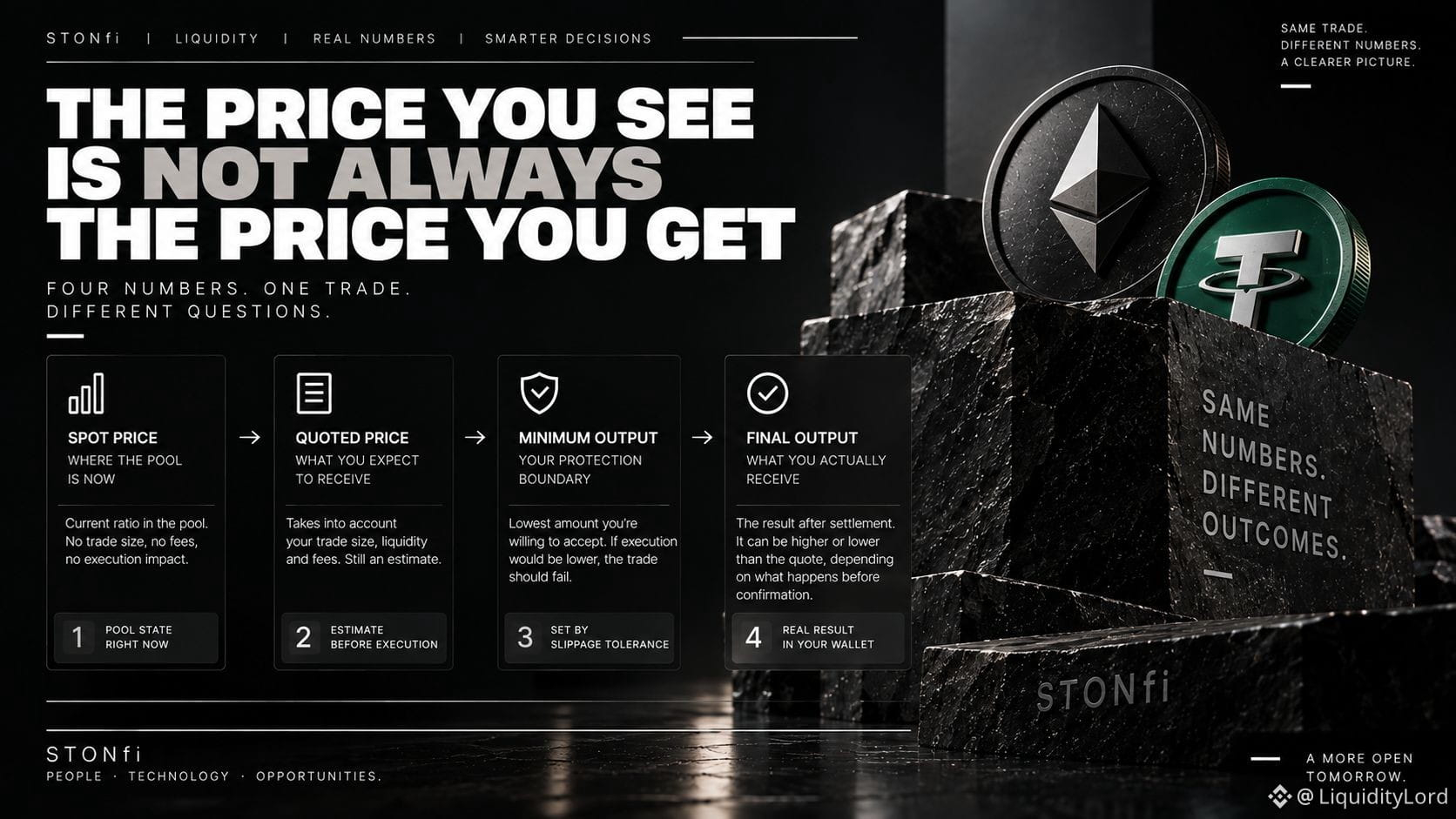
🔥 THE PRICE YOU SEE IS NOT ALWAYS THE PRICE YOU GET
A STONfi swap looks simple: you send one token and receive another. But four numbers describe the trade, each answering a different question.
📍 SPOT PRICE VS QUOTED PRICE
Spot price is the ratio between the assets in a pool. It is a baseline, but it does not include your trade size, fees or the effect your transaction can have on reserves.
The quote is more specific. It considers the requested amount, liquidity and fees to estimate what you could receive. But it is still an estimate. Another swap can execute before yours and change the pool.
- Spot price → where the pool is now
- Quoted price → what your trade is expected to receive
🛡 MINIMUM OUTPUT IS THE BOUNDARY
Minimum output defines the lowest amount you are willing to accept. If execution cannot meet that floor, the swap should fail rather than settle at a worse result.
It comes from your slippage tolerance. Set it too tightly and normal market movement can cause failures. Set it too loosely and you reduce the protection the limit provides.
The quote says “this is what we expect.” Minimum output says “below this, do not execute.”
✅ FINAL OUTPUT IS THE RECEIPT
After settlement, final output is what actually reaches your wallet. Unlike the other values, it describes completed execution rather than a current condition or estimate.
- Spot price = baseline
- Quote = expectation
- Minimum output = protection
- Final output = result
The difference between quote and final output does not automatically mean something went wrong. Pool conditions can change before confirmation. What matters is whether the final result remains within the boundary you accepted.
One swap can have four different numbers without contradiction. They show different moments in one execution.
Not investment advice - research on your own! 🚀
$ZEC
A STONfi swap looks simple: you send one token and receive another. But four numbers describe the trade, each answering a different question.
📍 SPOT PRICE VS QUOTED PRICE
Spot price is the ratio between the assets in a pool. It is a baseline, but it does not include your trade size, fees or the effect your transaction can have on reserves.
The quote is more specific. It considers the requested amount, liquidity and fees to estimate what you could receive. But it is still an estimate. Another swap can execute before yours and change the pool.
- Spot price → where the pool is now
- Quoted price → what your trade is expected to receive
🛡 MINIMUM OUTPUT IS THE BOUNDARY
Minimum output defines the lowest amount you are willing to accept. If execution cannot meet that floor, the swap should fail rather than settle at a worse result.
It comes from your slippage tolerance. Set it too tightly and normal market movement can cause failures. Set it too loosely and you reduce the protection the limit provides.
The quote says “this is what we expect.” Minimum output says “below this, do not execute.”
✅ FINAL OUTPUT IS THE RECEIPT
After settlement, final output is what actually reaches your wallet. Unlike the other values, it describes completed execution rather than a current condition or estimate.
- Spot price = baseline
- Quote = expectation
- Minimum output = protection
- Final output = result
The difference between quote and final output does not automatically mean something went wrong. Pool conditions can change before confirmation. What matters is whether the final result remains within the boundary you accepted.
One swap can have four different numbers without contradiction. They show different moments in one execution.
Not investment advice - research on your own! 🚀
$ZEC