$ETH spent years betting that most execution would move to rollups. Now an active protocol proposal is explicitly arguing that twelve seconds is simply too slow.
EIP-8198 proposes cutting Ethereum slot times from twelve seconds down to eight seconds. The motivation from researchers is direct: faster transaction landing, tighter DEX pricing, less MEV leakage, and faster exchange deposits.
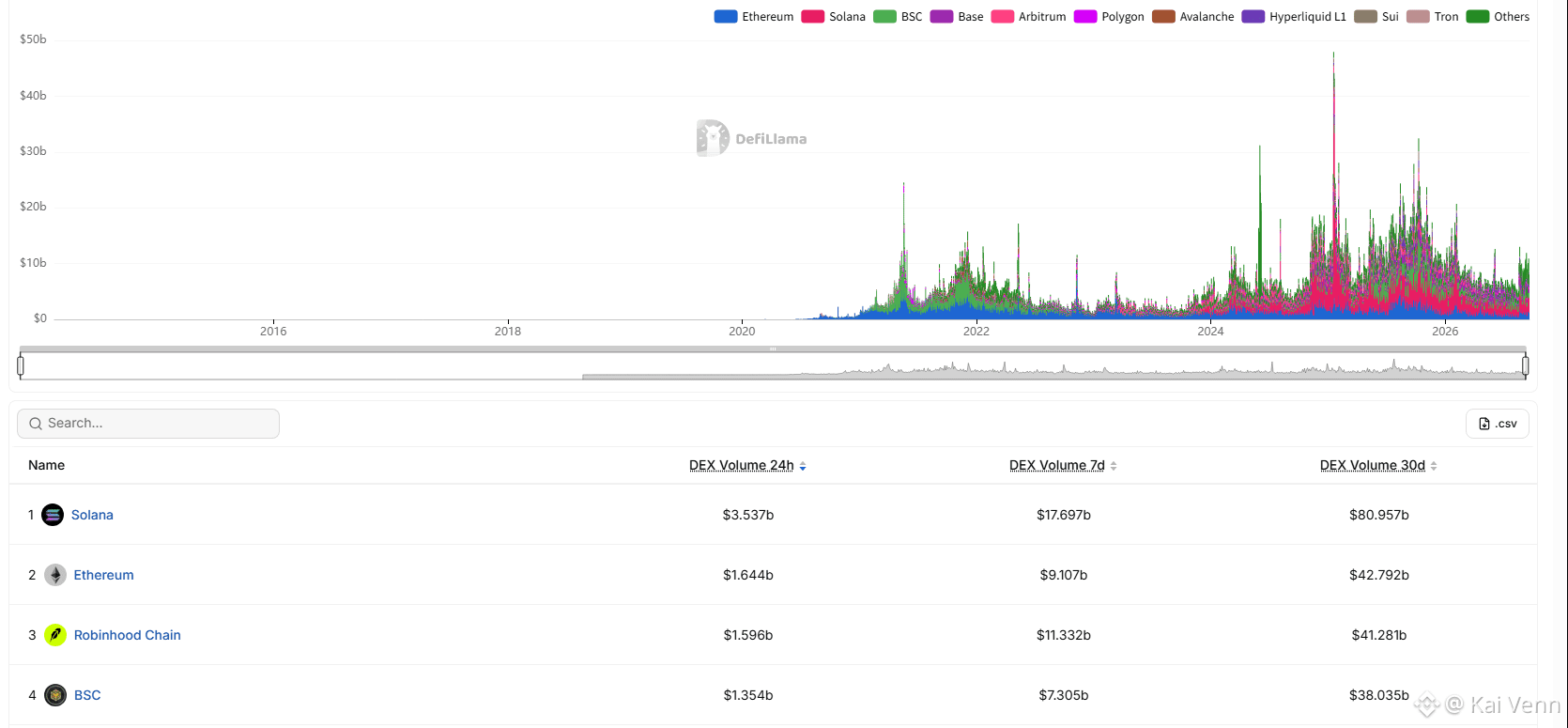
Meanwhile, DefiLlama data shows Solana clocking roughly $3.5 billion in daily DEX volume against Ethereum L1 at $1.6 billion. That does not mean Ethereum is panicking, but it proves market priorities shifted. L1 latency matters again.
The interesting part is that this proposal does not abandon the rollup roadmap. Ethereum is attempting to accelerate the base layer while continuing to scale through Layer 2s. Yet the harder obstacle remains fragmentation. Cutting slots from twelve seconds to eight seconds improves native latency. It does not reunify liquidity scattered across dozens of rollups.
EIP-8198 proposes cutting Ethereum slot times from twelve seconds down to eight seconds. The motivation from researchers is direct: faster transaction landing, tighter DEX pricing, less MEV leakage, and faster exchange deposits.
Meanwhile, DefiLlama data shows Solana clocking roughly $3.5 billion in daily DEX volume against Ethereum L1 at $1.6 billion. That does not mean Ethereum is panicking, but it proves market priorities shifted. L1 latency matters again.
The interesting part is that this proposal does not abandon the rollup roadmap. Ethereum is attempting to accelerate the base layer while continuing to scale through Layer 2s. Yet the harder obstacle remains fragmentation. Cutting slots from twelve seconds to eight seconds improves native latency. It does not reunify liquidity scattered across dozens of rollups.