

The Fetch.ai exploit looks like a $2M hack on the surface but the real damage becomes clearer when you separate FET from NTX.
The attacker drained around 8.72M FET worth roughly $1.54M after exploiting a weak approval check in the token converter.
The important detail is that the attacker did not create new FET.
They moved existing tokens.
That difference probably explains why FET took a relatively limited hit. FET had already climbed from around $0.149 to $0.1889 before the exploit and then dropped toward $0.1711.
Still painful but nowhere near a supply collapse.
NTX was completely different.
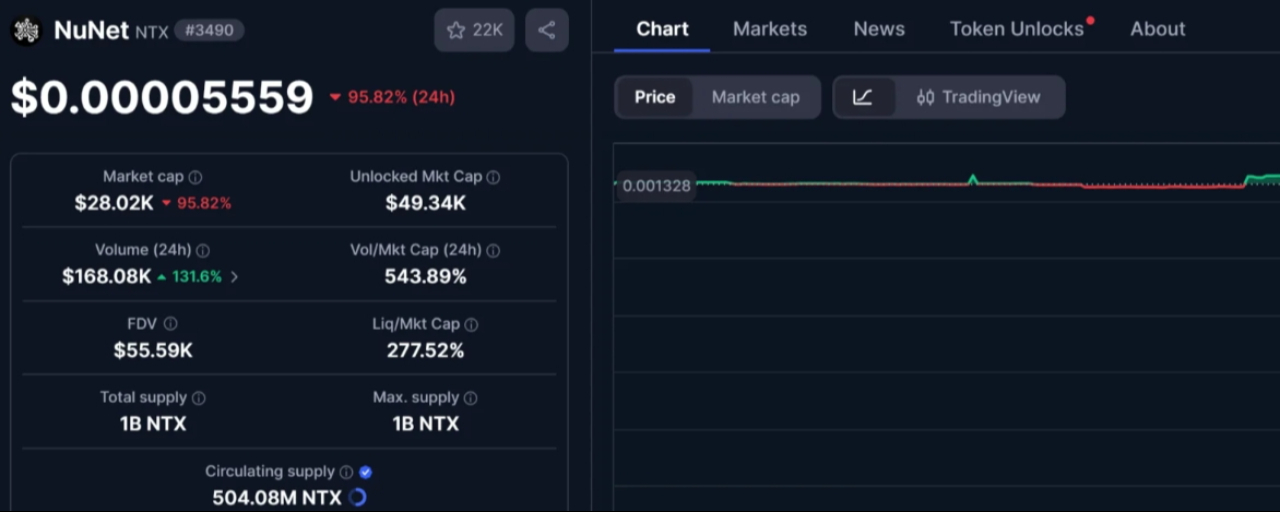
The same wallet cluster later received around 408.5M newly minted NTX worth roughly $463K.
That created an immediate supply shock.
NTX fell from around $0.00130 to $0.00005559. That is a 95.7% collapse.
This is the part I would pay most attention to.
A hack does not always hurt a token because money was stolen. Sometimes the bigger problem is what happens to the token supply after the exploit.
In NTX's case the unauthorized mint created hundreds of millions of tokens that should not have existed.
Volume increased more than 130% but price still collapsed.
That tells me the market was not simply reacting to fear. There was a huge supply imbalance meeting limited demand.
FET has a different problem now.
The 8.72M stolen FET represents only around 0.038% of circulating supply. So dilution is relatively small.
But those tokens can still become future selling pressure if the attacker manages to move or sell the remaining holdings.
That creates an overhang even after the immediate price reaction fades.
For me the biggest lesson is simple.
When analysing a crypto exploit I would not only ask how much money was stolen.
I would ask whether new tokens were created.
Existing supply being stolen is one problem.
Unauthorized supply entering circulation can be much harder for a market to absorb.
That difference is exactly why FET and NTX experienced such different outcomes from incidents connected to the same attacker.