🚨 BITCOIN SUPPLY IS GETTING OLDER — AND THAT’S A SIGNAL WORTH WATCHING.
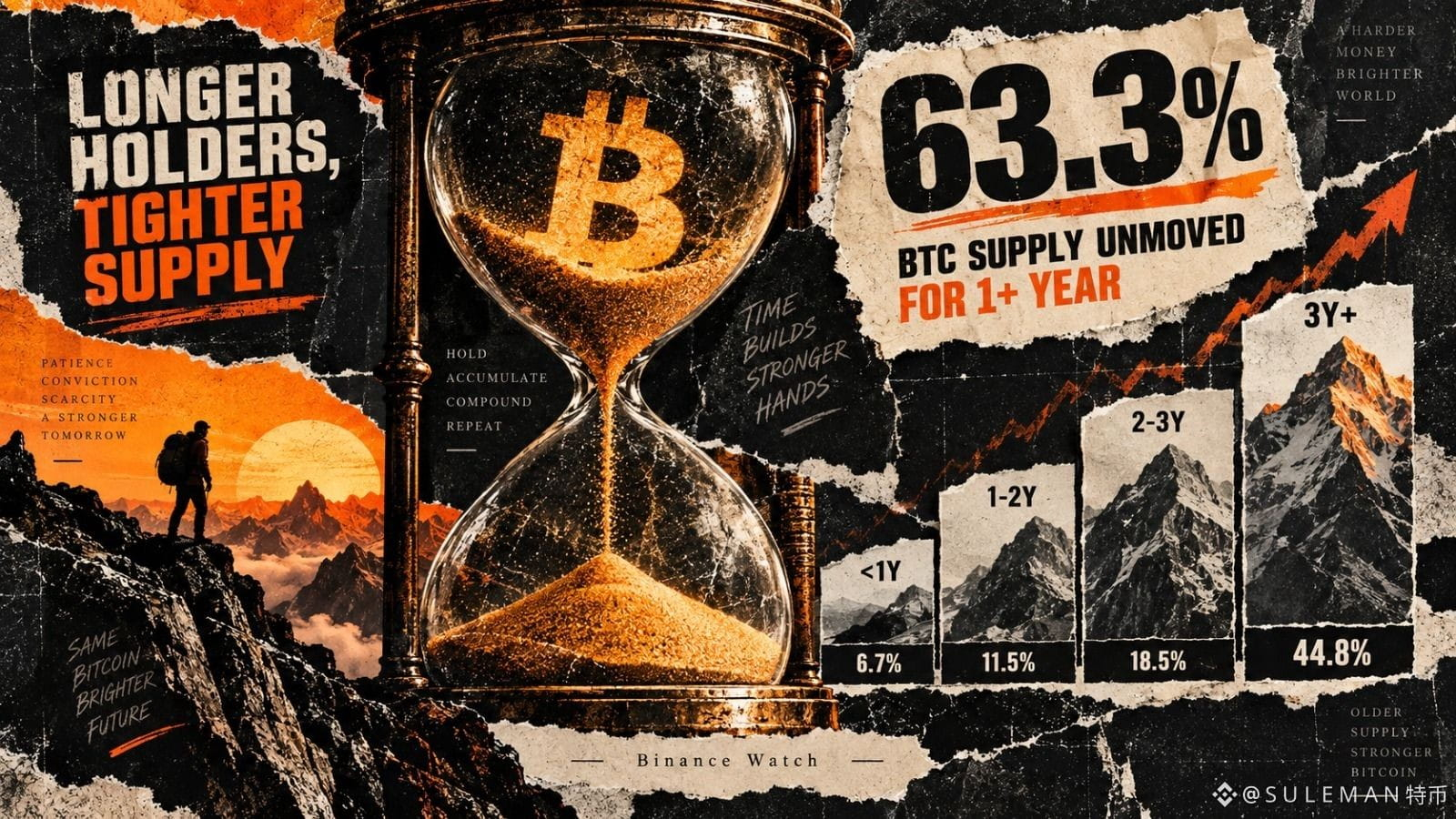
The share of $BTC that hasn’t moved for at least one year has climbed to 63.3%, up from 62.32% a month earlier.
The biggest shift came from the 1–2 year HODL band, which rose to 14.57%, while the 6–12 month band declined. That suggests a meaningful amount of Bitcoin simply aged into the longer-term holder category instead of moving on-chain.
For traders watching Bitcoin on Binance, this matters because older supply can reduce near-term selling pressure if those coins stay inactive.
But there’s an important distinction: this does not automatically prove fresh accumulation. HODL-wave data tracks when coins last moved, not who owns them or why they stayed still.
The clearer takeaway is simple:
More BTC is sitting in older wallets, while recent coin movement has slowed.
👀 If exchange outflows, entity balances, and spending data start confirming the same trend, the long-term accumulation story could become much stronger.
$牛来
$龙虾
The share of $BTC that hasn’t moved for at least one year has climbed to 63.3%, up from 62.32% a month earlier.
The biggest shift came from the 1–2 year HODL band, which rose to 14.57%, while the 6–12 month band declined. That suggests a meaningful amount of Bitcoin simply aged into the longer-term holder category instead of moving on-chain.
For traders watching Bitcoin on Binance, this matters because older supply can reduce near-term selling pressure if those coins stay inactive.
But there’s an important distinction: this does not automatically prove fresh accumulation. HODL-wave data tracks when coins last moved, not who owns them or why they stayed still.
The clearer takeaway is simple:
More BTC is sitting in older wallets, while recent coin movement has slowed.
👀 If exchange outflows, entity balances, and spending data start confirming the same trend, the long-term accumulation story could become much stronger.
$牛来
$龙虾