

Regulators Aren't Waiting Around Anymore — And Crypto Just Got a Signal Worth Watching
Congress dropped the ball. Regulators picked it up and started running.
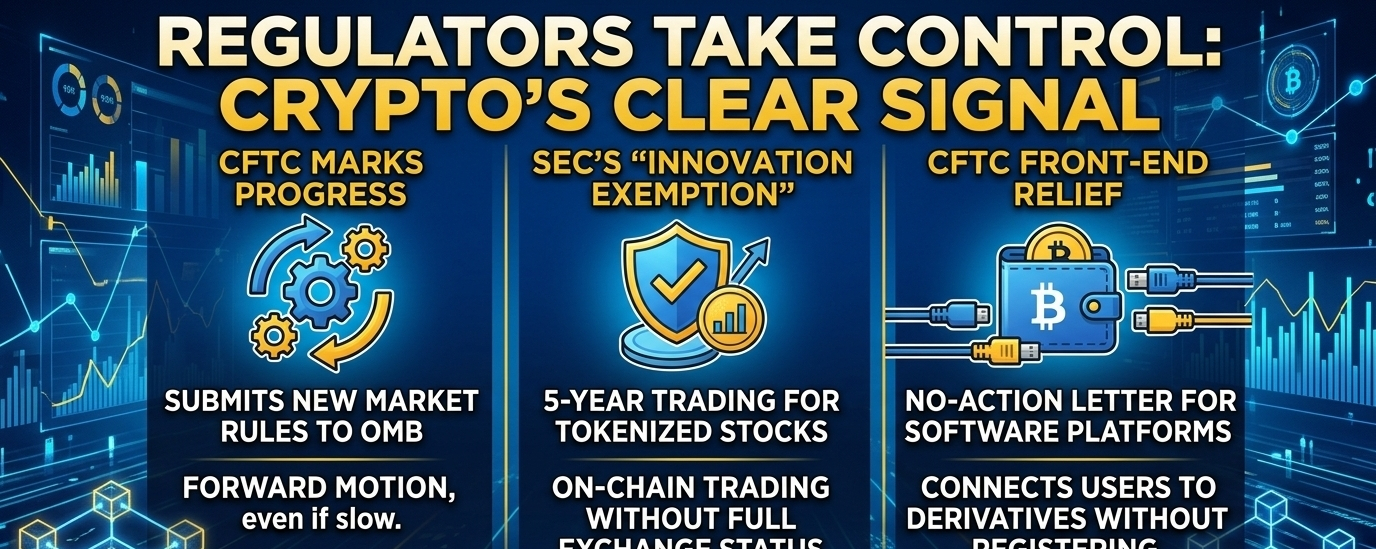
After the Clarity Act failed to clear the Senate this week, most people expected crypto regulation to stall out — again. Instead, the CFTC just did the opposite. It quietly sent a new crypto market rules proposal straight to the White House for review. No fanfare, no details released yet — just a clear signal that the agency isn't waiting on lawmakers to get its act together.
Here's the move: the proposal now sits with the White House's Office of Management and Budget. Once that review wraps, it goes back to the CFTC for a vote and public comment — then another vote before it actually becomes law. Slow? Sure. But it's forward motion, and in crypto policy, forward motion is rare enough to notice.
And the CFTC isn't the only one moving. The SEC dropped its own surprise the same day, opening a five-year "innovation exemption" that lets qualifying platforms offer onchain trading of certain tokenized stocks — without needing to register as a full securities exchange. That's a meaningful crack in the door for tokenized equities, and it didn't need Congress to happen.
Even CFTC chair Mike Selig made the agency's posture clear, essentially signaling the CFTC is ready to move fast on rules for this next phase of finance — with or without legislative backup.
There's more. The CFTC also issued a no-action letter this week, giving certain software platforms a green light to connect users to regulated derivatives markets — including through crypto wallets — without registering as brokers. They can charge transaction fees and promote specific contracts, but they can't hold customer funds or make trading calls for users. Guardrails included: disclosures, recordkeeping, and marketing compliance, until formal rules catch up.
The bottom line? Congress may be stuck, but the agencies that actually regulate crypto aren't waiting for permission. Two major moves in one week, both aimed at giving the industry something it's wanted for years — actual clarity.