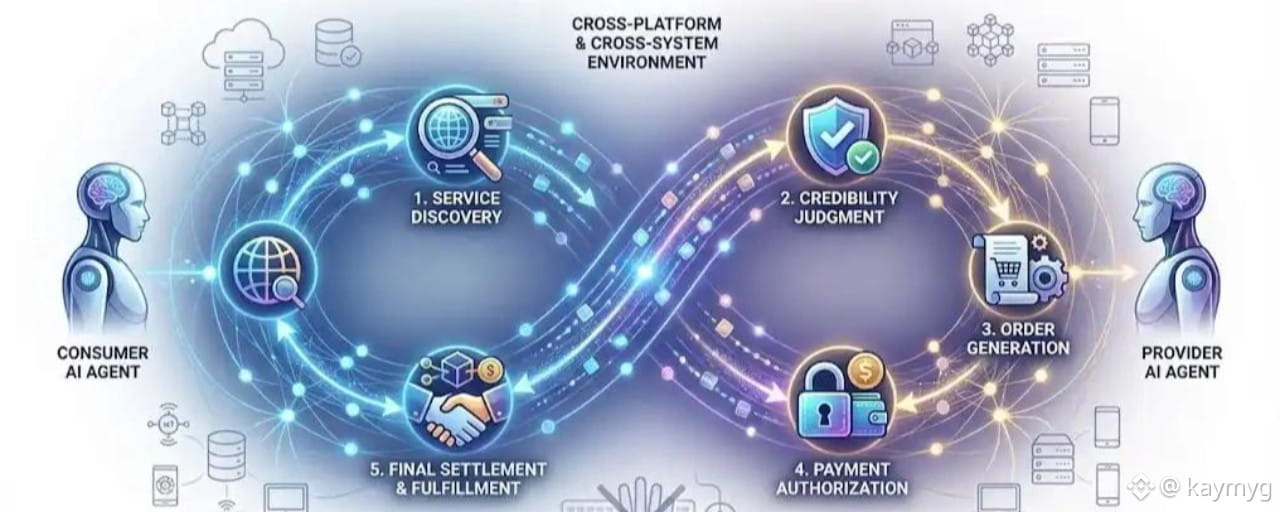

The internet was built for humans.
Its next phase may not be.
For decades, the dominant economic actors online have been people, companies and institutions. They browse websites, sign contracts, open bank accounts, buy services, send payments and make decisions.
Agentic AI changes that model.
#AIAgents can increasingly observe its environment, make decisions, call APIs, negotiate with other systems, purchase resources and execute transactions. As these capabilities mature, the internet could evolve from a network where humans use software into a network where software acts economically on behalf of humans or independently within defined constraints.
That creates a problem that has received far less attention than the intelligence itself:
What does money look like when the economic actor is a machine?
This is where #decred becomes an interesting protocol to examine.
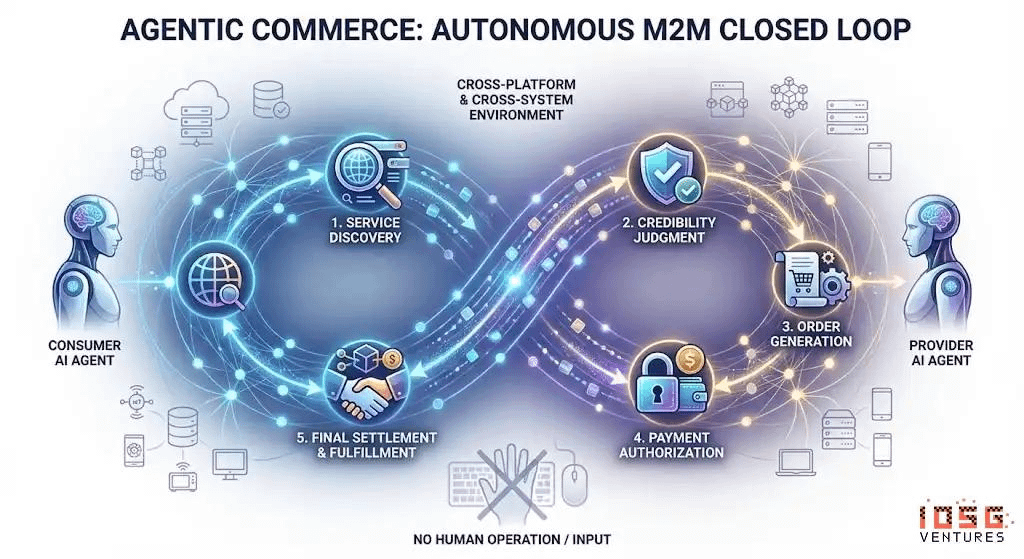
The Internet is becoming an economic machine
The first generation of the internet connected people.
The second connected businesses.
The emerging generation may connect agents.
Imagine an AI agent operating continuously on the internet.
It might purchase compute from another provider, pay for access to a database, purchase an API call, compensate another agent for information, pay for storage, sell a service and use the proceeds to fund its next operation.
Instead of a human clicking “Pay,” the transaction could simply be:
Agent → authorization → payment → service → verification → payment
repeated thousands of times.
This is fundamentally different from today's consumer internet.
Humans tolerate friction.
Machines don't.
An agent cannot reasonably open a bank account, wait three business days for settlement, manually approve every transaction and phone a bank whenever a payment is blocked.
An agent-native economy therefore requires financial infrastructure that is:
programmable, permissionless, globally accessible, machine-readable and continuously available.
#Stablecoins will almost certainly play an important role in this environment. So will #bitcoin and other networks.
But another question emerges:
What happens when agents need money that isn't controlled by a company, government or intermediary?
That is where decentralized monetary networks become particularly interesting.
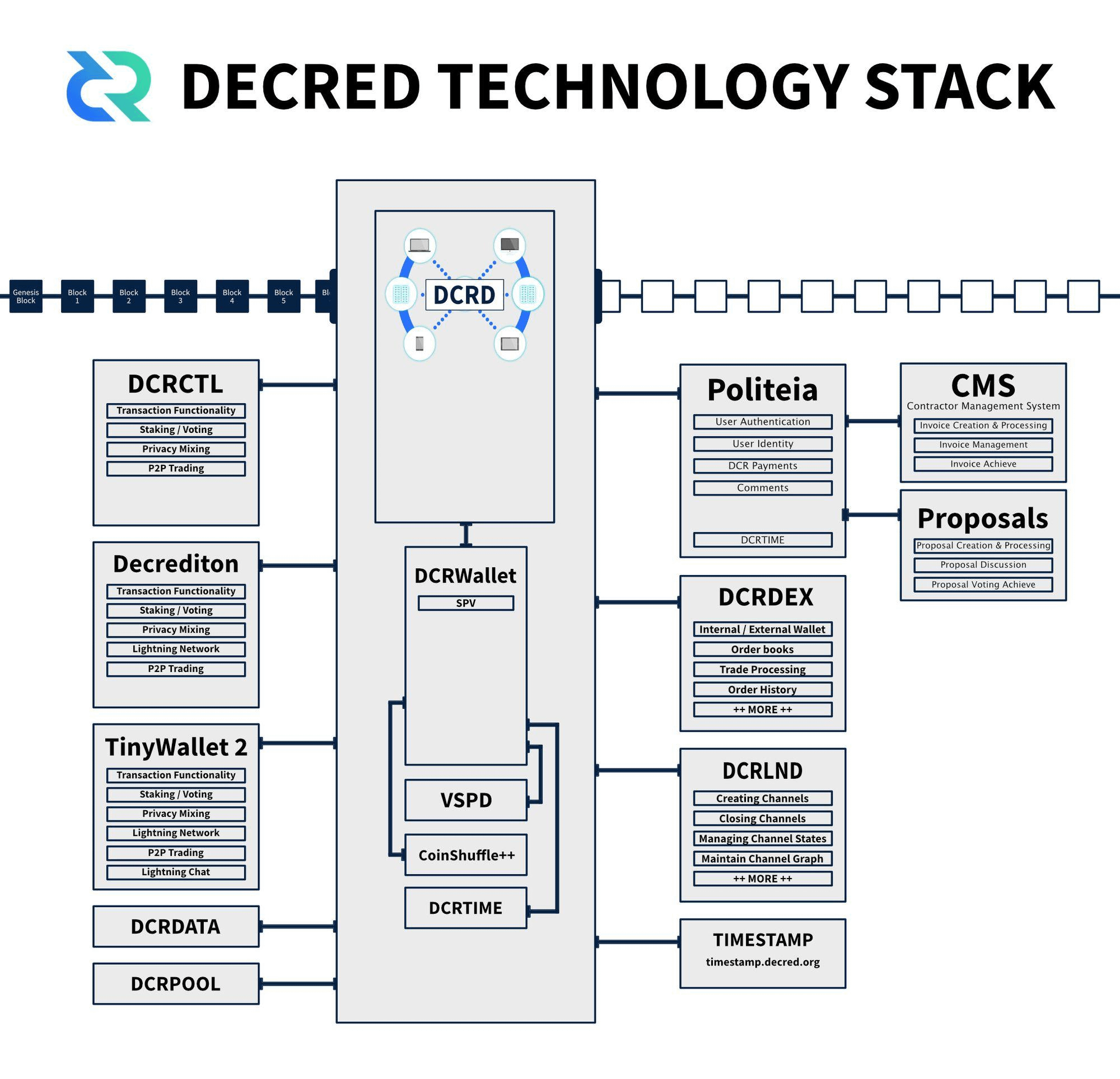
Decred was designed around a problem AI may make more important
Decred is often described simply as another cryptocurrency.
That description misses something important.
Decred was built around a fundamental question:
How can a decentralized monetary network govern itself over time without depending on a permanent central authority?
Its architecture combines Proof-of-Work and Proof-of-Stake, while incorporating stakeholder voting, a protocol treasury and an explicit governance mechanism.
That matters because decentralization isn't only about who produces blocks.
It is also about who gets to change the rules.
A cryptocurrency can be perfectly decentralized today and become increasingly centralized tomorrow if its development, treasury, governance or infrastructure becomes dependent on a small group of actors.
Decred's architecture attempts to make those political and economic decisions part of the protocol itself.
And that becomes particularly interesting in an AI-dominated internet.
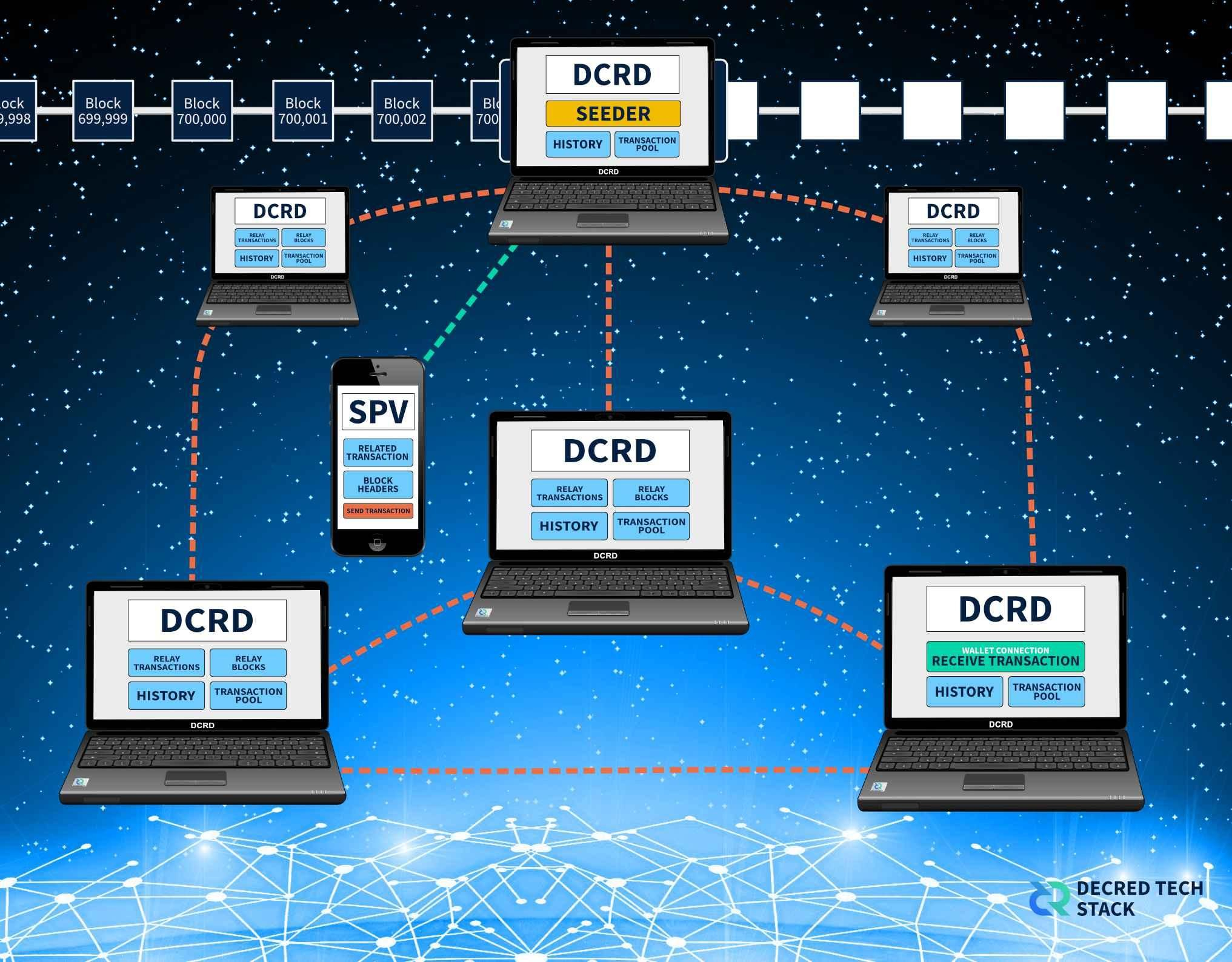
When the adversary becomes an agent
The biggest change brought by agentic AI may not be that machines become smarter.
It may be that machines become abundant.
An internet containing ten million autonomous agents behaves very differently from an internet containing ten million human users.
Agents can operate 24/7.
They can replicate.
They can coordinate.
They can respond to incentives at machine speed.
They can attempt attacks continuously.
They can negotiate with one another.
And they can potentially use money as an operational resource.
This creates an unusual cybersecurity environment.
Today, an attacker may need employees, infrastructure, money and time.
Tomorrow, an attacker could deploy thousands of autonomous agents that continuously probe networks, generate identities, search for vulnerabilities, manipulate markets or attempt economic attacks.
The distinction between cybersecurity and monetary security could therefore become increasingly blurred.
Money itself becomes part of the security architecture.
Why governance could matter more than ever
Consider a decentralized network facing a new attack made possible by advanced AI.
The network needs to respond.
Perhaps its cryptographic assumptions need updating.
Perhaps its economic incentives need modification.
Perhaps its treasury allocation needs to change.
Perhaps its consensus rules need to evolve.
Who makes that decision?
A centralized blockchain can potentially have a company or small development team make the decision.
A decentralized network has a harder problem.
It needs to change without recreating the centralized authority it was designed to eliminate.
This is one of the areas where Decred's governance model becomes particularly relevant.
Its stakeholders can participate in decisions concerning protocol development and treasury expenditure.
That creates an unusual property:
the network contains an internal mechanism for adapting itself.
In an environment where technological change accelerates dramatically, adaptability could become a security property rather than merely a governance feature.
The treasury becomes interesting in an agentic world
Decred also has another feature that deserves more attention: its treasury.
A portion of network issuance funds the treasury, creating an endogenous source of funding for development and ecosystem work.
This creates an important distinction from projects whose continued development depends heavily on external fundraising.
Imagine a decentralized network existing for decades.
Its developers need to respond to new cryptographic threats.
Its infrastructure needs maintenance.
Its software needs upgrades.
Its ecosystem needs new tooling.
Its adversaries become increasingly sophisticated.
Where does the money come from?
A protocol-level treasury provides one answer:
the network can fund its own continued development.
In an agentic future, this becomes conceptually fascinating.
The network isn't simply maintaining a ledger.
It is maintaining an economic organism with resources dedicated to its own survival and evolution.
Agents need more than payments
There is a tendency to describe the AI-agent economy as simply:
“AI agents will need crypto payments.”
That's probably too narrow.
Agents will need an entire economic stack.
They need:
Identity
Who is this agent?
Authorization
What is it allowed to do?
Reputation
Should another agent trust it?
Settlement
How does it pay?
Collateral
What backs its commitments?
Privacy
Which information should remain private?
Governance
What happens when the rules need to change?
Security
What happens when another agent attempts to exploit it?
This is why the intersection between AI agents and cryptocurrency is much more interesting than simply putting an “AI” label on a token.
The real question is whether decentralized networks can become economic infrastructure for autonomous software.
Decred's privacy dimension
Agentic systems also create a potentially enormous privacy problem.
A human might make several payments during a day.
An autonomous agent could make thousands.
Those transactions could reveal:
what services the agent uses;
which agents it communicates with;
what resources it purchases;
how much it earns;
who funds it;
what operations it performs.
At sufficient scale, financial data becomes behavioral intelligence.
This creates an uncomfortable possibility:
the autonomous internet could become extraordinarily efficient and extraordinarily surveilled.
Privacy-preserving transaction systems therefore become potentially important infrastructure for machine economies.
Decred has historically treated privacy as part of its broader monetary architecture rather than merely as a marketing feature.
That doesn't mean DCR automatically becomes the privacy currency of AI agents. Adoption still has to happen.
But the underlying requirement becomes increasingly obvious:
autonomous economic actors need the ability to transact without exposing their entire operational graph.
The battle won't necessarily be DCR versus AI tokens
There is another important point.
The future probably won't be:
AI agents → DCR
and nothing else.
The monetary architecture could become layered.
For example:
Stablecoins could handle predictable unit-of-account payments.
Bitcoin could function as high-value reserve collateral.
Lightning and other payment layers could handle rapid transactions.
Specialized networks could provide programmable or application-specific functionality.
And assets such as DCR could occupy a different niche:
independent, scarce, censorship-resistant monetary infrastructure with native governance.
This is important because Decred doesn't need to become the universal payment currency of AI agents for its architecture to become relevant.
It could instead become part of the security and monetary substrate underneath an increasingly autonomous internet.
The most interesting property may be independence
There is a deeper issue underneath all of this.
AI agents will increasingly depend on centralized infrastructure.
Cloud providers.
AI model providers.
Payment processors.
Identity providers.
Data providers.
Operating systems.
Application platforms.
That creates concentration.
An agent may be autonomous in its decision-making while still being completely dependent on centralized infrastructure.
The same could happen with money.
An agent could be autonomous but ultimately dependent on a centralized payment provider that can freeze its funds, reverse transactions or deny service.
That's not complete economic autonomy.
It is merely automated dependence.
Decentralized money offers a different model.
The agent controls its keys.
The network validates the transaction.
Settlement occurs according to protocol rules.
No customer-service representative needs to approve the transaction.
That distinction could become much more important as agents become economically significant.
Decred's real AI thesis
Decred therefore doesn't need an AI chatbot.
It doesn't need an AI-themed token.
It doesn't need to pretend to be an artificial-intelligence protocol.
Its potentially interesting relationship with AI is much more fundamental.
Agentic AI increases the number, speed and autonomy of economic actors on the internet.
That increases the demand for:
permissionless money, autonomous settlement, cryptographic authorization, privacy, robust security and governance mechanisms capable of adapting to new threats.
Those are precisely the kinds of problems decentralized monetary networks have been attempting to solve for years.
Decred simply approaches them through a particularly governance-oriented architecture.
The paradox
There is a fascinating paradox here.
The more intelligent the internet becomes, the less human it may become.
And the less human the economic environment becomes, the more important predictable rules could become.
Humans can negotiate.
Machines execute.
Humans can tolerate ambiguity.
Machines require explicit permissions.
Humans can call a bank.
An autonomous agent may need settlement immediately.
Humans can appeal a transaction.
A machine needs deterministic rules.
This suggests that the infrastructure underneath an agentic internet may ultimately need to look less like today's banking system and more like a cryptographic operating system for economic activity.
Decred's opportunity and its risk
None of this guarantees that Decred wins anything.
That distinction matters.
Technological suitability does not automatically create adoption.
Decred faces the same fundamental challenge it has faced for years:
Can an technically sophisticated decentralized network translate its architecture into meaningful economic usage and liquidity?
Litecoin, Bitcoin, stablecoins and newer programmable networks have substantial network effects.
An agent doesn't necessarily care which protocol has the most elegant governance model.
It cares whether the protocol is available, liquid, secure, cheap and useful.
That means Decred's AI-era thesis ultimately depends on adoption.
Its architecture may become more relevant.
That does not mean the market will necessarily recognize that relevance.
The bigger picture
The cryptocurrency debate has traditionally been framed around humans:
What money should people use?
Agentic AI introduces a different question:
What money should autonomous economic actors use?
That question has barely begun to be answered.
If millions or eventually billions of software agents begin participating in economic activity, the internet will need financial infrastructure capable of operating at machine speed without requiring continuous human permission.
That infrastructure will probably include centralized systems, stablecoins, traditional financial rails and decentralized networks simultaneously.
But the decentralized networks will have an additional role to play.
They provide something centralized systems cannot easily provide:
an economic system whose rules are enforced by a network rather than by an institution.
Decred's significance in that future isn't that it is an “AI cryptocurrency.”
It is that agentic AI could make the problems Decred was designed to solve more important.
The ultimate test won't be whether Decred can market itself to the AI industry.
It will be whether, in a world filled with autonomous economic actors, its combination of scarcity, security, governance, treasury-funded development and independence proves useful enough that those actors or the humans who control them choose to build around it.
The AI age may therefore produce a strange reversal.
We are building increasingly autonomous machines.
And at the same time, we may discover that those machines need something very old-fashioned:
money they can control themselves.