
A striking new development is putting Bitcoin and global shipping in the same spotlight.
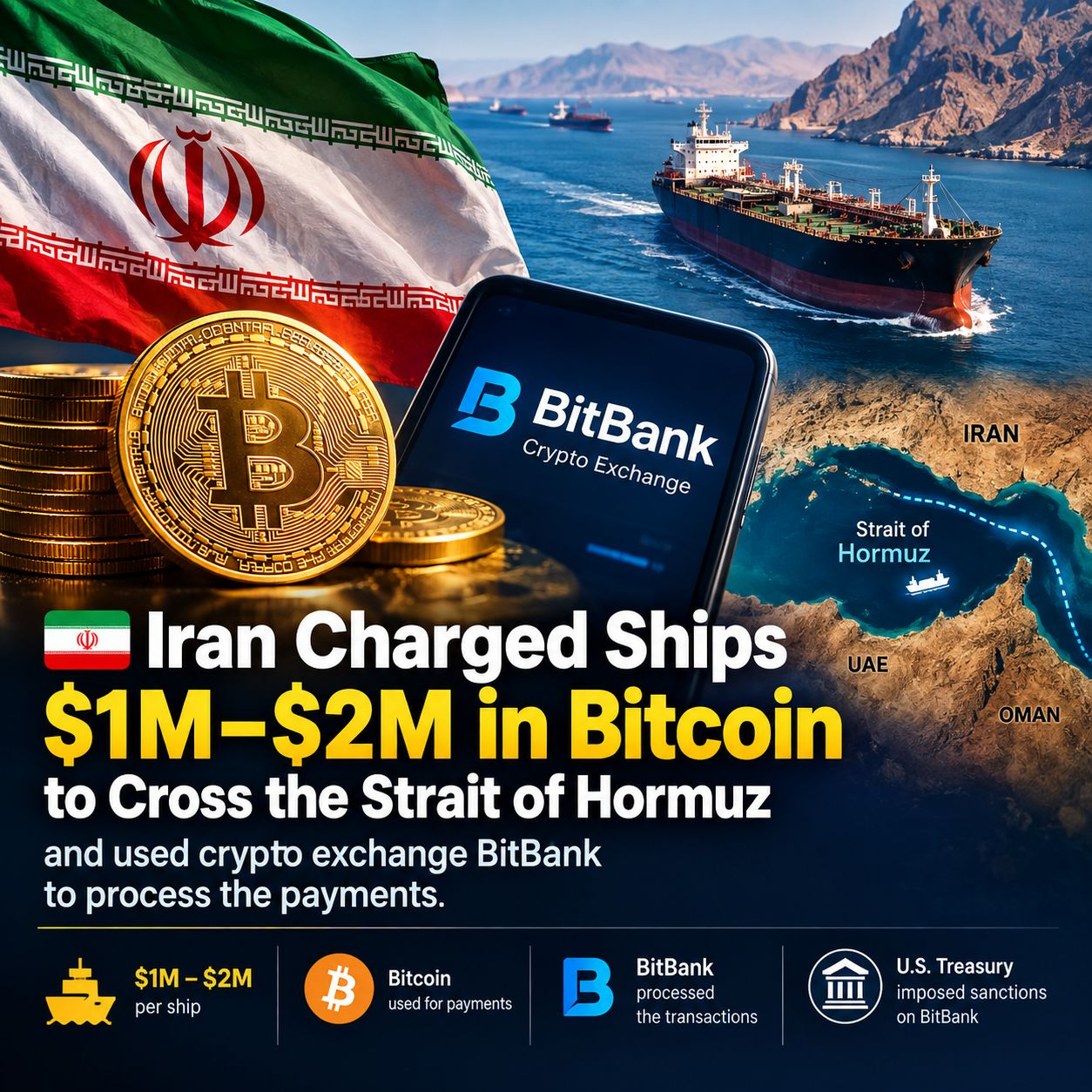
According to the U.S. Treasury Department, Iran’s Hormuz Safe Marine Services Authority has been charging vessels between $1 million and $2 million for what it describes as “safe passage” through the strategically important Strait of Hormuz.
The payments reportedly moved through BitBank, a Tehran based crypto exchange. Treasury said the platform has processed part of these payments since June and separately alleged that BitBank moved hundreds of millions of dollars in Bitcoin to Iran’s Islamic Revolutionary Guard Corps (IRGC).
🚢 Why the Strait of Hormuz matters
The Strait of Hormuz is one of the world’s most important energy shipping routes, connecting the Persian Gulf with the Gulf of Oman.
With tensions in the region already affecting maritime traffic, the reported use of Bitcoin for ship related payments adds another layer to the story.
₿ Why Bitcoin?
Crypto can allow cross-border transfers without relying on traditional correspondent banking networks. That characteristic can be particularly significant for entities operating under international sanctions.
However, Bitcoin transactions are not anonymous. Transactions are recorded permanently on a public blockchain and can be analyzed by blockchain investigators.
⚠️ U.S. sanctions BitBank
On September 17, the U.S. Treasury announced sanctions against BitBank and other entities linked to the alleged financial network. The sanctions prohibit U.S. persons from dealing with designated entities and can also create risks for foreign institutions that process related transactions.
The story highlights a growing intersection between geopolitics, maritime trade, sanctions and cryptocurrency.
Could Bitcoin become an increasingly important tool for international payments when traditional financial channels are restricted? 👀
#bitcoin #CryptoNews #BinanceSquare #blockchain #Geopolitics