
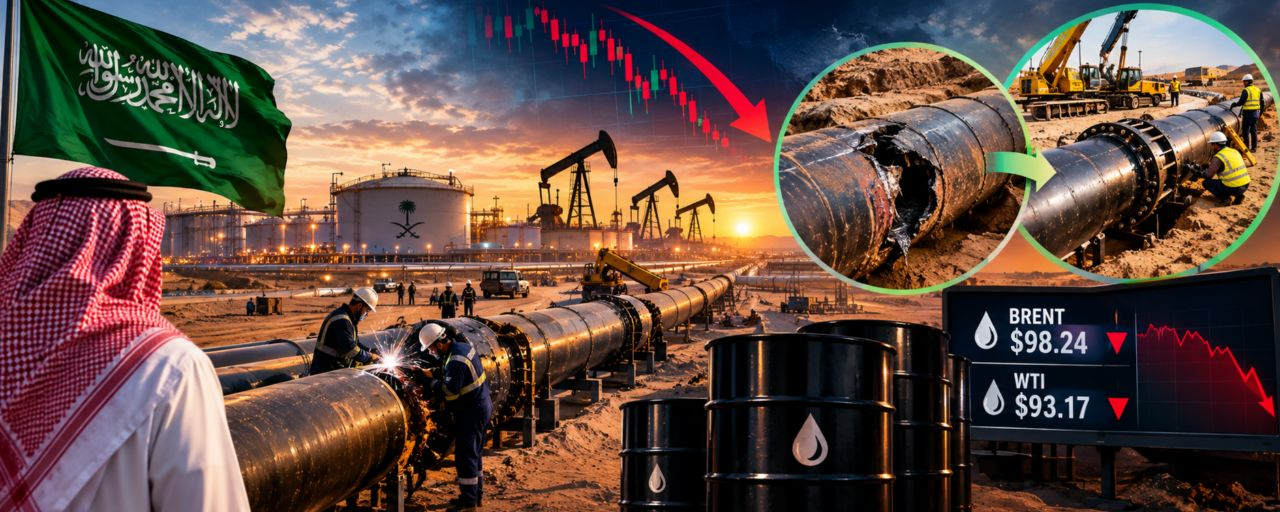

Oil handed back a chunk of its rally on Wednesday. Signs are emerging that some of the Middle East supply outages behind the run-up are starting to resolve, and traders who had spent the past several sessions piling into long positions took the opportunity to lock in gains.
Saudi Arabia is doing its part to calm the market. The kingdom is working to restore roughly half its East-West pipeline's capacity within days, a person familiar with the matter said, after drone strikes forced the line offline last week. U.S. Energy Secretary Chris Wright backed up that timeline this week, telling CNBC the damage was temporary and that the pipeline would be back within days.
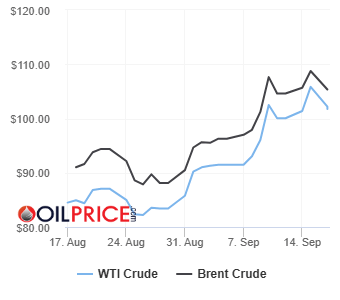
The price action followed through. West Texas Intermediate closed down 3.2% at $102.43 a barrel Wednesday. Brent, the global benchmark, fell 2.7% to $105.83. Both extended their losses once trading opened in Asia.
The Pipeline Everyone Is Watching
With the line down and cross-country flows to the Red Sea coast halted, Saudi Arabia has been ramping up prompt spot sales of crude from outside the Strait of Hormuz to keep barrels moving. It's an improvised fix for a problem the kingdom didn't choose.
Two pumping stations took the brunt of the damage, according to security and industry sources. Aramco is now bypassing the wrecked section to bring part of the pipeline back online while repairs continue elsewhere, with full capability targeted in roughly six weeks. Independent analysts working off satellite imagery of the fire damage think that number could slip toward five or six weeks even for the partial fix, so treat "within days" as a floor, not a guarantee.
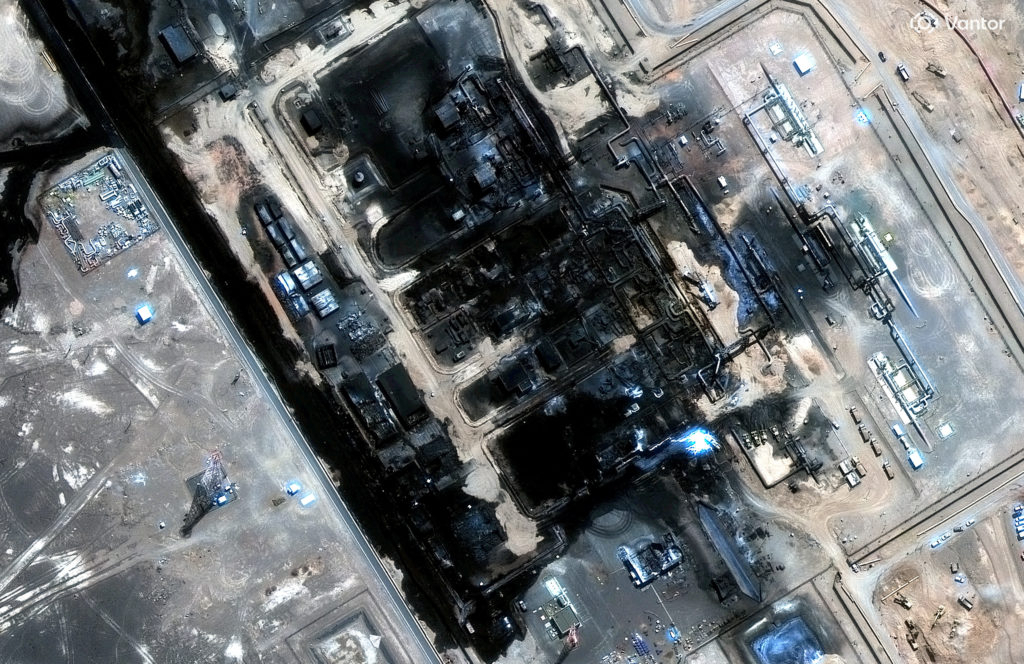
The line itself, a 1,200-kilometer stretch that has become Saudi Arabia's main workaround since the Strait of Hormuz closed, went dark last Thursday after drones launched from Iraqi territory tore into it. It's the latest in a run of attacks on Saudi energy and civilian infrastructure that Iran-backed Houthi forces in Yemen have carried out this month, mostly concentrated on the kingdom's western Red Sea coast.
None of that has stopped Aramco from selling. Traders say the company moved roughly 20 million barrels of spot crude to Asian refiners this week, cargoes for pickup this month and next from just outside Hormuz. Chinese state-owned and independent processors did most of the buying, joined by other importers across East Asia.
Saudi Arabia had largely avoided the worst of this war until now. That changed once the Houthis shifted to near-daily attacks, a campaign that risks complicating the multi-trillion-dollar diversification plans Riyadh has spent years building. Saudi officials said Wednesday they had again come under fire from the Iran-backed militia, which they say has effectively locked down one of the kingdom's key export routes.
Two claims from that fighting are worth watching closely. Houthi rebels say they shot down a Saudi F-15 and released footage that appears to show charred wreckage on the ground. If confirmed, it would be the first F-15 lost in this round of fighting, and the Wall Street Journal reports it could signal a real jump in the group's ability to contest Saudi airspace. Separately, debris recovered in Yemen suggests Saudi Arabia fired a Chinese-made ballistic missile in combat for the first time, the paper reported.
Trump's Version of Optimism
President Trump, talking to reporters Wednesday after arriving in North Carolina, said he hopes the war is close to over and that Iran "very much" wants a deal. The two sides have been in direct contact lately, he said, not through intermediaries.
Tehran isn't ready yet, by his account, though he still expects things to wrap up "very soon," a slightly softer version of what he said last week, when he predicted the war would end right after the November midterms because he believes Tehran can't sustain the pressure much longer. He's expected to raise the whole situation with Gulf leaders in the coming days, Axios reported.
Out on the water, Wednesday looked closer to normal than it has in weeks. Three VLCCs made it into the Persian Gulf and two tankers came out the other side toward the Gulf of Oman, with no Iranian fire reported on either leg.
Wright put total Hormuz traffic over the past several days at around 18 million barrels of crude and refined products. Whether that pace survives a slower-than-hoped pipeline fix is the question the desk will be asking through the rest of the week.