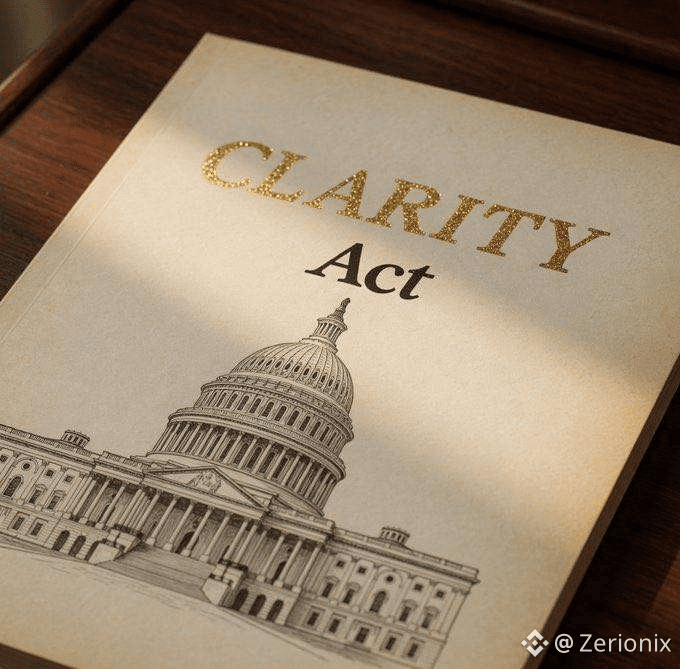
CLARITY Act failed to advance in the Senate, but CFTC Chair Michael Selig says U.S. crypto rulemaking is still moving forward.
The Senate vote fell short of the 60 votes needed to advance the bill, effectively putting the legislation on ice for now.
But Selig had already made the agency’s fallback position clear. The CFTC can use its existing authority to build crypto market rules even without new legislation, and he has directed staff to prepare frameworks in areas including crypto market structure and tokenized collateral.
That distinction matters.
CLARITY would have put the regulatory framework into law, creating statutory boundaries between the SEC and CFTC. Agency rulemaking can move faster, but it doesn't provide the same permanence and can be changed by future regulators or challenged in court.
Personally, I think the interesting part now is that the failure of CLARITY doesn't necessarily mean the end of U.S. crypto regulation. It changes who is driving it.
Congress couldn't agree.
The agencies are saying they can still move.
Now the question is whether SEC and CFTC rules can provide enough clarity for the industry without the statutory certainty CLARITY was supposed to provide.
Quick take: CLARITY stalled, but crypto rulemaking didn't. Selig's CFTC is already preparing to use its existing authority. The next phase may be regulation through agencies instead of legislation.
$BTC #BTC Price Analysis# #Meme Alpha#
The Senate vote fell short of the 60 votes needed to advance the bill, effectively putting the legislation on ice for now.
But Selig had already made the agency’s fallback position clear. The CFTC can use its existing authority to build crypto market rules even without new legislation, and he has directed staff to prepare frameworks in areas including crypto market structure and tokenized collateral.
That distinction matters.
CLARITY would have put the regulatory framework into law, creating statutory boundaries between the SEC and CFTC. Agency rulemaking can move faster, but it doesn't provide the same permanence and can be changed by future regulators or challenged in court.
Personally, I think the interesting part now is that the failure of CLARITY doesn't necessarily mean the end of U.S. crypto regulation. It changes who is driving it.
Congress couldn't agree.
The agencies are saying they can still move.
Now the question is whether SEC and CFTC rules can provide enough clarity for the industry without the statutory certainty CLARITY was supposed to provide.
Quick take: CLARITY stalled, but crypto rulemaking didn't. Selig's CFTC is already preparing to use its existing authority. The next phase may be regulation through agencies instead of legislation.
$BTC #BTC Price Analysis# #Meme Alpha#